
Modern Home Decor: Complete Guide to Designing a Space You’ll Love
Modern home decor is more than just a visual trend — it’s a lifestyle philosophy built around clarity, intention, and beauty that lasts. Whether you’re moving into your first apartment or finally ready to refresh a space you’ve been staring at for years, understanding what modern decor actually means is the best place to start. The term gets thrown around constantly, but there’s real substance behind it: clean lines, purposeful materials, a curated palette, and rooms that feel both sophisticated and genuinely livable.
What draws so many people to this style is its flexibility. Modern decor isn’t cold or sterile — at least not when it’s done right. It can be warm and inviting, layered with texture, or punctuated with bold personality through a single statement piece. From sleek, urban apartments to sprawling suburban homes, the principles adapt beautifully to almost any space and budget. In my experience styling rooms on a budget, even small changes — swapping out a light fixture, adding a linen throw, choosing the right art — can shift an entire room’s energy.
This guide covers everything you need to know: the core principles of the style, how mid century modern home decor differs from its contemporary cousins, where organic modern fits in, how to choose accessories wisely, and the common mistakes even well-intentioned decorators make. By the end, you’ll have a clear, actionable framework for building a home that feels both beautiful and unmistakably yours.
What Is Modern Home Decor? A Style Built on Simplicity
At its core, modern home decor is rooted in the design movements of the early-to-mid 20th century — specifically Bauhaus, Scandinavian minimalism, and International Style architecture. The guiding principle is “form follows function,” meaning every element in a room should serve a purpose while contributing to the visual composition. Ornamentation for its own sake is out. Thoughtful design that happens to be beautiful is very much in.
Modern decor typically features a neutral base — whites, warm greys, soft taupes, charcoal — with strategic accent colors. Furniture silhouettes are clean and geometric, often with exposed legs that make rooms feel more open. Materials like glass, steel, concrete, and natural wood are common choices. Textiles tend to be simple: think solid-colored cushions, linen curtains, or a single well-chosen rug. The result is a room that breathes.
What is modern home decor, and how is it different from contemporary style?
This is one of the most misunderstood distinctions in interior design. “Modern” refers to a specific design era — roughly 1920s to 1970s — while “contemporary” describes whatever is popular right now. Modern decor has defined characteristics: flat surfaces, minimal ornamentation, natural materials, and a focus on horizontal lines. Contemporary style is more fluid, borrowing freely from multiple periods. A room can be both modern and contemporary, but they’re not synonyms. If you’re drawn to the clean geometry of a Eames chair or a Noguchi coffee table, you’re thinking modern.
Modern design is a specific aesthetic movement with roots in the early 20th century. It prioritizes clean lines, natural materials, and intentional simplicity — not just whatever looks trendy this season.
One thing I’ve learned after years of styling spaces is that true modern decor never feels empty — it feels edited. The difference is intention. Every object in the room is there because it earns its place, whether through utility, beauty, or both. Minimalist wall decor is a perfect entry point: a single large-format print or a gallery of three identically framed pieces can anchor an entire wall without visual clutter.
Mid Century Modern Home Decor: Timeless and Still Relevant
Mid century modern home decor is perhaps the most recognizable — and most beloved — subset of the broader modern aesthetic. Emerging from the post-WWII era between roughly 1945 and 1969, it celebrated optimism, new materials, and democratic design. Furniture from this period was meant to be beautiful and accessible, not just reserved for the wealthy. Designers like Charles and Ray Eames, Florence Knoll, and George Nelson defined the look with pieces that still feel fresh today.
The hallmarks of mid century modern style include tapered wooden legs on furniture, low-profile sofas and chairs, sunburst clocks, walnut or teak wood tones, and a warm palette of mustard yellow, burnt orange, olive green, and avocado. It pairs beautifully with artificial plants for home decor — large-leaf tropical varieties like fiddle-leaf figs or monstera look stunning against the warm wood tones characteristic of this era.
The Eames Lounge Chair, designed in 1956, remains in continuous production today and is considered one of the most successful furniture designs in history. It’s a masterclass in mid century modern home decor principles: luxurious comfort, honest materials, and iconic silhouette.
Recreating this look doesn’t require hunting for vintage originals at auction. Quality reproductions are widely available, and mixing a few authentic mid century pieces with newer furniture gives rooms a collected, lived-in feel rather than a museum-like quality. Pair a walnut credenza with a simple linen sofa and hang a mid century inspired sunburst mirror above it — the combination is immediately recognizable and enduringly stylish.
Organic Modern Home Decor: Where Nature Meets Clean Lines
Organic modern home decor is the style that’s been taking over Pinterest boards and interior design magazines for the past several years — and for good reason. It takes the restraint and clean geometry of modern design and infuses it with warmth through natural textures, curves, and materials sourced from the earth. Think linen, jute, rattan, raw wood, stone, and terracotta alongside the clean-lined furniture modern design is known for.
Where traditional modern decor can sometimes feel cold, organic modern deliberately softens the edges. You’ll see arched doorways, rounded furniture silhouettes, woven wall hangings, and a palette pulled directly from nature — warm whites, sand, clay, sage, and driftwood grey. The effect is calming and sophisticated, a home that feels as though it grew naturally into its aesthetic rather than being styled from a catalog.
Is it best to use natural materials in an organic modern home?
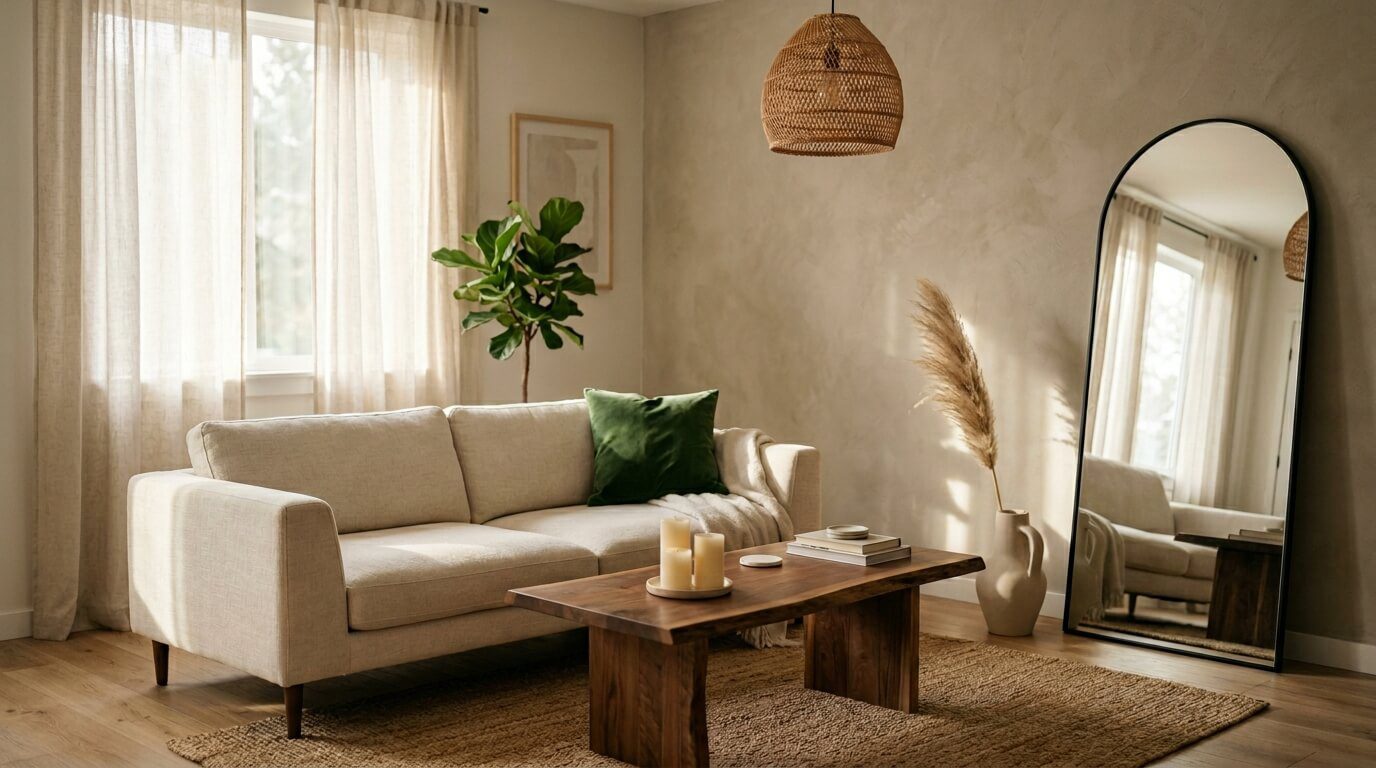
Natural materials are foundational to organic modern decor, but the key is layering them thoughtfully. Start with one or two anchor materials — perhaps a raw linen sofa and a live-edge walnut coffee table — then build outward with complementary textures. Jute rugs, terracotta vessels, rattan pendant lights, and linen curtains all reinforce the natural narrative without competing. Avoid synthetic materials that mimic organic textures, as they tend to read as cheap against the real thing. The goal is rooms that feel grounded, like they’ve absorbed calm from the natural world and given it back to you.
In organic modern spaces, odd numbers rule. Group three ceramic vases of varying heights rather than a matched pair. Cluster five candles instead of two. This mimics how objects appear in nature and immediately reads as more curated and intentional.
Modern Luxury Home Decor: Elevating Everyday Spaces
Modern luxury home decor is the elevated end of the modern spectrum — spaces that feel genuinely high-end without necessarily being ostentatious about it. Luxury in this context isn’t about filling a room with expensive objects. It’s about quality of materials, precision of detail, and the feeling a room produces when you walk into it. A room can look expensive because of proportion and restraint rather than price tags.
Marble, brass, velvet, aged leather, and polished concrete are materials commonly associated with modern luxury interiors. Lighting plays an outsized role here — LED lights for living room spaces, when properly layered with ambient, task, and accent lighting, create a depth and warmth that transforms even an average room into something that feels considered and expensive. Dimmers are non-negotiable in a luxury modern home.
Texture contrast is another hallmark of modern luxury decor. Pairing a matte plaster wall against a glossy lacquered console, or placing a nubby bouclé chair beside a smooth marble side table, creates visual richness without requiring additional objects. The tension between textures does the work.
One of the most common mistakes in modern luxury home decor is over-accessorizing. Luxury is defined as much by what’s absent as by what’s present. If every surface is covered, the room reads as busy rather than refined. Edit ruthlessly — keep only what’s truly beautiful or meaningful.
Modern luxury home decor also extends to underappreciated surfaces like floors and ceilings. A statement ceiling — whether coffered, painted in a deep contrasting tone, or fitted with architectural molding — elevates a room in ways wall decor simply can’t. Similarly, large-format porcelain tiles or wide-plank hardwood floors set a tone of quality that radiates through every other design decision in the room.
Modern Home Decor Ideas and Accessories That Actually Work
The real magic of modern decor is in the details — the accessories that pull a room together without overwhelming it. Modern home decor accessories work best when they’re selected with intention: each piece should relate to at least one other element in the room through color, material, or form. Random accumulation of pretty objects produces clutter; curated selection produces a room that feels like a whole.
Here are some of the most effective modern home decor ideas for transforming a space without a full renovation:
- Swap standard curtain rods for black matte or brushed brass versions — the hardware upgrade costs under $30 and reads as immediately more refined.
- Choose a single large rug rather than layering smaller ones; modern spaces benefit from the visual expansion a generous rug provides.
- Group sculptural objects in threes — a ceramic vase, a small succulent, and a stack of art books make a complete vignette on any surface.
- Replace cold overhead lighting with a combination of table lamps and floor lamps to create warmth and layered light.
- Use mirrors strategically — a large rectangular or arched mirror bounces light and makes any room feel significantly larger.
- Add texture through throws — a chunky knit draped over a sofa arm softens the geometry of modern furniture without disrupting the visual aesthetic.
When it comes to modern home decor ideas for specific rooms, the living room typically offers the greatest transformation potential. A single investment piece — a well-made sofa in a neutral linen, a designer-inspired coffee table — anchors the whole room and makes everything around it look more intentional. For rooms with limited budgets, affordable home rugs can completely transform the feel of a space for a fraction of what new furniture costs.
Modern home decor accessories are most effective in odd numbers and when they share at least one visual characteristic — whether color, finish, or material. Restraint isn’t deprivation; it’s curation.
Choosing the Right Home Color Palette for a Modern Interior
Color is arguably the most powerful tool in your modern decorating arsenal — and the one most people get wrong. The instinct is often to play it safe with pure white on every wall, but a well-considered home color palette does so much more. Modern interiors benefit from layered neutrals: a warm off-white on walls, a slightly deeper greige on trim, and one or two deliberate accent colors introduced through furniture, textiles, and art.
The most enduring modern palettes are built on a foundation of three or four colors maximum. Consider a base of warm white and soft charcoal, with accents of aged brass and dusty sage. Or a softer approach: linen, terracotta, and matte black with pops of deep forest green. The key is that every color relates to the others — nothing should feel like it arrived from a different room. Exploring a cohesive home color palette before committing to paint or major purchases can save significant time and money.
Don’t overlook the role of natural light in how colors read. A paint chip that looks warm and creamy in the store can turn cold and flat in a north-facing room with limited sunlight. Always test paint colors in the actual space at different times of day before committing. In modern interiors, this attention to detail in color selection is what separates spaces that merely look nice from rooms that feel genuinely exceptional.
According to research from the Architectural Digest editorial team, warm neutrals with earthy undertones consistently outperform cool-toned whites in terms of buyer appeal and long-term livability — something worth considering whether you’re decorating to sell or to stay.
Budget Breakdown: Where to Invest in Modern Home Decor
One of the most practical questions in any decorating project is where to spend and where to save. Modern home decor, with its emphasis on quality over quantity, actually rewards smart budget allocation more than most styles. Fewer, better pieces will always outperform a room stuffed with inexpensive items trying to mimic the look.
| Category | Budget Range | Priority Level | Notes |
|---|---|---|---|
| Sofa / Main Seating | $600 – $2,500+ | High — Invest Here | This is the visual anchor of any living room. Quality matters most here. |
| Area Rug | $100 – $800 | High — Invest Here | Size and material quality dramatically affect how the room reads. |
| Lighting (Pendants, Lamps) | $80 – $600 per fixture | High — Invest Here | Lighting transforms mood more than almost any other element. |
| Coffee Table | $150 – $900 | Medium | Mid-range options from Wayfair or IKEA with upgrades work well. |
| Throw Pillows & Blankets | $20 – $120 per item | Medium — Can Save Here | Refreshed seasonally; no need to spend heavily on these. |
| Wall Art | $30 – $500+ | Medium | Large-format prints from Etsy or Society6 offer excellent value. |
| Decorative Accessories | $15 – $200 per piece | Low — Save Here | Thrift stores and estate sales yield great finds for modern decor. |
| Paint | $50 – $200 per room | High — Best ROI of Anything | Fresh paint is the single highest-impact change you can make. |
The design principle at work here is straightforward: invest in the items you touch and see constantly, save on the pieces that can be swapped easily. A quality sofa you’ll use daily for a decade is worth spending on. Throw pillows, on the other hand, can come from TJ Maxx without anyone knowing the difference. This approach lets you build a genuinely beautiful modern interior without overspending in every category at once.
Common Mistakes in Modern Home Decor (and How to Fix Them)
Even experienced decorators make predictable errors when trying to achieve a modern look. Knowing what to avoid saves considerable time, money, and the frustration of a room that never quite comes together despite your best efforts.
Candle styles for modern home decor — are they important?
Absolutely, and this is more nuanced than most people expect. Candles are one of the most affordable and versatile accessories in modern decor, but the wrong style completely undermines the aesthetic. Heavily scented candles in elaborate glass holders with ribbons and ornate labels tend to skew traditional or rustic, not modern. For modern interiors, reach for simple pillar candles in a matte ceramic vessel, unscented taper candles in minimal brass holders, or architectural geometric candle holders in black or white. The candle style should feel as considered as the furniture — clean, simple, and purposeful.
Beyond candles, here are the most common modern home decor mistakes worth addressing:
- Rugs that are too small: The most widespread mistake in living room decor. In modern spaces, a rug should be large enough for all front furniture legs to sit on it — at minimum, 8×10 feet for a standard living room.
- Matching furniture sets: Modern interiors are collected, not matched. A sofa and coffee table from the same manufacturer’s set reads as dated. Mix materials and slightly different tones for depth.
- Ignoring scale: Furniture that’s too small for the room makes the space look unfinished. Scale down only in genuinely small rooms — in large spaces, go big and bold.
- No focal point: Every modern room needs a visual anchor — a fireplace, a large piece of art, a statement light fixture. Without it, the eye wanders and the room feels unresolved.
- Skipping texture: Modern doesn’t mean flat. Layering textures — matte walls, glossy ceramics, nubby textiles, smooth wood — creates visual richness that makes rooms feel designed rather than furnished.
- Overhead lighting only: Relying solely on a central ceiling fixture creates flat, unflattering light. Incorporate floor lamps, table lamps, and accent lighting for a layered effect.
Interior design authorities like the Houzz design community consistently cite improper rug sizing as the number one decorating error in residential spaces — modern or otherwise. Getting this right alone will noticeably improve any room.
Before buying a rug, tape out its dimensions on the floor with painter’s tape. This takes five minutes and has saved me from expensive returns more times than I can count. Scale is everything in modern interiors, and seeing it before committing changes decisions every time.
Longevity and Maintenance: Keeping Your Modern Home Looking Its Best
One of the great advantages of modern home decor is its longevity. Because it’s rooted in design principles rather than seasonal trends, a well-executed modern interior can look just as fresh in fifteen years as it does the day it’s completed. That said, maintaining the aesthetic requires periodic editing and care for the materials involved.
Natural materials like wood, stone, and linen require maintenance. Wood furniture benefits from periodic conditioning with appropriate oils or waxes, particularly in dry climates. Linen textiles should be washed carefully to preserve their texture — machine washing on cold and air drying prevents the shrinkage that can make cushion covers unwearable. Stone surfaces, including marble and travertine, need sealing annually to prevent staining. These aren’t onerous tasks, but skipping them means beautiful materials age poorly.
The Smithsonian’s design archives note that mid century modern furniture — designed with materials like molded fiberglass, bent plywood, and aluminum — has proven remarkably durable when properly maintained, with many original pieces still in circulation and daily use after 60-plus years.
Beyond material maintenance, the longevity of a modern interior depends on periodic editing. As your collection of accessories grows, schedule a seasonal review. Remove anything that no longer feels intentional. Rotate accessories between rooms. Refresh throw pillows and blankets. These small adjustments keep the space feeling curated rather than accumulated — which is the defining difference between a modern home and just a house with nice things in it.
Frequently Asked Questions
What is modern home decor, exactly?
Modern home decor refers to an interior design aesthetic rooted in the design movements of the early-to-mid 20th century, particularly Bauhaus, Scandinavian minimalism, and the International Style. It’s defined by clean lines, minimal ornamentation, natural materials like wood, glass, and steel, and a neutral palette punctuated with intentional accent colors.
Unlike “contemporary” style — which simply means what’s popular right now — modern decor has specific aesthetic rules and historical roots. It prioritizes function and form equally, meaning every element in a room should serve a purpose while contributing to the visual composition. The overall effect is a space that feels uncluttered, sophisticated, and genuinely livable rather than sterile.
What are the best modern home decor ideas for a small living room?
Small living rooms benefit enormously from modern design principles, because the emphasis on clarity and restraint naturally prevents the visual crowding that makes small spaces feel cramped. The most impactful modern home decor ideas for a small space include choosing furniture with exposed legs to create a sense of floor space, using a large single rug rather than multiple smaller ones, and mounting shelving on walls to keep floor space clear.
Mirrors are transformative in small modern rooms — a large rectangular mirror on the primary wall effectively doubles the perceived size of the space. Keep your palette tight: two to three colors maximum, with the lightest tones on walls and ceiling. Avoid heavy drapes in favor of linen or sheer panels that allow natural light to flow freely. Finally, resist the urge to fill every surface — in small modern spaces, negative space is an asset, not an absence.
What candle styles work best for modern home decor?
The best candle styles for modern home decor are those that prioritize clean, minimal design over ornate decoration. Pillar candles in matte ceramic or concrete vessels, taper candles in simple brass or black iron holders, and geometric candle lanterns in glass and metal all read as distinctly modern. Avoid heavily decorated glass jars, ribbon-tied labels, or overly rustic wooden holders — these lean traditional or farmhouse rather than modern.
Color matters too: in modern spaces, white, cream, and black candles are the safest choices, though a single deep accent color — forest green, terracotta, or dusty blue — can work beautifully as a complement to your palette. If you prefer scented candles, look for minimal packaging and sophisticated fragrance profiles like cedar, vetiver, eucalyptus, or white tea rather than heavily sweet or floral scents, which tend to pair better with more traditional aesthetics.
Is there a best furniture store for modern home decor?
No single store is definitively the best furniture store for modern home decor, as the right choice depends on your budget, location, and specific style direction. That said, certain retailers consistently deliver quality modern pieces at accessible price points. IKEA remains unbeaten for foundational modern furniture with clean silhouettes — pieces like the EKTORP sofa or HEMNES storage can anchor a modern room when styled correctly. For mid-range investment pieces, West Elm, CB2, and Article offer well-designed modern furniture with better material quality than fast-furniture options.
At the higher end, Design Within Reach carries licensed reproductions of genuine mid century modern classics, while stores like Room & Board specialize in American-made modern furniture with exceptional build quality. For budget-conscious decorators, Facebook Marketplace and Craigslist are underrated goldmines — mid century modern home decor pieces from the actual era are frequently listed at accessible prices by people who don’t realize their value.
How do mid century modern and organic modern home decor differ?
Mid century modern home decor is historically rooted in the post-WWII design era (roughly 1945–1969), characterized by tapered wooden legs, warm wood tones like walnut and teak, geometric forms, and a palette of mustard, olive, and burnt orange. It celebrates industrial materials used artfully alongside natural wood. Organic modern home decor, by contrast, is a contemporary approach that takes the clean geometry of modern design and infuses it with natural textures, earthy tones, and softened silhouettes.
Where mid century modern embraces pattern and bold accent colors from its era, organic modern stays closer to a nature-derived palette of warm whites, sand, terracotta, and sage. Organic modern also incorporates more textural layering — jute, linen, rattan, raw ceramics — than classic mid century interiors typically did. The two styles can overlap and coexist beautifully in the same space, particularly when connected by warm wood tones and restrained color palettes.
What modern home decor accessories make the biggest impact?
Modern home decor accessories that deliver the highest visual return on investment tend to be items that engage multiple senses or that command immediate attention: a large-format piece of art, a sculptural floor lamp, a statement vase in an architectural shape, or a beautifully textured throw draped over furniture. These are pieces that anchor your eye and set the tone for the room’s entire aesthetic.
Mirrors deserve special mention — a well-placed mirror in a modern interior does triple duty as artwork, light amplifier, and space expander. Beyond that, the most impactful accessories are often the simplest: a single ceramic bowl on a coffee table, three stacked design books, or a cluster of candles in varying heights. The modern accessory principle is quality and intentionality over quantity. A few genuinely good pieces will always outperform a shelf crowded with average ones.
How do I choose a color palette for a modern home?
Choosing a color palette for a modern home starts with identifying your base — the neutral that will dominate your walls and larger furniture pieces. Warm whites (like Benjamin Moore’s White Dove or Sherwin-Williams Accessible Beige) tend to be more forgiving and livable than cool whites, which can read as clinical under certain light conditions. From that base, select one to two accent colors that complement rather than compete.
The most enduring modern palettes are built on the rule of three: a dominant neutral (60%), a secondary tone (30%), and an accent (10%). Test paint colors in the actual room at different times of day before committing — natural light has a profound effect on how colors read, and what looks perfect in a store sample can look completely different on a large wall. Exploring a well-researched home color palette before purchasing paint or major furniture is always time and money well spent.
Can modern home decor work in a traditional or older home?
Modern home decor works beautifully in older homes — arguably better than it does in many new builds, which often lack the architectural character that gives modern furnishings something to respond to. Crown molding, original hardwood floors, brick fireplaces, and detailed millwork provide visual richness that contrasts elegantly with modern furniture’s clean lines. The tension between old architecture and modern furnishings creates interiors that feel layered, evolved, and genuinely interesting.
The key is to lean into rather than fight the existing architecture. Keep original moldings and trim rather than removing them; instead, paint them a contrasting tone that anchors them within a modern palette. Choose modern furniture with enough visual weight to hold its own against architectural detail. And don’t over-modernize — preserving some period character through exposed wood floors or an original fireplace surround gives the modern elements something to play against, which produces far more compelling rooms than a completely neutral backdrop would.
Final Thoughts: Building a Modern Home That Feels Truly Yours
Modern home decor, at its best, is not a rigid style rulebook — it’s a framework for making thoughtful decisions about your space. When you understand the underlying principles — clarity, intention, quality materials, and purposeful restraint — you have everything you need to create a home that’s not just visually appealing but genuinely comfortable and personal. The goal isn’t a showroom; it’s a space that feels like an elevated version of you.
Start with the fundamentals: a considered color palette, furniture with honest materials and clean lines, and lighting that flatters rather than just illuminates. Build from there, adding accessories with intention and editing regularly to keep the space from becoming cluttered. Whether you’re drawn to the warmth of organic modern, the nostalgic elegance of mid century, or the refined restraint of modern luxury, the principles are the same: fewer things, better things, placed with care.
From here, there are several natural directions to explore as you develop your home’s aesthetic. Diving deeper into wall decor options will give you a richer sense of how to finish the vertical planes in your rooms. Understanding how to work with artificial and natural plant life in modern interiors adds organic warmth without the maintenance demands. And if you’re ready to think more holistically, exploring how rooms connect and flow through a unified color strategy will take your home from a collection of nice rooms to a genuinely cohesive living environment. Modern decor rewards the patient, the intentional, and the curious — and the results are very much worth the effort.