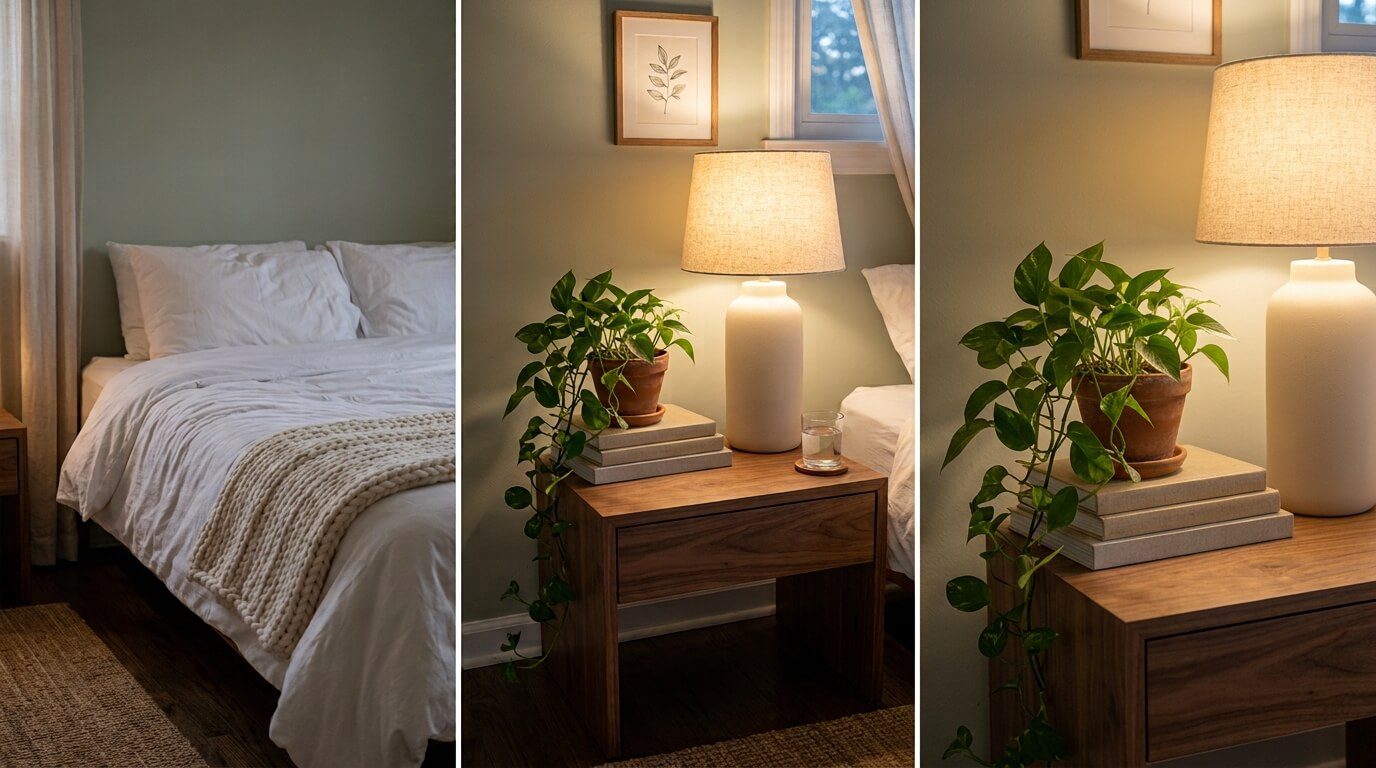

Table Lamps for Bedroom: Your Complete Guide to Choosing the Perfect Light
Choosing the right table lamps for bedroom spaces is one of those decisions that quietly shapes the entire atmosphere of your most personal room. It’s not just about brightness — the right lamp adds warmth, texture, and a sense of calm that makes winding down at the end of the day feel intentional rather than accidental. Whether you’re styling a cozy reading nook, upgrading both sides of a king bed, or looking for small table lamps for bedroom corners that don’t overwhelm a tight space, the options available in 2026 are more refined, more energy-efficient, and more design-forward than ever before.
Table lamps for bedroom use are bedside or surface-mounted lighting fixtures designed to provide soft, directional light for nighttime reading, ambient relaxation, and decorative styling. The best bedroom table lamps combine the right height (typically 24–30 inches total), an appropriate shade size to diffuse light evenly, and a base style that complements your existing decor — whether that’s minimalist Scandinavian, warm bohemian, or sleek modern.
In my experience helping readers style their bedrooms on a realistic budget, no single upgrade transforms a space as completely as updating the bedside lighting. A lamp that’s too short disappears visually; one that’s too bright turns your nightstand into an interrogation desk. Getting this one element right — the scale, the shade material, the color temperature of the bulb — pulls everything else together. This guide covers all of it: from how to choose table lamps for bedroom environments to the best picks across every budget and style category for 2026.
Why Bedroom Table Lamps Matter More Than You Think
Most people spend time agonizing over their bedroom furniture and bedding, then grab the first lamp they find on clearance and wonder why the room never feels quite right. Lighting is the invisible interior design layer — it defines mood, affects your sleep quality, and even influences how restful a space feels before you’ve even closed your eyes.
According to the Sleep Foundation, exposure to bright or blue-spectrum light in the hour before bed can suppress melatonin production and delay the onset of sleep. This means the lamp you choose — and the bulb you put in it — has a direct biological impact, not just an aesthetic one. Warm-toned bulbs in the 2700K–3000K range are far better suited for a bedroom environment than cool daylight LEDs.
The color temperature of a light bulb is measured in Kelvin (K). Bedroom lamps should use bulbs between 2700K and 3000K for warm, relaxing light — similar to the glow of a candle. Anything above 4000K will feel clinical and disrupt your wind-down routine.
Beyond biology, bedroom table lamps are anchor pieces for your nightstand styling. A well-chosen lamp works alongside your minimalist wall decor to create a cohesive, intentional look — especially when you’re aiming for a clean, uncluttered aesthetic. The base, the shade, and the finish all contribute to the room’s visual language in ways that overhead lighting simply cannot replicate.
How to Choose Table Lamps for Bedroom Spaces
How to Choose Table Lamps for Bedroom: The Essential Checklist
When I first started styling bedrooms seriously, I made the rookie mistake of buying lamps based purely on how they looked on the product page — and they never quite worked once they arrived. Learning how to choose table lamps for bedroom spaces properly changed everything. There are five key factors that determine whether a lamp will actually work in your room:
- Total height: The lamp plus nightstand should place the bottom of the shade at roughly shoulder height when you’re seated in bed — typically 24–30 inches total lamp height for standard nightstands.
- Shade width: The shade diameter should be roughly equal to two-thirds the lamp base height for visual balance. A narrow base with an oversized shade looks top-heavy.
- Light direction: Drum shades diffuse light in all directions; empire shades direct more light downward — better for reading.
- Switch placement: Rotary switches on the cord are often more convenient than those on the base when the lamp is on a crowded nightstand.
- Style cohesion: Match the lamp’s finish to at least one other metal element in the room — door handles, picture frames, or curtain rods — for a pulled-together look.
One thing I’ve learned from years of bedroom styling: when in doubt, go slightly taller rather than shorter. A lamp that’s too short gets visually swallowed by pillows and headboard. You want that warm glow to be visible and purposeful, not hidden behind a stack of throw cushions.
Before buying, hold a ruler or tape measure next to your nightstand and visualize where 24, 26, and 30 inches fall. Then sit on your bed in your normal reading position — that’s the height your eye level needs the light source to be near. This one step will save you from at least one return shipment.
For paired bedside lamps, symmetry is satisfying but not mandatory. Many of the most beautiful bedroom setups I’ve seen use matching bases with slightly different shades, or the same shade shape in two different complementary finishes. What matters more than perfect matching is visual weight — if one side looks heavier than the other, the room will always feel slightly off-balance.
Getting Size and Scale Right: How Tall Should Bedroom Table Lamps Be?
How Tall Should Bedroom Table Lamps Be for Optimal Lighting?
This is the single most common question I get about bedroom lighting, and thankfully it has a clear answer. The ideal total height for a bedroom table lamp — meaning the base plus the shade together — is between 24 and 32 inches. This range accommodates most standard nightstand heights (26–30 inches) while ensuring the bottom edge of the shade sits at approximately eye level when you’re sitting up in bed.
Here’s a more specific breakdown: if your nightstand is 26 inches tall, you want a lamp that’s 25–28 inches. If your nightstand is 30 inches (a common height for floating or platform-bed-adjacent tables), a 24-inch lamp works well. The goal is for the combined height of nightstand plus lamp to land somewhere between 50 and 58 inches from the floor — this puts the shade in the ideal position for both reading light and ambient glow.
For rooms with very high ceilings (9 feet and above), you can push toward the 30–32 inch lamp range without the space feeling cluttered. In compact bedrooms or rooms with low-profile platform beds, smaller table lamps for bedroom use in the 18–22 inch range can actually look more proportionate and intentional than a towering floor-to-shade standard lamp.
The golden rule: nightstand height + lamp height should equal 50–58 inches total. This positions the shade at the right height for comfortable reading without shining light directly into your eyes when lying down.
Modern Table Lamps for Bedroom: 2026’s Best Styles and Trends
Modern table lamps for bedroom spaces in 2026 have moved decisively away from the ornate, heavy-based styles that dominated the early 2010s. What’s leading the trend right now is a confident simplicity — sculptural ceramic bases in matte earthy tones, slender brass columns with linen drum shades, and geometric resin bases that look like small art objects on your nightstand.
Here are the standout aesthetic directions that are genuinely selling well and holding up in real bedroom settings this year:
Organic Modern: Bases that look hand-thrown or naturally textured — think matte terracotta, ribbed porcelain, or rough-hewn stone-effect ceramics paired with neutral linen or cotton shades. These work particularly well alongside artificial plants for home decor, creating a layered, nature-inspired nightstand vignette.
Slim Metal Column: Brushed brass or matte black slender column lamps — usually 26–28 inches — with small drum shades in white or cream. These are the workhorses of modern bedroom design: they work in almost any style context, from mid-century to contemporary minimalist.
Sculptural Statement: One-of-a-kind looking bases — mushroom shapes, twisted forms, or asymmetric silhouettes — that function as both lamp and decor object. Usually reserved for the lamp on the “feature” side of the bed (typically the side visible from the door).
According to Architectural Digest, the biggest lamp trend of recent years isn’t a style at all — it’s the addition of USB charging ports built into the base. In 2026, over 60% of new bedroom lamp releases include at least one USB-A or USB-C port, making them genuinely functional as well as beautiful.
Color in lamp bases has also made a significant comeback. Forest green, deep navy, and rust-terracotta bases are all popular right now — especially when they echo an accent color elsewhere in the room (a throw pillow, a piece of wall art, or a rug). Pairing a bold-colored base with a white or cream shade keeps the look grounded and prevents it from feeling too busy.
Side Table Lamps for Bedroom: Pairing, Placement, and Proportion
Side table lamps for bedroom nightstands are almost always bought in pairs, and that brings its own set of considerations. The most important thing is proportion relative to your headboard height. Low headboards (under 40 inches) call for slightly shorter lamps so the lighting doesn’t visually dominate; taller statement headboards can handle lamps up to 30 inches because the headboard provides a visual anchor.
Placement matters too. Lamps positioned too far back on the nightstand throw light behind you when you’re reading; they should sit toward the front-center of the surface so light falls forward onto your book or screen. Leave at least 3–4 inches of clearance between the shade and your headboard — shades can discolor fabric headboards over time from heat accumulation, especially with incandescent or halogen bulbs.
If your bedroom has LED strip lighting for ambient effect — which pairs beautifully with table lamps for a layered look — you can read more about options and installation in our guide to LED lights for living room spaces, many of which apply equally well to bedrooms. Combining LED strip backlighting with warm table lamps creates a depth of light that feels both cozy and deliberately designed.
When buying side table lamps for bedroom use in pairs, order from the same product listing rather than buying two separately over time. Color temperature, shade tone, and base finish can vary subtly between production batches — even with identical model numbers. Getting them together guarantees a true match.
Small Table Lamps for Bedroom: Big Style in Compact Spaces
Small table lamps for bedroom use have become their own distinct category — and they deserve more credit than they typically get. In rooms where nightstand real estate is limited (a small glass shelf, a floating wall-mounted ledge, or a petite drum table), a lamp in the 14–20 inch range can deliver just as much visual impact and functional light as a full-sized option.
The trick with small lamps is to make the base do more visual work. A small lamp with a plain base gets lost; a small lamp with a beautifully glazed ceramic base, an interesting texture, or a distinctive silhouette becomes a focal point. Think of it like jewelry for your nightstand — small but specific.
Bedroom side table lamps in compact sizes also work wonderfully in children’s rooms, guest rooms with twin beds, and studio apartments where the sleeping area needs to feel cozy without being visually heavy. In those contexts, a 16-inch lamp with a white cotton shade and a simple white ceramic base is practically invisible as a design choice — it just makes the space feel quietly right.
Budget Breakdown: What to Expect at Every Price Point in 2026
One of the most persistent myths about bedroom lamps is that you need to spend a lot to get something that looks good and lasts. In reality, there’s excellent quality available at every tier — you just need to know what to prioritize at each price point. Here’s an honest breakdown based on what’s actually available in the market right now:
| Budget Range | What You Get | Best For | What to Watch Out For |
|---|---|---|---|
| Under $30 | Basic plastic or thin metal bases, synthetic shades, limited finishes | Guest rooms, children’s rooms, temporary setups | Shade quality often poor; bases can feel lightweight |
| $30 – $70 | Ceramic or resin bases, fabric shades, decent finish quality | Budget-conscious main bedroom styling | Check wiring quality; cord length can be short |
| $70 – $150 | Quality ceramic, brass, or wood bases; linen or cotton shades; dimmer compatibility | Primary bedroom — best value-to-quality ratio | Shade replacement can be tricky with non-standard fitters |
| $150 – $300 | Solid brass, hand-thrown ceramic, or stone bases; premium shades; USB ports | Signature bedroom statement; long-term investment piece | Higher price doesn’t always mean better light output |
| $300+ | Designer or artisan bases, high-quality materials, unique aesthetic | Feature bedrooms, boutique-hotel aesthetic, collectors | Often non-dimmable; replacement shades can be expensive |
For most primary bedrooms, the $70–$150 range genuinely hits the sweet spot. You get real materials, reliable wiring, and enough style variety to find something that fits your specific aesthetic without overpaying for a brand name. If you’re ever browsing home decor on a tighter budget, check out our roundup of horse rugs for the home cheap — the same principles of finding quality at accessible price points apply across all bedroom decor categories.
The Right Bulb Makes All the Difference
You can buy the most beautiful lamp in the world and completely undermine it with the wrong bulb. This is not an exaggeration — I’ve seen stunning ceramic lamps turned into harsh, clinical-feeling light sources by a cool daylight LED, and I’ve seen inexpensive basic lamps transformed into something genuinely atmospheric by the right warm-glow filament bulb.
For bedroom table lamps, the specifications that matter most are:
- Color temperature: 2700K–3000K only. This is warm white to soft white — the equivalent of incandescent glow.
- Lumens: 450–800 lumens is ideal for a bedside lamp. More than 800 will feel too bright for a relaxing environment.
- CRI (Color Rendering Index): Look for CRI 90+ for the most natural, flattering light that makes your room’s colors look true.
- Dimmability: Always choose a dimmable LED if your lamp has a dimmer switch — non-dimmable LEDs will buzz or flicker on dimmer circuits.
- Bulb shape: A19 is the standard; ST19 Edison-style bulbs work beautifully in open-shade or exposed-socket lamps for a warm, vintage feel.
The U.S. Department of Energy notes that LED bulbs use at least 75% less energy than incandescent lighting and last 25 times longer — making them both the environmentally responsible and economically smart choice for bedroom table lamps that may be on for several hours each evening.
Common Mistakes to Avoid When Buying Bedroom Lamps
After helping readers style hundreds of bedrooms through this site, I’ve noticed the same errors coming up over and over. Avoiding these will save you money, returns, and the frustration of a room that doesn’t come together the way you planned.
Buying without measuring first. This is the most common mistake by a significant margin. Always measure your nightstand height and the space between the nightstand surface and the top of your headboard before ordering anything. A lamp that’s 2 inches too tall can make your headboard look squat; one that’s 4 inches too short gets swallowed entirely.
Ignoring the shade material. Opaque shades (thick fabric, metal) create downward or directional pools of light — great for reading but can feel harsh if that’s your only light source. Translucent linen or cotton shades diffuse light outward, creating a soft ambient glow. For bedrooms, diffused light almost always wins.
Matching everything too precisely. A bedroom where every element is perfectly matched in the same metal finish, the same shade of white, and the same design style can feel sterile. Allow for some variation — a warm brass lamp next to a matte black picture frame is more interesting than two matching brass pieces.
Never exceed the maximum wattage printed inside the lamp’s socket or on its label. Using a higher-wattage bulb than specified can overheat the socket, damage the wiring, and in severe cases create a fire hazard. LED bulbs are much safer in this regard since a 10W LED produces the same light as a 60W incandescent — but always check the label.
Forgetting about cord management. A beautiful lamp with a visible cord snaking across your nightstand or trailing along the wall undermines the whole aesthetic. Plan where your cord will run before you buy — and consider whether a lamp with a longer cord (6 feet or more) gives you more flexibility in outlet placement.
Overlooking the nightstand size. A large lamp base on a small nightstand leaves no room for your phone, book, or glass of water. The lamp base should occupy no more than one-third of your nightstand surface area.
Longevity & Maintenance: Keeping Your Bedroom Lamps Looking Great
A quality bedroom table lamp, properly maintained, should last a decade or more. The lamp base itself — whether ceramic, brass, or wood — requires very little care. A light dusting with a dry or slightly damp microfiber cloth every few weeks is all that’s needed. Avoid harsh chemical cleaners on any metal finish, as they can strip lacquer and cause premature tarnishing.
Lamp shades are where most of the maintenance attention is warranted. Fabric shades attract dust and can yellow over time, particularly near windows with direct sunlight exposure. A very light vacuum with the brush attachment on the lowest setting removes surface dust without damaging the fabric. For yellowing, gentle spot-cleaning with a damp cloth and a tiny drop of mild dish soap works for most cotton and linen shades — but test an inconspicuous area first.
Replacing the bulb is the most frequent maintenance task, and with modern LEDs rated for 15,000–25,000 hours, you might only need to do this once every 10–15 years under normal use. When you do replace it, keep a note of the wattage equivalent and color temperature so you maintain consistent light quality. If you’ve paired your lamp with other modern home decor elements in your room, maintaining that consistent warm-light quality is what keeps the whole environment feeling cohesive — you can find more inspiration for pulling a room together in our guide to modern home decor ideas.
Daily
- Turn off before sleeping
- Avoid draping items over shade
- Keep cords untangled
Weekly
- Dust shade lightly
- Wipe base with dry cloth
- Check cord for wear
Monthly
- Deep-clean shade if needed
- Check bulb seating
- Polish metal bases gently
Frequently Asked Questions About Table Lamps for Bedroom
How to choose table lamps for bedroom spaces if I’m starting from scratch?
Start with your nightstand height and your bed’s headboard height — these two measurements will dictate your ideal lamp height range. A lamp whose total height (base plus shade) puts the bottom of the shade at approximately eye level when you’re seated in bed is your target. From there, choose a shade material that suits your lighting need: translucent linen for ambient glow, or a denser fabric for more directed reading light.
Next, consider the base material and finish in relation to your room’s existing metal tones. Match at least one element — your lamp’s finish should echo something already in the room, whether that’s a mirror frame, door handle, or picture frame. Finally, always confirm the maximum wattage and choose a warm 2700K–3000K LED bulb for the most sleep-friendly light quality.
How tall should bedroom table lamps be for standard nightstands?
For a standard nightstand height of 26–30 inches, the ideal lamp height is between 24 and 30 inches. The combined height of your nightstand plus lamp should fall between 50 and 58 inches from the floor — this positions the bottom edge of the shade at roughly shoulder height when you’re sitting up in bed, which is the optimal zone for both reading and ambient light. If you have a low-profile platform bed and a lower-than-standard table, you may want a slightly taller lamp in the 28–32 inch range to compensate.
One practical test: sit on your bed against your pillows and headboard in the position you actually read or use your phone. The bottom of the lamp shade should be roughly level with your chin at that position. If it’s significantly below your chin, the lamp is too short; if it’s above your eyes, it’s too tall and the bare bulb may cause glare.
What is the best style of table lamp for a modern bedroom?
Modern table lamps for bedroom spaces in 2026 favor clean-lined bases in natural or artisan materials — matte ceramic, brushed brass, travertine stone, or solid wood — paired with simple linen or cotton drum shades in white, cream, or warm off-white. The defining characteristic of the modern bedroom lamp is restraint: the base provides the visual interest while the shade keeps the overall silhouette clean and uncluttered. Avoid overly ornate or fussy details if your room leans minimalist or Scandi-influenced.
For those who want some personality, sculptural bases — mushroom-cap forms, ribbed cylinders, or organic asymmetric shapes — are having a significant moment in 2026 and add a collector’s-item quality to a nightstand without overwhelming the rest of the room. Pair any statement base with the simplest possible shade to let the form speak for itself.
Can I use small table lamps for bedroom nightstands, or are they too dim?
Small table lamps for bedroom use are absolutely functional and not inherently dimmer than their larger counterparts — light output is determined by the bulb, not the lamp size. A compact 16-inch lamp fitted with a 60W-equivalent LED (around 800 lumens, 2700K) will provide perfectly adequate reading light. The key is choosing a shade that’s semi-translucent rather than heavily lined, so more light escapes through the sides for ambient effect alongside the downward reading light.
Where small lamps do fall short is in visual presence on large nightstands — a 14-inch lamp on a wide 24-inch nightstand can look lost. In those cases, consider placing a small stack of books or a decorative tray next to the lamp to build visual weight and make the grouping feel intentional. In the right context — petite floating shelves, narrow drum tables, or children’s rooms — small table lamps are the perfect solution.
Should bedroom table lamps match exactly, or can they be different?
Bedroom side table lamps for bedroom use don’t need to be identical — in fact, perfectly matching pairs can sometimes feel overly rigid in more relaxed or eclectic bedroom styles. The goal is visual balance, not exact replication. You might use the same base shape in two different complementary finishes (matte black and brushed brass), or the same finish with slightly different base forms (cylindrical vs. slightly tapered). What matters is that both lamps have similar visual weight and scale.
That said, for a very clean, minimal bedroom aesthetic, matching pairs genuinely work best because any variation can feel like a mistake rather than an intentional design choice. The more pared-back your room, the more matching pairs make sense. The more layered and eclectic your bedroom style, the more latitude you have to mix and complement rather than match.
What wattage should I use in a bedroom table lamp?
For bedroom table lamps, the ideal light output is between 450 and 800 lumens — equivalent to a 40W–60W incandescent bulb in older terms. In modern LED terms, this means a bulb drawing 5W–10W of actual power. This range is bright enough for comfortable reading without being so intense that it disrupts your body’s natural melatonin production in the evening hours. Always check the lamp’s maximum wattage rating (printed inside the socket or on a label) and never exceed it.
For most people, a 60W-equivalent LED (800 lumens) at 2700K is the single best all-purpose choice for a bedroom table lamp — it’s bright enough to read by, warm enough to feel relaxing, and dimmable if your lamp has that capability. If you use your lamp primarily for ambient mood lighting rather than reading, a 40W equivalent (450 lumens) may actually be preferable for its softer, more intimate glow.
Are touch lamps or smart lamps worth it for the bedroom?
Touch lamps — where tapping the base cycles through brightness levels — are genuinely useful for bedrooms because they eliminate the need to fumble for a switch in the dark. Most mid-range touch lamps now offer three brightness settings, which effectively gives you a built-in dimmer without needing a separate switch or smart home setup. They’re particularly popular for small table lamps for bedroom use on cluttered nightstands where reaching a cord switch can be awkward.
Smart lamps (Wi-Fi or Bluetooth controlled via an app or voice assistant) offer even more flexibility — scheduling, color temperature adjustment, and remote control — but they add complexity and cost. For most people, a well-chosen dimmable lamp with a quality warm LED and a convenient touch or rotary switch provides everything they need without the subscription concerns or compatibility issues that can come with smart home ecosystems.
How do I clean a fabric lamp shade without damaging it?
The safest and most effective method for cleaning a fabric lamp shade is to use a soft brush vacuum attachment on the lowest suction setting, moving in gentle downward strokes from top to bottom. This removes surface dust and fine particles without disturbing the shade’s structure or fabric weave. Do this monthly or whenever the shade looks dusty — a dusty shade can reduce light output by 10–15% and can develop permanent yellowing if neglect allows dust to become embedded.
For more persistent spots or overall yellowing, lightly dampen a clean white cloth with water and a tiny drop of mild dish soap, then gently blot (never rub) the affected area. Always test in a hidden spot first, particularly with shades that have a paper liner or delicate fabric covering. Allow to air-dry completely before switching the lamp back on — moisture near a hot bulb can cause damage or, in rare cases, create a hazard with non-LED bulbs.
More Questions Answered
How to choose table lamps for bedroom spaces on a budget?
Focus your budget on the shade material — a quality linen or cotton shade elevates even an inexpensive base. Prioritize a lamp in the $50–$80 range with a ceramic or resin base and a fabric shade over cheaper synthetic alternatives, and invest in a good-quality warm LED bulb regardless of what you spent on the lamp itself.
How tall should bedroom table lamps be for a king-size bed?
For a king-size bed with standard 26–30 inch nightstands, lamps in the 26–30 inch range work best — the larger scale of the bed benefits from lamps that have a proportional presence. Avoid anything under 24 inches, which will look visually diminished against a wide king headboard.
What shade shape is best for bedroom table lamps?
Drum shades (cylindrical, equal diameter top and bottom) are the most versatile choice for modern and contemporary bedrooms — they diffuse light evenly in all directions and suit almost every base style. Empire shades (wider at the bottom) direct more light downward, making them slightly better for reading-focused use.
Can side table lamps for bedroom use work without a nightstand?
Yes — a wall-mounted clip-on reading lamp or a floor lamp with a swing arm positioned beside the bed can achieve the same effect as a traditional nightstand lamp. If you do use a surface lamp without a nightstand, a stable weighted floor lamp base placed directly on the floor beside the bed, adjusted to the correct height, is a practical and often stylish solution in modern and minimalist bedroom designs.
Final Thoughts: Lighting Your Bedroom Right
Getting the lighting right in your bedroom is genuinely one of the highest-impact upgrades you can make — and it doesn’t require a large budget or an interior design degree. Understanding how to choose table lamps for bedroom environments comes down to three fundamentals: the right height for your specific setup, a shade material that creates the mood you want, and a warm-toned bulb that supports rest rather than disrupting it.
The world of bedroom side table lamps for bedroom use has never been more varied or more thoughtfully designed than it is in 2026. Whether you gravitate toward the sculptural ceramic bases of the organic modern trend, the clean simplicity of a slim brass column lamp, or a pair of compact small table lamps for bedroom shelves in a studio apartment, there’s a genuinely excellent option at every price point. The key is to measure first, visualize the scale, and resist the temptation to buy based on a product photo alone — real-world bedroom context always looks different than a styled catalog shot.
From here, it’s worth exploring how your new lamps interact with the rest of your bedroom’s design elements. Consider how the lighting complements your wall decor, your textiles, and your other accent pieces. A beautifully lit room with cohesive decor creates a sanctuary that genuinely affects how you feel at the beginning and end of every day — and that’s worth getting right.