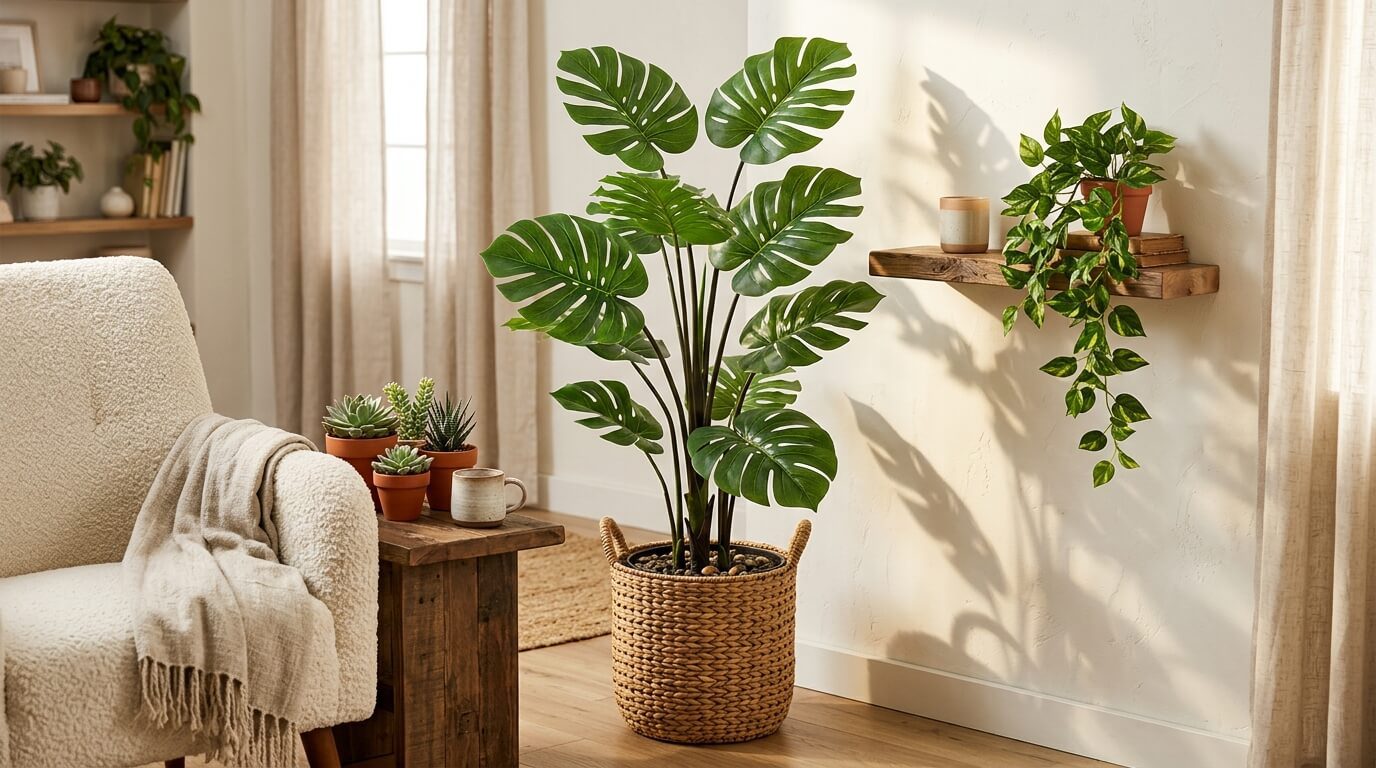

Artificial Plants for Home Decor: Complete Guide to Stylish Faux Greenery
Artificial plants for home decor have come a long way from the dusty plastic ferns of decades past. Today’s faux botanicals are so convincingly lifelike that even experienced interior designers use them — not as a compromise, but as a deliberate choice. Whether you’re dealing with a low-light apartment, a busy lifestyle that leaves no time for watering schedules, or simply a space that real plants refuse to thrive in, artificial plants offer a permanent solution without sacrificing style.
The range available now is genuinely impressive. From sprawling artificial monstera leaves that anchor a living room corner, to delicate faux succulents that line a bathroom shelf, there’s a convincing option for every aesthetic and every budget. I’ve spent years experimenting with greenery in my own home, and the biggest shift I’ve noticed is how much quality has improved — even mid-range options now have textured, matte leaves with natural color variation that photograph beautifully and hold up for years.
This guide walks you through everything you need to know: which types of artificial plants work best in which rooms, how to style them so they look completely real, what to spend (and where to save), and how to maintain them so they stay looking fresh year after year. Whether you’re decorating a minimalist studio or a maximalist family home, faux greenery belongs in your toolkit.
Why Artificial Plants Are a Smart Decor Choice
The appeal of home decor artificial plants goes well beyond convenience. Real plants bring undeniable charm, but they also bring demands — consistent light, humidity, watering, fertilizing, and pest management. For many households, that level of ongoing commitment simply isn’t sustainable. Artificial plants eliminate all of that without eliminating the visual warmth that greenery provides.
From a design standpoint, faux botanicals give you complete creative control. You can place a striking fiddle-leaf fig in a dark hallway where no living plant would survive. You can position a cascading pothos on a high shelf without worrying about whether it’s getting enough light. You choose the pot, the size, the leaf shape — and nothing changes unless you want it to.
According to research published by the Urban Forestry & Urban Greening journal, exposure to plant imagery — including artificial greenery — has been shown to produce measurable reductions in psychological stress, making faux plants a genuinely beneficial addition to home environments.
There’s also an argument for sustainability. A single high-quality artificial plant can last five to ten years, whereas real plants — especially delicate tropicals — often need replacing every season. For renters who move frequently, faux plants travel with you and require no acclimation period in a new space. Pair your greenery with thoughtfully chosen modern home decor elements and you have an effortlessly cohesive interior that holds up over time.
Types and Styles: Artificial Plants Decor for Every Room
The sheer variety of artificial plants decor on the market today means you’ll rarely struggle to find the right piece for a specific space. Broadly, faux plants fall into a few categories — and understanding them helps you shop smarter.
Tropical Statement Plants
These are the showstoppers: oversized monstera, fiddle-leaf figs, bird of paradise, and banana leaf plants. They’re typically sold on stems 4–6 feet tall and work best in living rooms, entryways, and open-plan spaces where they can anchor a corner without competing with surrounding furniture. The best versions have individually weighted leaves that can be gently repositioned to look more natural.
Trailing and Hanging Varieties
Faux pothos, string of pearls, ivy, and tradescantia work beautifully in hanging baskets, on top of bookshelves, or draping from floating shelves. They add organic movement to a room in a way that upright plants can’t. One thing I’ve learned: always fluff and separate the individual vine strands when you first unbox them. They arrive compressed and look dramatically better after five minutes of gentle reshaping.
Succulents and Cacti
These smaller varieties are among the most convincing faux plants available, largely because the real versions have such a waxy, structured appearance that high-quality plastic replicates it almost perfectly. Grouping three to five different succulent varieties in a single low tray creates a striking arrangement for coffee tables, bathroom counters, and windowsills.
Mix two or three different leaf textures and heights in the same pot or planter for a more natural, layered look. Real plant arrangements are rarely all one species — your faux groupings shouldn’t be either.
Bonsai and Topiary
Artificial bonsai trees and sculpted topiaries carry a sculptural, architectural quality that works particularly well in minimalist wall decor contexts — they add organic shape without visual noise. A well-made faux bonsai on a console table or fireplace mantle reads as a considered design choice rather than a decoration afterthought.
Small Artificial Plants for Home Decor
Small artificial plants for home decor punch well above their size in terms of visual impact. The key is intentional grouping and thoughtful placement rather than dotting them randomly around a space.
Bathroom shelves, kitchen windowsills, office desks, and bedside tables are all natural homes for compact faux greenery. A cluster of three or four mini succulents in varying heights, placed on a wooden tray alongside a candle and a small decorative object, creates a purposeful vignette that feels genuinely designed rather than assembled.
Pots and planters matter enormously at this scale. A cheap-looking pot undermines even the most realistic artificial plant. Opt for terracotta, ceramic, or woven baskets — materials with texture and weight that signal quality. Small artificial plants for home decor in sleek white or matte black pots work particularly well against darker paint colors, while natural terracotta suits warmer, earthier schemes.
The odd number rule applies to small plant arrangements: groupings of three or five always look more natural and intentional than even-numbered pairs. Use varying heights to create visual rhythm.
Tall Artificial Plants for Home Decor
Tall artificial plants for home decor serve an architectural function — they fill vertical space, draw the eye upward, and give a room a sense of lush, layered scale that no piece of furniture can quite replicate. A 5-foot artificial olive tree in a woven rattan basket, for example, can completely transform a bare corner into a focal point that feels warm and lived-in.
When choosing tall plants, pay close attention to the trunk and stem quality, not just the leaves. Cheap tall plants often have obviously hollow or flimsy trunks that give them away immediately. Better options use moss-wrapped or textured stems that genuinely mimic natural bark. Fill the base pot with real soil, decorative pebbles, or preserved moss to sell the illusion further — this small detail makes a disproportionate difference.
Positioning tall artificial plants for home decor in corners behind sofas or beside reading chairs creates a canopy effect that makes a space feel more intimate and cozy. For rooms with high ceilings, placing a tall plant in a raised planter stand adds another 12–18 inches of height and keeps proportions balanced.
Avoid placing tall artificial plants in direct, sustained sunlight. UV exposure fades faux foliage over time, causing leaves to yellow or bleach unevenly. If your space gets intense sun, look for plants explicitly labeled UV-resistant or UV-stabilized.
Where to Place Artificial Plants for Home Decor Indoor
One of the genuine advantages of artificial plants for home decor indoor is total placement freedom. There’s no need to chase light sources or optimize for humidity. That said, placement still matters enormously for the visual result — and a few room-by-room principles can guide you.
Living Room
The living room is where most people spend the most time, so it rewards the biggest investment in quality. A large floor plant in a statement pot beside the sofa or TV unit creates an immediate impression. Layer in smaller trailing plants on shelving units to add depth and texture. If you’re designing around a home color palette that leans neutral, green foliage provides a natural accent color that feels calming and organic rather than decorative.
Bedroom
Bedrooms benefit from greenery that’s calming rather than dramatic. Soft, rounded leaf forms — think faux eucalyptus, trailing pothos, or delicate ferns in hanging planters — work better here than spiky tropical statement plants. Place a small arrangement on the dresser or nightstand for a spa-like feel without the watering responsibility.
Kitchen and Bathroom
These rooms are where real plants often struggle most — inconsistent humidity in bathrooms, heat and grease in kitchens — making faux plants a particularly practical choice. Herb-style arrangements in small terracotta pots work well on kitchen counters or window ledges, adding a homegrown feel without any of the actual growing. In bathrooms, high-quality faux ferns on the back of the toilet or a trailing vine on a shelf add greenery to a typically sparse space.
Home Office
Studies from Harvard Business Review have documented the positive effect of greenery on focus and productivity in workspaces. A mid-sized artificial plant beside your monitor — something with varied leaf shapes rather than a uniform bush — adds visual interest without distraction. Combined with warm task lighting, the effect is a workspace that genuinely feels inviting to sit at.
How to Use Artificial Plants in Home Decor
How to Use Artificial Plants in Home Decor: Layering for Depth
The most common mistake people make with artificial plants is treating them as individual decorative objects rather than elements in a layered composition. Real indoor jungles work because plants exist at multiple heights simultaneously — floor level, table level, shelf level, hanging level. Replicating that layering with faux greenery is what separates a convincing styled interior from one that looks flat.
Start with your largest floor plant as the anchor, then work inward and upward with medium and small varieties. Add at least one hanging or trailing element to break the horizontal lines and introduce movement. Think about leaf size variety too — pairing large, bold monstera leaves with delicate, wispy fern fronds creates contrast that feels natural rather than manufactured.
For a living room or bedroom arrangement, consider how your plants interact with LED lights for living room settings. Warm ambient lighting near a tall faux tree casts natural-looking shadows on the leaves and dramatically increases the illusion of life. It’s a small detail that makes a huge difference in evening.
How to Make Artificial Plants for Home Decor Look Real
Realism in faux plants comes down to three things: quality of the plant itself, quality of the container, and quality of the base. Start with silk or latex-leaf plants rather than cheap plastic — the texture and color variation are noticeably more convincing. Choose pots with some weight and natural material character. Then fill the visible soil area with preserved moss, real pebbles, or actual potting mix. This last step alone transforms the look entirely — even an average-quality faux plant looks dramatically more believable sitting in real soil.
Lightly misting artificial plants with water just before guests arrive gives leaves a subtle sheen that reads as fresh and alive — especially effective with large tropical leaf varieties like monstera or fiddle-leaf fig.
Don’t forget to bend and reshape leaves when you first set up a faux plant. They arrive folded for shipping, and five minutes spent gently bending each stem to face different directions and angles makes the arrangement look genuinely organic. Some premium artificial plant brands even recommend lightly warming the stems with your hands to make them more pliable during this shaping process.
Cost Breakdown: What to Expect at Every Budget
Artificial plants span an enormous price range, and knowing what you get at each tier helps you allocate your budget where it matters most. The biggest impact usually comes from investing in the one or two statement pieces that anchor a room, then filling in with affordable smaller plants for supporting arrangements.
| Budget Tier | Price Range | What You Get | Best For |
|---|---|---|---|
| Budget | $5–$20 | Basic plastic or fabric succulents, small cacti, simple stems | Fillers, grouped arrangements, kids’ rooms |
| Mid-Range | $25–$80 | Silk or PE leaves, decent trunks, reasonable leaf color variation | Shelving plants, bedroom greenery, medium statement pieces |
| Premium | $90–$250 | Real-touch latex or silk, weighted trunks, UV resistance, hand-painted details | Living room anchors, entryway statements, photographed spaces |
| Luxury | $250+ | Near-botanical realism, custom sizing, designer pot options included | High-end interiors, commercial staging, long-term investment pieces |
It’s worth noting that a mid-range artificial plant in a quality pot will almost always outperform a luxury plant in a cheap container. Budget accordingly — sometimes spending $15 less on the plant and $15 more on the planter produces a noticeably better result. You can also add texture and personality to any room by pairing greenery with affordable horse rugs for the home or similar layered textile elements for a rich, collected look.
Common Mistakes to Avoid
Even well-intentioned decorators make the same faux greenery missteps. Avoiding these saves money and produces better results from the start.
- Buying too small: One of the most common errors is choosing plants that are proportionally too small for their space. A 2-foot plant that would look striking in a small nook looks lost in a large living room. Err on the side of going larger than you think you need.
- Ignoring the pot: An obviously cheap pot undermines even the best quality plant. Always budget for a quality planter alongside the plant itself.
- Leaving the base exposed: An empty, clearly synthetic base is an immediate tell. Cover it with moss, pebbles, soil, or even a cluster of small decorative stones.
- Overcrowding a space: More is not always more. Three well-placed, quality faux plants create a better impression than ten cheap ones scattered around a room.
- Buying obvious shiny plastic: Shiny, uniformly green plastic leaves look fake in every light condition. Prioritize matte, varied-color leaves with subtle texture — even at budget price points, these exist.
- Never reshaping: Artificial plants need periodic adjustment. Take five minutes every few months to reposition and fluff the leaves to prevent them from looking flat or compressed.
- Placing in direct sunlight without UV protection: Fading from UV exposure is the main thing that degrades faux plants over time. If a window gets direct afternoon sun, either choose UV-stabilized plants or position them out of the direct beam.
Longevity & Maintenance
One of the most appealing promises of artificial plants is that they’re low maintenance — and they genuinely are compared to living plants. But “low maintenance” doesn’t mean zero maintenance. A proper care routine keeps your faux greenery looking fresh and extends its lifespan significantly.
Weekly
- Dust leaves with a soft, dry microfiber cloth
- Reposition any stems that have shifted
- Check for visible dirt or pet hair accumulation
Monthly
- Wipe leaves with a lightly damp cloth
- Inspect for UV fading or discoloration
- Reshape overall plant form thoroughly
- Clean the pot or planter exterior
Seasonally
- Deep clean with mild soap and water spray
- Rotate plant position for even light exposure
- Consider moving to seasonal arrangements
For large floor plants, the most effective cleaning method is taking them outside on a calm day and using a hairdryer on the cool setting to blow dust off the leaves. This reaches the undersides of leaves and crevices that a cloth can’t get to easily. For smaller plants, a gentle shake over a trash can removes the majority of surface dust in seconds.
High-quality artificial plants — particularly silk and real-touch latex varieties — can genuinely last a decade or more with proper care. The Spruce’s guide to artificial plant care notes that the most significant factor in longevity is UV protection — plants in rooms with strong direct sunlight should be treated with a UV-protective silk plant spray every six months to prevent color degradation. This simple step can dramatically extend the visual life of premium pieces.
Storage matters if you rotate your decor seasonally. Store artificial plants upright or with their leaves gently wrapped in tissue paper inside a box — never compressed or folded tightly. A few minutes of reshaping after storage will restore them, but preventing major crush deformation in the first place saves time.
Frequently Asked Questions
How to use artificial plants in home decor without them looking cheap?
The key to making artificial plants look genuinely stylish is focusing on three details that most people overlook: the pot quality, the base coverage, and the leaf reshaping. Always use planters in natural materials — terracotta, ceramic, woven rattan — rather than the plastic pot the plant often ships in. Cover the visible base area with real moss, pebbles, or soil so there’s no synthetic base showing. Finally, spend a few minutes bending and positioning individual leaves in slightly different directions so the plant looks organic rather than symmetrically manufactured.
Lighting placement also plays a major role. A faux plant near a warm-toned lamp or in the soft light of a window looks far more convincing than one sitting under harsh overhead fluorescents. Grouping plants at different heights rather than placing them alone also adds to the realistic effect considerably.
What are the best types of artificial plants for home decor indoor?
For indoor spaces, the most popular and convincing artificial plants include monstera, fiddle-leaf figs, pothos, snake plants, and olive trees for larger statement pieces. Succulents, ferns, and trailing ivy work beautifully as smaller accent plants. The best artificial plants for home decor indoor are made from silk, real-touch latex, or high-quality polyethylene — materials that have natural-looking texture and matte, varied coloring rather than uniform shiny green.
Your choice should be driven by the scale of the space and the existing decor style. A Scandinavian-inspired room suits clean-lined plants like snake plants or eucalyptus stems, while a boho space benefits from lush trailing vines and layered tropical foliage.
How to make artificial plants for home decor look real?
The most impactful single thing you can do to make artificial plants for home decor look real is to add real elements to the base. Filling the planter with actual potting mix, real pebbles, or preserved moss instantly makes the arrangement look ten times more convincing because it grounds the artificial plant in a genuinely organic context. Pair this with a quality ceramic or terracotta pot rather than a plastic one and the combination is often convincing even to plant enthusiasts.
Beyond the base, focus on leaf shaping — use your hands to gently bend and angle individual leaves so they face different directions, mimicking how real plants grow toward light sources. A very light mist of water on the leaves before anyone sees them also gives a subtle freshness that looks natural. For large tropical plants, occasionally wiping leaves with a very slightly damp cloth removes dust and restores that healthy-leaf sheen.
Are artificial plants good for home decor compared to real ones?
Artificial plants offer several genuine advantages over real ones for home decor purposes. They require zero maintenance, can be placed anywhere regardless of light levels, never attract pests, and don’t need watering, repotting, or fertilizing. For busy households or spaces with challenging light conditions — dark hallways, windowless rooms, high-traffic areas — faux plants are often the more practical and durable choice.
Real plants offer benefits that artificial ones genuinely can’t replicate, including air purification (though research from NASA’s Clean Air Study suggests you’d need a very high density to see meaningful air quality effects) and the living, changing quality that real plants bring. Many people choose to blend both — real plants in spots where they’ll thrive, artificial ones where they won’t.
What size artificial plants work best in a living room?
For most living rooms, a combination of at least one floor plant in the 4–6 foot range alongside medium and small accent pieces creates the most balanced, layered result. A single large floor plant — fiddle-leaf fig, monstera, or bird of paradise — should be the visual anchor, placed in a corner or beside a sofa where it won’t obstruct traffic flow. From there, medium trailing plants on shelving and small succulents or stems on coffee tables fill out the space.
The most common mistake in living rooms is choosing plants that are too small. A plant that looks fine in the store or in an online product photo can look underwhelming and out of scale in an actual room. When in doubt, size up — a larger plant that genuinely fills its corner is always more impactful than a smaller one that gets lost in the space.
How do I clean and maintain artificial plants to keep them looking fresh?
Regular dusting is the single most important maintenance step for artificial plants. Dust accumulates on leaves surprisingly quickly — particularly in rooms with upholstered furniture, rugs, or pets — and a dusty artificial plant looks obviously fake from across the room. A weekly wipe with a dry microfiber cloth prevents buildup. For large floor plants with many leaves, using a hairdryer on the cool setting outdoors is the most efficient method.
Monthly, wipe leaves with a cloth barely dampened with water (no cleaning products needed for most faux plants). Once or twice a year, if the plant is small enough, a gentle shower rinse and air dry works well. For UV exposure, apply a UV-protective silk plant spray every six months for any plant near a window that gets direct sunlight — this is the main factor that causes fading over time. With this routine, a good-quality artificial plant should look fresh for five to ten years.
Where should I place small artificial plants for home decor?
Small artificial plants for home decor work best in locations where they can be part of a styled vignette rather than sitting alone. Bathroom shelves, bedroom nightstands, kitchen countertops, office desks, and floating shelves are all ideal spots. Group two or three small plants with other decorative objects — a candle, a small sculpture, a book — on a tray or wooden board for a purposeful, curated look that feels designed rather than just placed.
At small scales, the pot choice becomes even more critical because it occupies proportionally more of the visual. Choose planters with texture and character — hand-thrown ceramics, woven baskets, hammered metal, weathered terracotta — rather than smooth, featureless plastic. The pot elevates the plant and helps the whole arrangement read as a considered decor choice.
Can artificial plants be used in bathrooms and kitchens?
Absolutely — and they’re often the best choice for these rooms precisely because real plants can struggle with the humidity fluctuations and temperature changes typical of kitchens and bathrooms. Artificial plants for home decor indoor in bathrooms add a spa-like quality to the space without any concerns about mold, overwatering, or insufficient light. Faux ferns, eucalyptus, and trailing pothos all work particularly well in bathroom environments.
In kitchens, faux herb arrangements in small terracotta pots on the windowsill or counter give a fresh, homegrown feel without the need to actually maintain living herbs. Keep kitchen artificial plants away from areas directly above the stove where grease and heat can accumulate on leaves — a shelf or windowsill a meter or more away is a better position. Clean kitchen faux plants slightly more frequently to remove any airborne grease particles that can make leaves look dull.
Final Thoughts: Building a Home That Feels Green and Alive
The beauty of committing to artificial plants for home decor is the freedom it gives you to design without compromise. You’re no longer working around light conditions, travel schedules, or plant survival rates — you’re working purely with what looks best and makes the space feel most like home. And when you invest in quality pieces, treat the arrangement with the same care you’d give any design element, and maintain them properly over time, the results genuinely hold up.
Start with one statement piece — a tall floor plant that fills an awkward corner, or a lush trailing vine on your most-visited shelf — and see how it changes the feel of the room. From there, the layering becomes intuitive. You’ll naturally want to add more as you see how much greenery warms and softens even the most minimal spaces.
If you’re deep into styling your space, it’s worth exploring how greenery works in context with your broader decor scheme. Think about your overall home color palette and how different leaf tones — deep forest green, silver-grey eucalyptus, warm olive — complement your walls and textiles. Look at how your lighting choices interact with the plants you’ve placed. Artificial greenery doesn’t exist in isolation — it’s part of the whole visual language of your home, and when it’s chosen and placed thoughtfully, it becomes one of the most impactful elements in it.