
Boho Home Decor Ideas: Expert Guide for 2026
If you’ve been scrolling through Pinterest lately, chances are you’ve fallen headfirst into the warm, layered, wonderfully eclectic world of boho home decor ideas. There’s something almost magnetic about the style — the woven wall hangings, the macramé, the trailing plants, the mismatched cushions that somehow all make perfect sense together. Bohemian decorating has surged in popularity over the past few years, and in 2026 it’s showing absolutely no signs of slowing down. In fact, it’s evolving in exciting directions, blending with other aesthetics in ways that make it feel completely fresh.
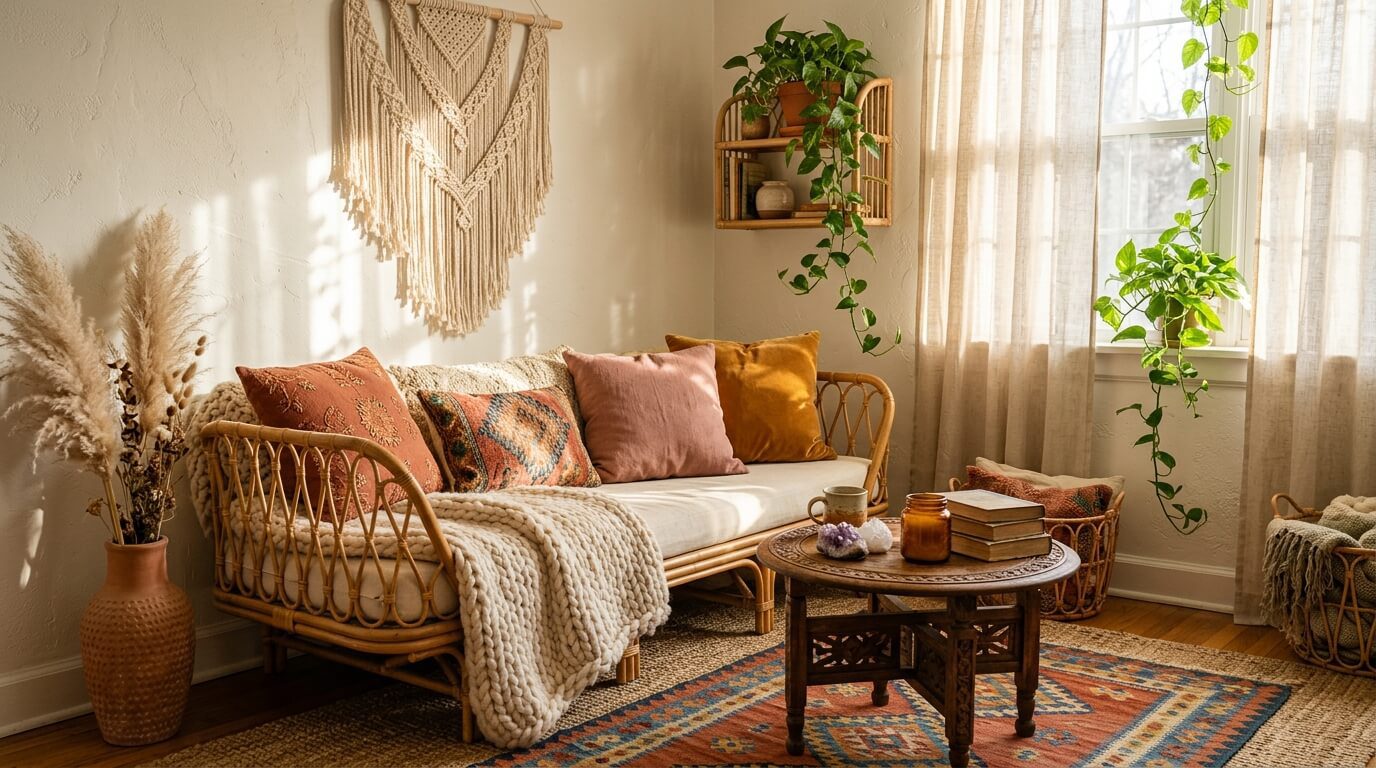
Boho home decor ideas draw from a rich tapestry of global influences, natural materials, and a free-spirited philosophy that values beauty over rigid rules. At its core, boho style layers textures, patterns, and organic elements — think rattan furniture, kilim rugs, dried botanicals, and warm earthy tones — to create spaces that feel deeply personal, well-traveled, and effortlessly relaxed. It’s the opposite of sterile minimalism, and that’s precisely why so many people love it.
In my experience decorating rooms on a real-world budget, bohemian style is one of the most forgiving and rewarding aesthetics you can work with. You don’t need to match everything perfectly — in fact, the beauty of boho chic home decor is that “perfectly imperfect” is the whole point. Whether you’re transforming an entire living room or simply refreshing a single corner, this guide walks you through every dimension of the boho style so you can make decisions that feel authentically yours.
What Is Boho Style in Home Decor?
What is boho home decor and where did it come from?
The word “bohemian” originally referred to artists, writers, and wanderers in 19th-century Europe who lived outside conventional society — people who valued creativity, freedom, and cultural exchange over conformity. That spirit translated directly into an interior design philosophy that’s been evolving ever since. Boho home decor pulls from North African textiles, Moroccan lanterns, Indian block prints, Southwestern patterns, and earthy Scandinavian minimalism, weaving them into spaces that feel globally inspired and personally meaningful.
What makes it genuinely different from other design styles is its intentional lack of rigid rules. According to the Smithsonian Magazine, the bohemian movement has always been defined by resistance to mainstream aesthetics — a principle that still drives boho decor today. You’re not buying a matching set from a catalog; you’re curating pieces that tell a story. A ceramic pot from a local artisan market, a vintage Persian rug found at a thrift store, a hand-woven throw brought back from a trip — these are the building blocks of authentic boho style.
What is boho style home decor versus other interior design trends?
Compared to contemporary minimalism (which prizes empty space and neutral uniformity), boho decor leans into abundance — but a curated, intentional abundance. It differs from maximalism too, because there’s always a grounding palette of warm neutrals and natural materials tying everything together. Think of it as maximalist warmth with bohemian soul. Where modern farmhouse decor favors shiplap and clean lines, boho embraces organic curves, hand-crafted imperfections, and layers upon layers of texture.
The term “boho chic” gained mainstream popularity in the early 2000s when celebrities like Sienna Miller and Kate Moss embraced the free-spirited aesthetic in their fashion — and it quickly crossed over into interior design, where it’s been a dominant force ever since.
Core Elements of Boho Style Home Decor
Understanding the foundational building blocks of boho style home decor makes it much easier to shop intentionally and decorate with confidence. The style has a visual language — once you learn it, you’ll start seeing it everywhere, and you’ll know exactly what belongs in your space.
Natural Materials: Rattan, jute, bamboo, linen, cotton, wood, and stone are the backbone of any boho space. These materials bring warmth and tactility that synthetic alternatives simply can’t replicate. A rattan pendant light over a dining table, for example, instantly reads as bohemian — and it costs as little as $35 from most home goods stores.
Layered Textiles: This is where boho decor really sings. Kilim rugs layered over sisal, embroidered cushions piled on a linen sofa, a chunky knit throw draped over a rattan chair — layers create depth and coziness. Don’t be afraid to mix patterns here; the secret is keeping your color palette cohesive even when the patterns vary wildly.
Plants, Everywhere: Trailing pothos, lush fiddle-leaf figs, clusters of succulents, hanging air plants — botanicals are non-negotiable in a boho interior. They bring life, color, and that essential connection to the natural world. If you struggle to keep real plants alive (no judgment — I’ve killed my share), high-quality artificial plants for home decor can achieve the same lush visual effect with zero maintenance.
Warm, Earthy Color Palette: Terracotta, ochre, dusty rose, sage green, burnt orange, cream, and warm browns form the core boho palette. These shades reference the natural world and create an enveloping warmth that cooler, more modern palettes can’t match. Accent with jewel tones — deep teal, rust red, magenta — for pops of unexpected richness.
Eclectic Art & Wall Decor: A boho wall is never bare. Gallery walls mixing vintage prints, macramé hangings, woven baskets, and botanical illustrations are classic expressions of the style. You can pair this beautifully with thoughtful minimalist wall decor elements for negative space — a single striking macramé piece against a whitewashed wall can be just as powerful as a full gallery arrangement.
Start with your rug and work outward. In boho decor, the rug is almost always the anchor piece — once you have a pattern and color palette you love on the floor, every other decision (cushions, throws, wall art) becomes much easier to make.
Boho Home Decor Living Room Ideas That Actually Work
The living room is where boho style truly thrives, because it’s the space where you have the most freedom to layer, collect, and display. Boho home decor living room setups range from minimally boho (a rattan chair, a kilim rug, a few trailing plants) to fully immersive spaces where every surface tells a story. Here’s how to approach it at different levels.
What is boho style in home decor when applied to a living room?
In a boho living room, the goal is comfort layered with character. Start with a low-slung sofa — ideally in a natural linen or cotton fabric — and build around it with a layered rug situation (a flatweave kilim over a neutral jute rug is a classic combination). Low coffee tables, floor cushions, and poufs create that relaxed, close-to-the-ground feeling that’s so central to the aesthetic.
Lighting matters enormously in a boho living room. Warm Edison bulbs, rattan pendant lights, Moroccan lanterns, and salt lamps all contribute to that golden, atmospheric glow. For a quick upgrade that costs less than $30, consider swapping your overhead light’s plain bulb for warm-toned LED filament bulbs — the difference is remarkable. A string of warm LED lights for living room spaces, draped along a shelf or behind a sofa, adds that dreamy, layered ambiance that’s practically synonymous with boho style.
Wall treatments in a boho living room can be as simple as a gallery arrangement of framed prints and woven baskets, or as dramatic as a full botanical mural on a feature wall. Macramé wall hangings — especially larger statement pieces measuring 24 inches or wider — make an immediate impact and cost between $25 and $120 depending on size and complexity. I once transformed a completely bare rental apartment wall with a $45 macramé piece and three potted plants on a floating shelf. Guests constantly asked if I’d had it professionally decorated.
In a boho living room, aim for at least three distinct textures visible from any seated position — for example, a woven rug underfoot, a linen sofa behind you, and rattan furniture beside you. That tactile variety is what gives the style its warmth and depth.
Don’t overlook the floor in your living room planning. Beyond rugs, floor cushions and large poufs (especially those covered in kilim or patchwork fabric) expand seating options while staying completely on-brand. If you have hardwood or tile floors, a large tribal-style rug in the 8×10 foot range really anchors the space. Affordable options are available at home decor retailers, and even horse rugs designed for interiors — like the horse rugs for the home cheap options available today — can bring striking pattern and texture to your boho living room floor for a fraction of typical rug prices.
Boho Chic Home Decor: Elevated & Refined Approaches
Boho chic home decor takes the free-spirited foundations of traditional bohemian style and refines them — the result is spaces that feel sophisticated and intentional without losing any of the warmth or personality. Think of it as the difference between a well-traveled artist’s studio and a luxury boutique hotel that happens to be obsessed with vintage textiles. Both are beautiful; boho chic just leans slightly more toward the latter.
The key distinguishing features of boho chic are quality materials, a more restrained color palette, and thoughtful negative space. Instead of piling every beautiful object you own onto every shelf, you edit ruthlessly — keeping only the pieces that genuinely earn their place. A single stunning ceramic vase from a local artisan, a beautifully preserved vintage mirror with an ornate gilded frame, a cashmere throw in a warm ivory tone — these feel chic because of their quality, not their quantity.
Furniture in a boho chic space tends toward clean lines with organic shapes — think curved velvet sofas in dusty rose or terracotta, vintage bentwood chairs, antique dressers refinished in chalk paint. Mixing one or two statement vintage pieces with newer, simpler items creates that effortlessly layered look. Marble and brass accents work beautifully here too, adding a glam element that pure bohemian decor sometimes lacks.
For the walls, boho chic favors large-scale art over gallery walls — a single oversized botanical print or abstract canvas in warm earthy tones makes far more impact than ten small frames crammed together. Pair with simple linen or jute curtains that puddle slightly on the floor, and you’ve got a room that feels both effortlessly casual and deeply stylish. This approach pairs particularly well with modern home decor elements — mixing a sleek marble side table into a boho chic living room creates that beautiful tension between old and new that defines the best contemporary interiors.
Boho chic can tip into “generic Instagram decor” territory if you’re not careful. Avoid buying wholesale pampas grass arrangements and mass-produced macramé from big-box stores without mixing in genuinely unique pieces. The chic in boho chic comes from curation, not just purchasing the right products.
Boho Witchy Home Decor: Where Magic Meets Earthy Style
One of the most fascinating evolutions in bohemian decorating is the rise of boho witchy home decor — a darker, more mystical subgenre that leans into crystals, celestial motifs, moody botanicals, and ritualistic objects. It’s not about Halloween aesthetics or anything theatrical; it’s about creating spaces that feel deeply atmospheric, intentional, and connected to something ancient and meaningful.
The color palette shifts in boho witchy decor. While standard boho relies on warm terracotta and cream, the witchy subgenre embraces deep plum, forest green, inky black, and charcoal — always balanced with natural wood tones and aged gold accents. Think of a room lit by beeswax candles, shelves lined with dark glass bottles, dried herb bundles hanging from the ceiling, and a large amethyst cluster on the coffee table. It’s atmospheric in the best possible way.
Crystal clusters — amethyst, rose quartz, obsidian, selenite — are foundational to boho witchy home decor and double as genuine conversation pieces. Cluster a few crystals of varying sizes on a wooden tray with a small candle and a dried botanical bundle, and you have an instant altar-style vignette that looks editorial and intentional. Dried flowers and herbs — lavender, eucalyptus, black dried roses, wheat stalks — are inexpensive (often under $10 a bundle) and last for months.
Celestial motifs — moon phases, stars, sun faces — appear on textiles, wall art, and ceramics in the witchy boho space. A moon phase wall hanging in hammered brass or black iron is a stunning statement piece. Layer it with dark velvet cushions, a worn Persian rug in burgundy and navy, and flickering string lights tucked behind a bookshelf full of well-loved books, and the atmosphere practically creates itself.
According to the Mintel consumer research group, interest in crystals, astrology, and spiritually themed home objects has grown by over 40% among millennial and Gen Z consumers since 2020 — making boho witchy decor one of the fastest-growing interior design subgenres today.
Budget Breakdown: What Boho Decor Really Costs
One of the biggest misconceptions about boho home decor is that it requires a large budget. In reality, it’s one of the most budget-friendly styles you can pursue — because thrifted, handmade, and naturally sourced items are not just acceptable, they’re ideal. Here’s a realistic breakdown of what you might spend transforming a living room with boho style home decor.
| Item | Budget Range | Mid-Range | Investment Piece |
|---|---|---|---|
| Area Rug (8×10 ft) | $45–$90 | $120–$250 | $400–$800+ |
| Rattan/Wicker Chair | $30–$60 (thrifted) | $80–$150 | $200–$500 |
| Macramé Wall Hanging | $20–$45 | $50–$100 | $120–$300 (artisan) |
| Cushion Covers (set of 4) | $18–$35 | $40–$80 | $90–$200 |
| Pendant Light (rattan) | $25–$50 | $60–$120 | $150–$400 |
| Plants (3–5 medium) | $15–$40 | $50–$100 | $120–$250 (rare varieties) |
| Throw Blanket | $15–$30 | $40–$75 | $100–$200 (cashmere) |
| Estimated Total | $168–$350 | $440–$875 | $1,180–$2,650 |
These figures reflect what I’ve personally spent sourcing pieces from a combination of thrift stores, Amazon, local markets, and specialty retailers. The beauty of boho style is that mixing price points is not just acceptable — it’s encouraged. A $400 vintage Persian rug paired with a $22 macramé hanging from Etsy and three $8 thrifted rattan frames looks absolutely cohesive and intentional.
Best Boho Home Decor Trends for 2026
Boho style evolves constantly, absorbing new influences while staying true to its free-spirited roots. Here’s what’s defining the aesthetic in 2026, based on what’s trending across interior design publications and social platforms right now.
- Desert Boho: Warm sandy tones, terracotta pottery, cacti and succulents, and Southwestern textile patterns dominate this dusty, sun-drenched subgenre that’s everywhere in 2026.
- Boho Japandi: The collision of Japanese minimalism and Scandinavian warmth with bohemian texture — think wabi-sabi ceramics, linen, rattan, and negative space used with intention.
- Global Maximalism: A return to full, layered rooms with pieces from multiple cultural traditions — Moroccan, Indian, Turkish, West African — creating spaces that feel curated over a lifetime.
- Handmade & Artisanal Focus: Mass-produced boho decor is giving way to a preference for one-of-a-kind pieces — pottery, weavings, woodwork — that carry genuine human craft.
- Dark Botanicals: Moving beyond the classic greenery-heavy boho, dark dried florals, black-leaved plants (like Black Velvet Alocasia), and moody botanical art are having a major moment.
- Grounded Neutrals With Bold Textile Pops: Instead of an all-warm-neutral room, 2026 boho spaces use a restrained neutral base and then introduce one or two bold textile pieces — a hand-blocked indigo runner, a vivid Oaxacan tablecloth — for visual energy.
Common Mistakes to Avoid With Boho Home Decor
Even the most well-intentioned boho spaces can go wrong. After years of styling and restyling my own home — and helping friends with theirs — here are the mistakes I see most often, and exactly how to sidestep them.
What is boho style home decor doing wrong? The most common pitfalls
Over-accessorizing without editing: Boho decor celebrates abundance, but there’s a line between curated layering and visual chaos. The fix? The “one thing at a time” rule. Add a piece, live with it for a week, and see if it genuinely adds to the space or just adds clutter. If you’re not sure, it’s probably clutter.
Buying everything from the same place: Nothing kills the authentic boho vibe faster than a room that’s entirely sourced from one big-box retailer. The style looks best when pieces come from genuinely different places — a thrift store rattan chair, an Etsy macramé, a pottery market ceramic, a vintage textile from a flea market. Mix your sources aggressively.
Neglecting lighting: Harsh overhead lighting is the enemy of boho ambiance. If your only light source is a single ceiling fixture, your space will never feel warm and atmospheric no matter how beautiful your decor is. Layer warm lamps, string lights, and candles throughout the room. The U.S. Department of Energy notes that warm-toned LED bulbs (2700K) create the closest approximation to natural candlelight — perfect for boho spaces.
Ignoring the floor: Rugs are the single most transformative element in a boho interior, and yet they’re frequently underestimated. An undersized rug — one that only sits under the coffee table instead of anchoring the entire seating area — makes a room feel disjointed. Go at least 8×10 feet for a standard living room, and don’t be afraid to layer.
Choosing the wrong plant pots: Bright white or shiny ceramic pots clash with the earthy boho aesthetic. Stick with terracotta, woven baskets, rattan holders, hammered metal planters, or anything with natural, matte texture. A beautiful plant in the wrong pot is still a missed opportunity.
Before you buy anything new, go through your existing possessions with boho eyes. Old wicker baskets, vintage scarves, wooden crates, inherited ceramic bowls — these are often the most authentic boho decor pieces you’ll ever find, and they’re already yours.
Caring for Your Boho Decor: Longevity & Maintenance
Natural materials are the foundation of boho decor, which means understanding how to care for them keeps your space looking its best for years rather than seasons. Rattan and wicker furniture should be cleaned with a soft damp cloth and kept out of direct prolonged sunlight, which can cause brittling and fading. A light application of linseed oil once a year keeps rattan supple and prevents cracking — a $12 bottle from any hardware store does the job beautifully.
Textile care is equally important. Kilim and flatweave rugs benefit enormously from regular rotation (every 6 months) to ensure even wear, and occasional professional cleaning every 12–18 months. For throw cushion covers, most linen and cotton versions wash beautifully on a gentle cycle with cold water — just air dry rather than using a machine dryer to preserve texture. According to wikiHow’s rattan care guide, consistent maintenance of natural furniture pieces can extend their lifespan by a decade or more.
Dried botanicals — pampas grass, eucalyptus, dried lavender — benefit from occasional dusting with a gentle hairdryer on a cool setting, which removes dust without damaging delicate petals or fronds. Most dried arrangements last 12–18 months before colors fade significantly. Store extras in a cool, dry space away from humidity, which causes mold and breakage.
Frequently Asked Questions About Boho Home Decor
What is boho home decor in simple terms?
Boho home decor is an interior design style rooted in bohemian philosophy — it prioritizes personal expression, natural materials, global textiles, and layered textures over matching sets and rigid rules. The aesthetic draws from a wide range of cultural influences, including Moroccan, Indian, Southwestern, and Scandinavian traditions, weaving them into spaces that feel warm, well-traveled, and uniquely personal. Key elements include rattan furniture, macramé, kilim rugs, trailing plants, earthy color palettes, and eclectic collections of art and objects. Unlike other design styles, boho decor actively encourages mixing old and new, expensive and affordable, and polished and handmade.
What is boho style in home decor versus bohemian?
“Boho” is simply the abbreviated, contemporary term for bohemian — and in practice, the two are used interchangeably. Some designers make a slight distinction: “bohemian” refers to the classic, more maximalist version of the style with heavy pattern mixing and abundant layering, while “boho” sometimes implies a slightly more edited, modern interpretation. However, these distinctions are loose and informal. Both terms describe the same foundational aesthetic: free-spirited, nature-inspired, globally-influenced interior design that values personal meaning over trend-following. Whether someone calls it boho or bohemian, the same principles of layering, natural materials, and eclectic curation apply.
How do I start decorating with boho home decor ideas on a budget?
Starting a boho interior on a budget is very achievable — in fact, thrift stores and secondhand markets are some of the best sources for authentic boho pieces. Begin with the highest-impact, lowest-cost changes: a warm-toned area rug (even a small layered kilim over a sisal mat), some trailing plants in terracotta pots, and a macramé wall hanging or woven basket display. These three elements alone can transform a plain room for under $80. From there, build gradually — add cushion covers in earthy or jewel tones, hunt thrift stores for rattan chairs and wooden furniture, and source handmade ceramics at local markets. The process of curating over time is actually what creates the most authentic boho spaces.
Can I mix boho home decor with modern or minimalist styles?
Absolutely — in fact, some of the most beautiful contemporary interiors blend boho warmth with modern or minimalist structure. The combination is often called “boho chic” or “Japandi boho” and works by using a clean, minimalist foundation (simple furniture, restrained color palette, generous negative space) and then layering boho texture on top through rugs, plants, textiles, and handcrafted objects. The key is restraint — in a hybrid space, you edit more carefully than in a pure boho room. Choose two or three exceptional boho statement pieces rather than layering every surface, and let the modern elements provide breathing room around them.
What colors are used in boho chic home decor?
The core boho chic color palette is built around warm, earthy neutrals: terracotta, cream, warm white, camel, dusty blush, and warm browns. These grounding tones are then accented with richer, more saturated shades — ochre, burnt orange, sage green, deep teal, mustard yellow, and rust red. In boho chic specifically (the more refined version of the style), jewel tones like emerald, cobalt, or deep plum might appear in smaller doses through cushions, ceramics, or art. The palette always feels warm rather than cool, organic rather than artificial, and intentionally pulled from the natural world rather than from trend forecasters.
What makes boho witchy home decor different from standard boho?
Boho witchy home decor takes the earthy, nature-connected foundation of standard boho and shifts it in a darker, more mystical direction. Where classic boho favors cream, terracotta, and warm neutrals, the witchy subgenre embraces deep forest greens, charcoal, black, and moody purples. Crystal clusters, dried herb bundles, celestial motifs (moon phases, stars, sun faces), tarot-inspired art, and candlelit vignettes replace the more conventional macramé and tropical plants. The overall atmosphere is atmospheric and intentional — it feels like a space designed for ritual and contemplation rather than purely for casual comfort, while still retaining the warmth, texture, and organic material love that defines all boho style.
How many plants do I need to achieve a boho look?
There’s no specific number, but in a boho interior, plants should feel abundant rather than sparse — a single small succulent on a large bookshelf won’t read as boho, but a cluster of three to five plants of varying heights and textures absolutely will. For a standard living room, aim for at least five to eight plants spread across different zones: a tall floor plant (fiddle leaf fig, bird of paradise) in a corner, medium trailing plants (pothos, ivy) on shelves, and smaller succulents or air plants on surfaces. Vary the containers — terracotta pots, woven baskets, hanging planters — to add additional texture. If you travel frequently or don’t have a green thumb, high-quality artificial plants can fill the visual role beautifully.
Is boho home decor still popular in 2026?
Yes — boho home decor remains one of the most consistently popular interior design styles heading into 2026, and it shows no signs of fading. Unlike trend-driven aesthetics that spike quickly and disappear, bohemian decorating has maintained its appeal for decades because it’s fundamentally about personal expression and organic living rather than following specific trend cycles. In 2026, the style continues to evolve through new subgenres — boho Japandi, desert boho, dark witchy boho — that keep it feeling fresh and relevant. The growing consumer interest in sustainable, handcrafted, and artisan-made goods also strongly aligns with core boho values, making it increasingly popular among design-conscious younger homeowners.
More Questions Answered
What is boho style home decor in one sentence?
Boho style home decor is an eclectic, nature-inspired interior design approach that layers global textiles, natural materials, plants, and handcrafted objects to create warm, personal spaces that feel lived-in and free-spirited. It draws from diverse cultural influences while prioritizing comfort, creativity, and individuality above all else.
What is boho home decor best known for?
Boho home decor is best known for its signature layered textiles — kilim rugs, macramé wall hangings, embroidered cushions, and chunky knit throws — combined with abundant plants and natural rattan or wooden furniture. These elements together create the warm, textured, globally-inspired atmosphere that makes bohemian interiors instantly recognizable.
What is boho style in home decor and what rooms does it suit best?
Boho style works beautifully in virtually any room but reaches its full potential in living rooms, bedrooms, and outdoor spaces where layering textiles and displaying collected objects has the most visual impact. A boho bedroom — with a canopy, layered throw blankets, rattan nightstands, and plants — can feel deeply cozy and retreat-like.
Final Thoughts: Making Boho Decor Genuinely Yours
The most important thing I’ve learned about decorating in the boho style is that it cannot be rushed or bought wholesale. The rooms that stop people in their tracks — the ones that feel genuinely magical — are almost always the result of patient, evolving curation. A piece found at a flea market in 2019, a plant that’s been growing for three years, a rug that came from a grandmother’s house — these are the things that give a boho interior its irreplaceable soul.
Whether you’re drawn to boho chic home decor with its refined elegance, boho witchy home decor with its mystical atmosphere, or the classic warmly layered version of boho style home decor, the underlying invitation is the same: create a space that reflects who you actually are, not who you think a magazine wants you to be. Collect slowly, prioritize natural and handcrafted materials, fill your rooms with living things, and trust your own eye over any trend report.
As you develop your boho aesthetic, you might also find yourself exploring related directions — organic modern minimalism, Japandi warmth, or Mediterranean coastal style — all of which share some DNA with the bohemian tradition. If you want to expand your decorating vocabulary beyond boho, the worlds of modern home decor, artisanal ceramics, and sustainable interior design are all rich territories worth exploring. The journey of making a home that truly feels like yours is one of the most rewarding creative projects there is — and it never really ends.