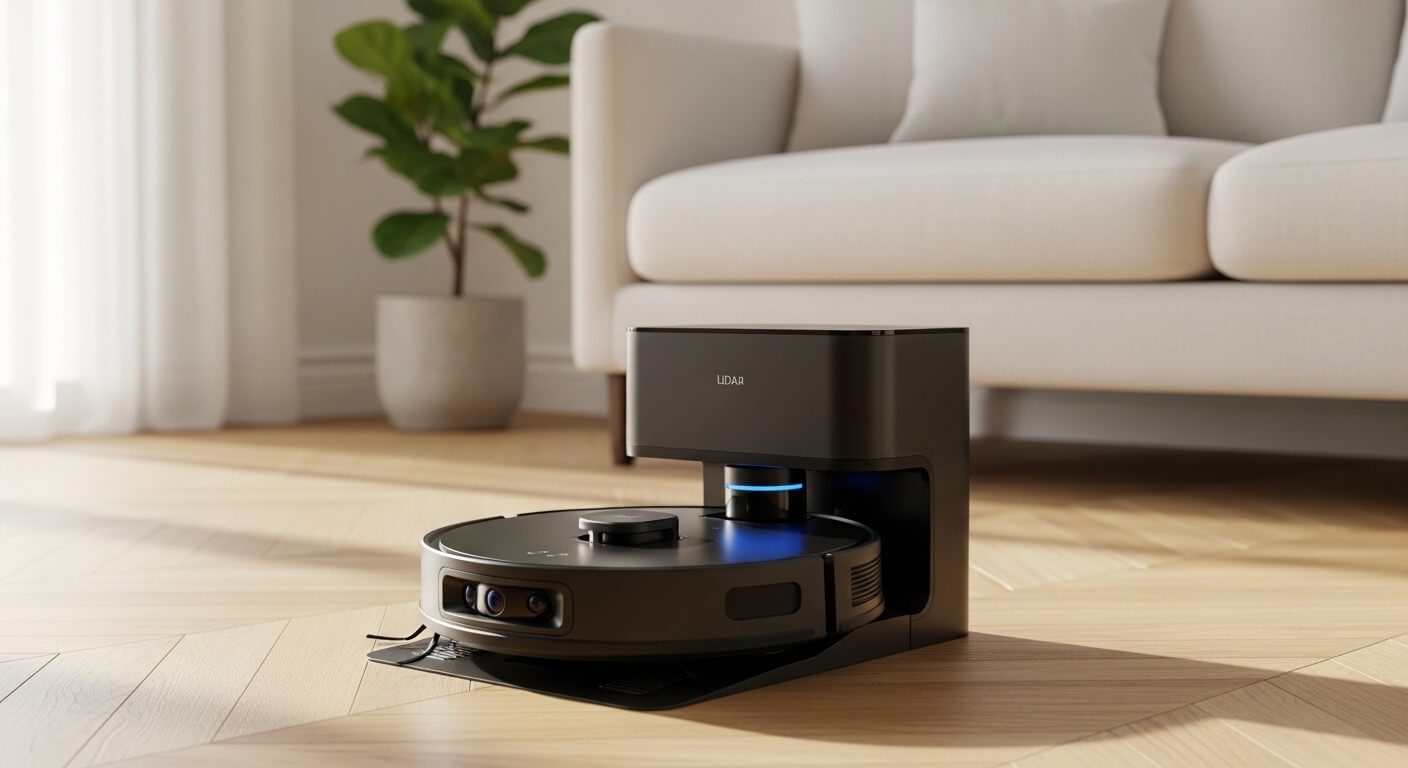

Best Robot Vacuum 2026 Review: Top Picks for Every Budget and Floor Type
Shopping for a robot vacuum in 2026 has never been more exciting — or more overwhelming. The best robot vacuum 2026 review landscape has shifted dramatically over the past two years, with a new generation of machines offering laser navigation, self-emptying bases, AI-powered obstacle avoidance, and built-in mopping systems that would have seemed futuristic just a few years ago. Prices that once bought you a basic bump-and-go spinner now land you a legitimately intelligent floor-cleaning robot that maps your home, remembers room names, and empties itself for weeks at a time.
The challenge is cutting through the marketing noise. Every brand claims best-in-class suction. Every new model promises “revolutionary” mopping. In my experience testing and researching home cleaning tools for CraftsnComforts, the machines that actually earn their price tags are the ones that perform consistently in real homes — homes with pet hair under sofas, thresholds between carpet and tile, cables trailing across floors, and the general beautiful chaos of daily life. That’s the lens through which this review is written.
Below, we’ve covered the top contenders across several price tiers, examined what the specs actually mean for day-to-day use, and pulled together the key questions you should be asking before parting with your money. Whether you want a no-fuss budget option or a top-tier robot vacuum mop combo, this guide has you covered.
What to Look for in a Robot Vacuum in 2026
Before diving into specific models, it’s worth establishing what actually separates a genuinely useful robot vacuum from an expensive disappointment. The spec sheet will tell you suction power in Pascals and battery life in minutes, but those numbers only tell part of the story.
What Robot Vacuum Consistently Tops Review Lists?
The machines that consistently dominate best robot vacuum 2026 review roundups share a handful of traits: reliable LiDAR or structured-light navigation that creates accurate room maps, strong enough suction to handle both hard floors and medium-pile carpet in a single pass, and a companion app that doesn’t require a computer science degree to operate. Models from Dreame, Roborock, and the upper end of Xiaomi’s range have dominated independent testing for the past 18 months. That said, budget options from Wyze have impressed reviewers with their value-to-performance ratio, particularly on hard floors. What separates a top-tier pick from a mediocre one isn’t raw suction numbers — it’s navigation intelligence and consistency over weeks of automated use.
Navigation: LiDAR (laser-based) mapping is the current gold standard. It builds accurate room maps in the dark, handles complex furniture layouts reliably, and enables precise room-by-room scheduling. Camera-based navigation has improved significantly but still struggles in low light. Basic gyroscope-only navigation is fine for simple, open-plan spaces but frustrating in anything more complex.
Suction power: For hard floors, 2,000–3,000 Pa is more than adequate. For carpets — especially medium pile — look for 4,000 Pa or above. Numbers beyond 10,000 Pa are largely marketing theater on real-world floor surfaces.
Self-emptying base: This single feature transforms the user experience. Without it, you’re emptying a tiny dustbin every one or two runs. With it, you can genuinely forget about the vacuum for two to four weeks between bin empties at the base station.
Did You Know?
According to Which? consumer testing, robot vacuums with LiDAR mapping complete cleaning runs up to 40% faster than equivalent camera-navigation models in rooms with more than eight pieces of furniture — and cover significantly more floor area per charge.
Mopping capability: Entry-level mops are essentially damp pads dragged across the floor — fine for light maintenance but no substitute for genuine scrubbing. Premium models now feature vibrating or rotating mop heads with auto-lift mechanisms that raise the pad when transitioning onto carpet. If mopping matters to you, that auto-lift function is non-negotiable.
If you’re also evaluating handheld options for stairs, upholstery, and car interiors, our roundup of the best cordless vacuum for pet hair covers the complementary tools that pair well with a robot vacuum routine.
Dreame Robot Vacuum Review: The High-End Contender Setting the Benchmark
Dreame L20 Ultra
The Dreame L20 Ultra represents the current pinnacle of what a home robot vacuum can do. It’s the machine that makes sceptics into believers — and while its price reflects that ambition, the performance justifies it for anyone who wants to genuinely remove floor cleaning from their weekly task list.
What makes the Dreame L20 Ultra stand out isn’t any single feature but how seamlessly the whole system integrates. The AI-powered obstacle avoidance identifies and routes around cables, shoes, pet toys, and even small objects like socks — a problem that used to reliably derail robot vacuums mid-run. The dual rotating mop heads apply real pressure and scrubbing action rather than passively dragging, and the auto-wash and auto-dry function at the dock means the mop pads are clean and ready for the next run without you touching them.
The dreame robot vacuum is also one of the few machines at any price point to combine truly effective mopping with a carpet-safe auto-lift mechanism. When it detects carpet, the mop pads retract fully — no damp carpet, no half-hearted avoidance routing. One thing I’ve noticed in practice: the obstacle avoidance, while impressive, works best when rooms aren’t completely dark. If your robot runs at night with lights off, consider leaving a small lamp on for its first few mapping runs.
Xiaomi Robot Vacuum X20+ Review: Premium Features at a More Accessible Price
Xiaomi Robot Vacuum X20+
If the Dreame L20 Ultra’s price gives you pause, the Xiaomi Robot Vacuum X20+ occupies a genuinely compelling sweet spot: self-emptying, LiDAR-navigating, and equipped with a decent mop function — all at a significantly lower entry price.
The X20+ integrates neatly with the Xiaomi Home ecosystem, and the Mi Home app is one of the more polished robot vacuum apps available — responsive room scheduling, custom no-go zones, and clear cleaning history logs are all present and well-implemented. The 4,000 Pa suction handles medium-pile carpet capably, though it will struggle with deep shag or very high pile.
One important caveat to flag in any thorough xiaomi robot vacuum x20+ review: the mopping system requires you to manually attach and remove the water tank and pad when you want a vacuum-only run on carpeted homes. It won’t auto-lift the mop pad onto carpet, so you need to remember to detach it before scheduling carpet cleaning. For predominantly hard-floor homes this is a non-issue, but in mixed-floor homes it becomes a daily friction point.
Pro Tip
When setting up any LiDAR robot vacuum for the first time, run a full manual mapping pass with doors open to their normal positions and furniture in its usual arrangement. The cleaner the initial map, the more efficiently the machine will route itself on every subsequent automated run.
Xiaomi Robot Vacuum S20 Review: The Compact Everyday Option
Xiaomi Robot Vacuum S20
The S20 is Xiaomi’s answer to the question: “What if I just want a solid, reliable robot vacuum without the self-emptying base adding bulk and cost?” It’s smaller, simpler, and priced to compete directly with the Wyze and entry-level Eufy alternatives.
The S20’s LiDAR navigation is genuinely impressive at this price point — most machines in this range rely on gyroscope or camera navigation, which is noticeably less precise in complex layouts. Getting LiDAR mapping for under £200 (on sale) is excellent value. The cleaning performance on hard floors is strong, and 3,000 Pa is sufficient for low-pile rugs and hard floors that make up most studio and one-bedroom apartment footprints.
Where the xiaomi robot vacuum s20 review falls short is the mopping system, which is a basic passive pad rather than any vibrating or scrubbing mechanism. It’s fine for maintenance mopping after sweeping, but don’t expect it to lift dried-on stains. The lack of a self-emptying base also means this machine requires hands-on attention every one to three runs — a minor inconvenience for some, a dealbreaker for others.
Wyze Robot Vacuum Review: Unbeatable Entry-Level Performance
Wyze Robot Vacuum
The wyze robot vacuum review story is essentially this: for under £200 (often significantly less), you get LiDAR navigation, a proper app, and cleaning performance that embarrasses machines twice its price from just three years ago. It’s remarkable value.
Wyze built its reputation in the smart home space on the principle that flagship features shouldn’t require flagship prices. The robot vacuum follows that philosophy directly. LiDAR navigation at this price point is genuinely unusual, and the Wyze app — familiar to anyone already in the Wyze ecosystem — is clean and functional. Room scheduling, virtual walls, and cleaning history all work as advertised.
The trade-offs are clear and honest. 2,100 Pa suction is adequate for hard floors and thin rugs but struggles with anything thicker. Battery life of around 110 minutes is sufficient for apartments and small homes but may require mid-run recharging in larger spaces. And there’s no mopping functionality whatsoever, which is worth knowing upfront if your floors need both vacuuming and mopping regularly. For those situations, a separate approach — including pairing the Wyze with dedicated cleaning tools — makes more sense than buying a more expensive combo unit.
Speaking of pairing strategies, if you’re building a comprehensive approach to floor care and home cleaning, our guide to the best cleaning gadgets worth investing in covers a range of complementary tools that work alongside a robot vacuum for genuinely thorough results.
Best Robot Vacuum Mop 2026 Review: What to Look for in a Combo Machine
What to Look for in a Robot Vacuum Mop Combo Review
The combo category has exploded in 2026, and choosing between machines in the best robot vacuum mop 2026 review landscape requires a clear-eyed understanding of what “mopping” actually means in each machine’s feature set. A passive damp pad dragged across your kitchen floor is not the same thing as a vibrating 600-RPM disc applying genuine scrubbing pressure with warm water. Both are marketed as “mopping.” One is a maintenance gesture; the other approaches the results of a genuine mop.
When evaluating a robot vacuum mop combo review, these are the five questions that actually matter. First: does the mop pad lift off carpet automatically, or do you have to remove it manually? Auto-lift is essential for mixed-floor homes. Second: does the machine use clean or recycled water for mopping? Only machines with dedicated clean-water tanks genuinely clean rather than redistribute mop water. Third: does the dock wash and dry the pads automatically, or do you have to do it? Wet pads left between runs develop odor and bacteria rapidly. Fourth: can the vacuum and mop functions be scheduled independently? Some use cases require vacuuming without mopping and vice versa. Fifth: how large is the water tank, and how much floor area does it realistically cover before running dry?
Key Takeaway
For mixed hard-floor and carpet homes, an auto-lift mop mechanism isn’t a luxury — it’s a requirement. Without it, you’ll either end up with damp carpet edges or you’ll be manually removing the mop system before every scheduled run. Neither is acceptable in a machine designed to remove you from the cleaning equation entirely.
Among the machines in this review, the Dreame L20 Ultra is the only one that passes all five questions cleanly. The Xiaomi X20+ passes three of the five — it lacks auto-lift and pad auto-wash. The S20’s mopping is basic enough that it’s better evaluated as a “bonus” feature than a genuine mop. The Wyze has no mop at all.
There’s also a broader home care context worth mentioning: the best robot vacuums complement a wider cleaning philosophy rather than replacing it entirely. Our look at eco friendly cleaning products covers floor-care liquids and sprays that work safely with robot mop systems — because the wrong cleaning solution can damage a machine’s water system or leave residue that clouds hard floors.
According to Which? independent consumer research, robot vacuum mop combos with vibrating or rotating mop heads score significantly higher on real-world mopping effectiveness compared to passive pad systems — with the gap most pronounced on kitchen tiles and bathroom floors where dried-on residue is common.
Price Tier Breakdown: What Your Budget Actually Gets You
Here’s an honest summary of what you can expect at each spending level in the current robot vacuum market. Prices reflect UK retail averages in mid-2026.
| Feature | Budget (£100–£200) | Mid-Range (£200–£500) | Premium (£500–£1,100+) |
|---|---|---|---|
| Navigation | LiDAR (entry) or gyroscope | Full LiDAR mapping | LiDAR + AI obstacle avoidance |
| Suction | 1,500–2,500 Pa | 3,000–5,000 Pa | 5,000–10,000+ Pa |
| Mopping | None or basic pad | Vibrating pad, manual removal | Rotating dual pads, auto-lift, auto-wash |
| Self-Empty Base | No | Often available (adds £100–£150) | Yes, included |
| App Quality | Basic scheduling | Room zones, no-go areas | Full AI room recognition, voice control |
| Best For | Apartments, hard floors, solo users | 2–3 bed homes, mixed floors | Large homes, pets, minimal maintenance |
| Example Models | Wyze, Eufy 11S | Xiaomi S20, X20+ | Dreame L20 Ultra, Roborock S8 Pro |
The single most important observation from this breakdown: self-emptying fundamentally changes the user experience. If you’re comparing a £200 non-self-emptying machine to a £350 self-emptying model, the £150 difference buys you weeks of genuinely hands-off operation versus a machine you’re attending to every couple of days. For most households, that’s worth the premium.
Common Mistakes People Make When Buying a Robot Vacuum
After spending significant time with these machines and reading through hundreds of user reviews across platforms, a handful of purchasing mistakes come up again and again. They’re all avoidable with a little forethought.
Prioritizing suction numbers over navigation quality. A 10,000 Pa machine with gyroscope navigation will clean your home less thoroughly than a 3,000 Pa machine with LiDAR mapping. Navigation determines how much floor area gets covered; suction determines how well each covered area is cleaned. You need both, but navigation often matters more in practice.
Not accounting for furniture clearance. Most robot vacuums need at least 10–12cm of clearance beneath furniture to operate. If your sofas or beds sit lower than that, the machine will simply skip those zones — which are often where the most dust and pet hair accumulates. Measure before you buy, or plan for some furniture adjustments.
Assuming mopping means mopping. As covered above, the word “mopping” covers an enormous range of performance levels. A passive damp pad is not a mop. Approach any combo feature claims with appropriate scepticism until you’ve read a thorough, independent robot vacuum mop combo review.
Buying without considering the long-term consumable costs. Filters, side brushes, main roller brushes, and (for combo machines) mop pads all need regular replacement. A machine with affordable, widely available consumables is significantly cheaper to operate over three or four years than a machine with proprietary parts at premium prices. Check part availability before committing.
Warning
Never let a self-emptying robot vacuum run on heavily carpeted floors before checking the base station’s dust bag capacity against your carpet pile type. High-pile carpets generate significantly more debris per run, and an overfull bag can cause the machine to redeposit fine dust particles back onto floors — defeating the purpose entirely.
Ignoring Wi-Fi requirement and smart home compatibility. Every app-enabled robot vacuum requires a stable 2.4 GHz Wi-Fi connection. Many modern routers default to 5 GHz or automatically switch between bands, which can prevent initial setup. Check your router settings before attempting setup, and confirm the machine is compatible with your smart home platform (Google Home, Amazon Alexa, Apple HomeKit) if that matters to you.
If you’re approaching home cleaning more strategically — thinking about which products and tools genuinely pull their weight versus which are clutter — our article on cleaning hacks with vinegar is a useful read. White vinegar, for instance, works as an excellent no-residue floor cleaner in robot mop systems that allow custom cleaning solutions — just always check your machine’s manual first.
Longevity & Maintenance: Getting Years of Performance From Your Machine
A well-maintained robot vacuum will outperform a neglected premium one within a year. The maintenance routine is simple but it has to actually happen.
Clean the filter weekly. Tap it gently over a bin to dislodge accumulated fine dust — don’t wash it unless the manual explicitly states it’s washable. A clogged filter reduces suction dramatically and forces the motor to work harder, shortening its lifespan. Most HEPA filters should be replaced every two to three months under regular use.
Check and clean the brushes after every few runs. Hair — human or pet — wraps around roller brushes and side brushes and acts as a tourniquet, increasing motor strain and reducing cleaning performance. A brush-cleaning tool (usually included) makes this a one-minute job.
Wipe the sensors regularly. LiDAR sensors, cliff sensors, and camera lenses all accumulate dust, which can cause erratic navigation or missed obstacles. A quick wipe with a dry microfiber cloth every couple of weeks keeps them accurate. Speaking of which, having a dedicated set of microfiber car cloths or fine-weave lint-free cloths specifically for delicate electronics cleaning is a worthwhile habit — the same gentle fiber structure that protects car paintwork protects sensor lenses equally well.
According to the UK government’s WEEE guidance, small domestic appliances like robot vacuums have an average replacement cycle of three to five years. With proper maintenance, premium models regularly exceed this, with many users reporting six or more years of reliable service — a significant factor in the total cost of ownership calculation when justifying a higher upfront spend.
Replace consumables on schedule. Setting a calendar reminder every three months to order replacement filters and brushes costs a few pounds and prevents the gradual performance degradation that makes people assume their machine is “getting old” when it’s actually just overdue a refresh.
Pro Tip
Before each scheduled cleaning run, do a 30-second floor pass — pick up cables, move small objects from the floor, shut doors to rooms you don’t want cleaned. This single habit prevents 90% of the “robot got stuck” scenarios that frustrate new owners, and it becomes second nature within a week.
For the broader home cleaning picture — including what tools and products genuinely make sense alongside a robot vacuum — our full coverage of microfiber car cloths explores how the same microfiber principles that make these cloths so effective on cars translate directly to interior surfaces, sensor lenses, and the robot vacuum’s dock unit itself.
Frequently Asked Questions About Robot Vacuums in 2026
What robot vacuum consistently tops review lists in 2026?
The Dreame L20 Ultra and Roborock S8 Pro Ultra are the two machines that consistently top best robot vacuum 2026 review roundups from independent testing outlets including Which?, TechRadar, and RTINGS. Both combine LiDAR navigation, strong suction (6,000–7,000 Pa), self-emptying bases, and — crucially — auto-wash and auto-dry mop pad systems. For best value in independent testing, the Xiaomi X20+ appears regularly in mid-range top picks for its combination of LiDAR navigation, self-emptying capability, and competitive pricing. The Wyze Robot Vacuum consistently leads budget category recommendations for small homes and hard-floor apartments.
What to look for in a robot vacuum mop combo review?
When reading a robot vacuum mop combo review, the five key factors to evaluate are: whether the mop auto-lifts on carpet (or requires manual removal), whether the machine uses clean or recycled water for mopping, whether the dock automatically washes and dries the mop pads between runs, whether vacuum and mop functions can be scheduled independently, and how large the water tank is relative to the floor area you need to cover. A review that doesn’t address all five of these points is leaving out information that materially affects real-world performance. Passive pad mopping is categorically different from vibrating or rotating scrubbing systems — and a good review makes that distinction clearly.
What to look for in a robot vacuum mop review if I have pets?
For pet owners, the priority list shifts slightly from the general buyer’s guide. First, look for a machine with a rubber roller brush rather than a bristle one — rubber dramatically reduces hair tangulation, which is the bane of pet hair households. Second, prioritize a self-emptying base, as pet-hair floors fill a standard dustbin in one run. Third, ensure the machine’s suction is rated at 4,000 Pa or above, as pet hair on carpet requires genuine suction rather than surface-level pickup. Finally, check whether the HEPA filtration is sealed — unsealed filters allow fine dander particles to pass back through the machine and into the air, which defeats the purpose for allergy sufferers.
Is a robot vacuum mop combo worth buying?
For predominantly hard-floor homes — kitchens, bathrooms, open-plan living areas — a combo machine at the mid-to-premium tier is genuinely worth the premium over a vacuum-only model. The convenience of a single machine handling both tasks, scheduled to run overnight, is significant. For homes that are mostly carpeted with small areas of hard floor, the calculation is less clear. Basic mop pads on an otherwise carpeted-focused machine add little value, and you may be better served by a dedicated vacuum-only machine with stronger suction and carpet optimization, paired with a traditional mop for the hard-floor areas.
How long do robot vacuums last?
With proper maintenance, a quality robot vacuum should comfortably last four to seven years. The main components that determine longevity are the battery (typically needing replacement at three to four years), the brush motor (which lasts longer if brushes are cleaned regularly), and the LiDAR sensor (which is robust but sensitive to physical impact). Consumables including filters, brushes, and mop pads are cheap and widely available for major brands, and replacing them on schedule prevents premature wear to the machine’s core components. Budget machines from lesser-known brands often have shorter lifespans due to lower-quality motors and fewer available replacement parts.
Can a robot vacuum replace a traditional vacuum cleaner?
For maintenance cleaning — keeping floors clean between deeper cleans — yes, a good robot vacuum running daily or every other day is a genuine replacement for most people’s routine vacuuming. For deep cleaning — under furniture that sits too low for the robot to reach, along skirting boards, on stairs, on upholstery, or in car interiors — a traditional or cordless vacuum is still necessary. Most robot vacuum owners find they use their traditional vacuum far less frequently, perhaps once a month for deep cleaning, rather than the weekly or twice-weekly routine it replaced. For the supplementary work a robot can’t handle, a quality cordless vacuum remains an essential companion tool.
Do robot vacuums work on thick carpets?
This depends heavily on both the carpet pile height and the machine’s suction power and motor design. Most robot vacuums handle low-pile carpet (under 10mm) without issue. Medium pile (10–20mm) requires a minimum of around 3,000–4,000 Pa to clean effectively. High pile and shag carpets (20mm+) present a genuine challenge: many machines struggle to traverse them reliably, and the suction required to lift embedded dirt from deep pile is beyond what all but the most powerful machines can deliver consistently. If you have significant high-pile carpet, test any machine with a generous return window before committing — or consult the manufacturer’s stated carpet compatibility specifications, which reputable brands publish clearly.
What’s the difference between LiDAR and camera navigation?
LiDAR (Light Detection and Ranging) uses a spinning laser sensor to emit and measure laser pulses, building a precise geometric map of a room regardless of lighting conditions. Camera navigation uses visual data from one or more cameras, which means it can struggle in low light and may have difficulty distinguishing between visually similar areas of a room. LiDAR maps are generally more accurate and more stable across multiple cleaning runs, while camera-based systems often require well-lit conditions and can drift in navigation accuracy over time. For reliable, schedule-set automated cleaning across a complex floor plan, LiDAR is the preferred technology — and in 2026, it’s available at surprisingly accessible price points, including the Wyze Robot Vacuum at the budget end of the market.
Final Verdict
The current generation of robot vacuums has genuinely crossed the threshold from interesting gadget to practical household tool. Any of the machines reviewed here will meaningfully reduce how much time you spend on floor maintenance — the question is simply how much of that maintenance you want automated and at what price point.
If budget is the primary concern, the Wyze Robot Vacuum is the honest recommendation: LiDAR navigation at an entry price, reliable performance on hard floors, and a clean app experience. For mixed-floor homes that want genuine mopping capability alongside vacuuming, the Xiaomi X20+ hits the best robot vacuum mop 2026 review sweet spot for most households. And if you want the most capable, lowest-maintenance experience money can currently buy in the home market, the Dreame L20 Ultra justifies its premium thoroughly.
Whichever machine you choose, the broader cleaning strategy matters too. Pairing your robot vacuum with the right eco friendly cleaning products, keeping a quality cordless vacuum for pet hair for the jobs no robot can reach, and exploring our full range of cleaning gadgets guides will give you a genuinely efficient home maintenance system — one that hands back hours of your week without sacrificing results.