
DIY Home Decor Ideas on a Budget: Expert Guide 2026
If you’ve ever scrolled through Pinterest and felt a pang of despair at your own living room, you’re not alone. The good news? You don’t need a designer’s budget to create a home that feels thoughtfully curated and genuinely beautiful. DIY home decor ideas on a budget have come a long way from the days of hot-glue disasters and craft-store chaos — today, with a little creativity and the right strategy, you can completely transform a room for under $50. I’ve done it myself more times than I can count, and the results have surprised even the most skeptical visitors.
DIY home decor ideas on a budget are creative, low-cost methods for decorating and personalizing your living spaces without spending a fortune. They typically involve repurposing existing items, thrifting, upcycling, or using affordable materials to achieve a high-end look. With the right approach, budget-friendly home decor can be just as stylish and impactful as anything from a luxury retailer.
Whether you’re moving into a new apartment, refreshing a tired bedroom, or just trying to inject some life into a neglected corner of your home, this guide covers everything from quick weekend wins to more involved projects. We’ll talk about where to shop, what to make, how to style on a shoestring, and — just as importantly — what mistakes to avoid. By the time you finish reading, you’ll have a clear, actionable plan for turning your space into something you’re genuinely proud of, without breaking the bank.
Why Budget Home Decor Actually Works
There’s a persistent myth that a beautifully decorated home requires either a large budget or a professional interior designer. In my experience, the opposite is often true — constraints force creativity. When you can’t just throw money at a problem, you end up making more intentional choices. You think harder about what you actually love, what serves a real purpose, and what reflects your personality rather than someone else’s aesthetic.
Home decor on a budget also teaches you to see potential everywhere. That battered wooden crate at the thrift store? A plant stand or a side table waiting to happen. The stack of old hardcovers gathering dust? A perfect riser for a sculptural vase. Interior design principles — balance, contrast, texture, focal points — cost absolutely nothing to apply. Understanding them is worth more than any expensive throw pillow.
Beyond the financial win, there’s a genuine emotional satisfaction to living in a space you built with your own hands. It’s one thing to order a gallery wall kit online. It’s another to curate a collection of frames from three different thrift stores, spray paint them all in one afternoon, and hang something that no one else in the world has. That sense of ownership and pride is genuinely priceless.
According to the U.S. Census Bureau, Americans spend on average over $2,000 annually on home furnishings — yet most decor experts agree that thoughtful arrangement and DIY touches can achieve 80% of the same visual impact at a fraction of that cost.
Best DIY Home Decor Ideas on a Budget for 2026
The DIY home decor landscape has shifted significantly in 2026. Trends that dominated 2024 — the maximalist grandmillennial look, the raw concrete aesthetic — have given way to something warmer and more approachable: layered textiles, natural materials, and intentional imperfection. Here are the ideas that are genuinely delivering results right now.
What are some budget-friendly home decor ideas that look expensive?
The secret to making budget decor look expensive lies in three words: scale, quality, and restraint. Instead of buying ten small cheap things, invest in one or two larger, more substantial pieces — even if they came from a thrift store. A single oversized mirror leaning against a wall, for example, instantly adds the kind of architectural presence that most rooms lack. Pair it with a tall, simple vase (even an IKEA one) and a sculptural plant, and you have a vignette that looks like it cost $500 but actually cost about $35.
Texture is the other great equalizer. Layering a jute rug over a cheap flatweave, adding a chunky knit throw, or mixing linen and velvet cushions creates a richness that photography can’t easily fake. You don’t need to spend on any one item — you just need enough variety that the room has depth. Mixing artificial plants for home decor with real botanicals is another trick that adds life and color without a recurring maintenance cost.
Painting an accent wall — or even a single piece of furniture — is still one of the highest-ROI moves in budget decorating. A tin of quality paint runs about $25–$35, and transforming a dated wooden dresser or a tired bookcase with a deep forest green or warm terracotta can anchor an entire room. One thing I’ve learned: always buy a small tester pot first. Colors look dramatically different on walls than on chips.
Swap out hardware on cabinets and drawers for dramatically upgraded-looking results. New brass or matte black pulls from Amazon or IKEA cost under $2 each and take about 10 minutes to install — it’s one of the best returns on a small investment in home decor on a budget.
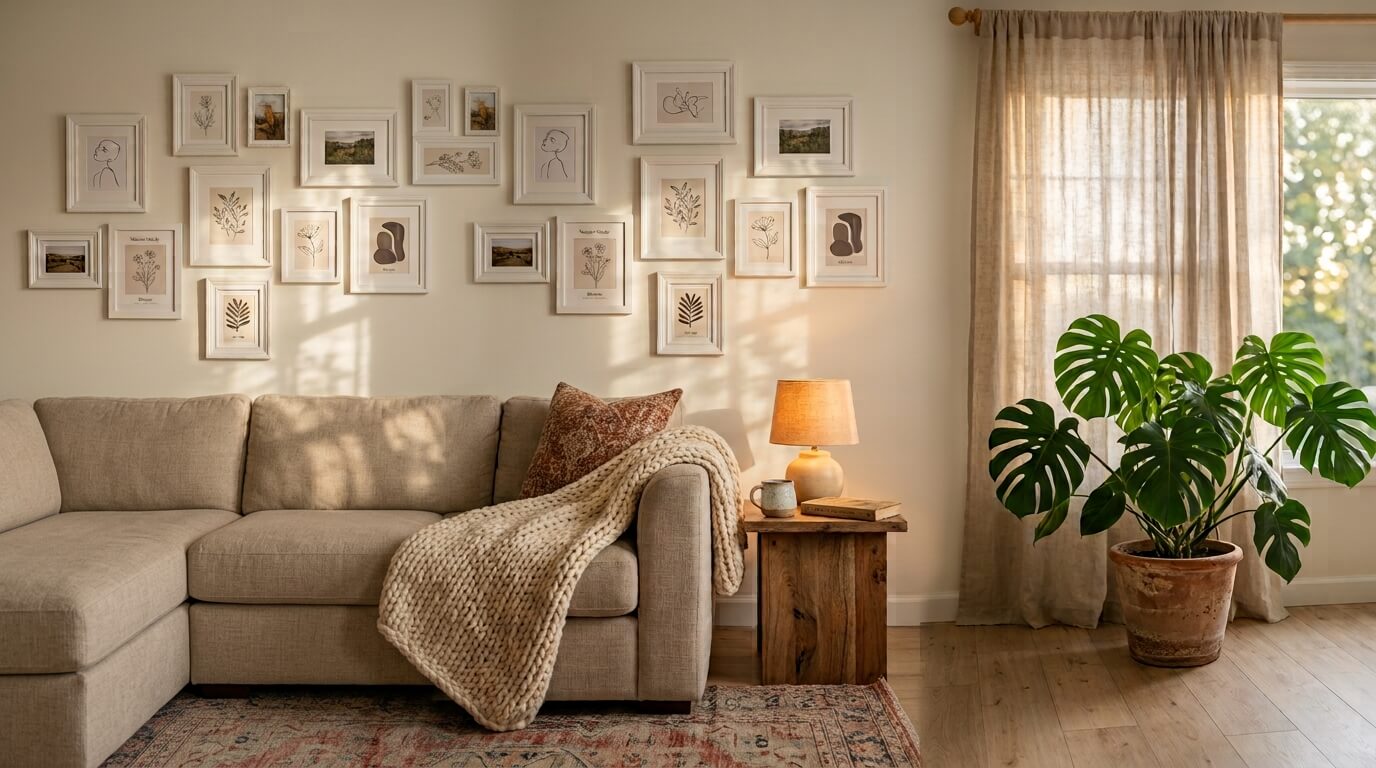
Gallery walls remain a powerhouse budget move when done right. The key is an odd number of frames — typically 5, 7, or 9 — and keeping them within the same color family rather than matching exactly. Lay your arrangement out on the floor first, photograph it, and then transfer it to the wall. Use paper templates taped up first if you’re worried about nail holes. For wall art itself, printable downloads from Etsy often cost $2–$5 and look stunning printed at a local copy shop for another $3–$5. Total cost for a full gallery wall: under $60.
LED strip lighting is another 2026 essential that punches well above its price. Strategic placement — behind a headboard, under floating shelves, or along the underside of a kitchen island — creates mood and depth that feels genuinely designed. You can explore a wide range of options for LED lights for living room setups, from warm white to color-changing strips that work with smart home systems.
Budget-Friendly Home Decor Stores Worth Knowing in 2026
Knowing where to shop is just as important as knowing what to make. The right stores can shave 60–70% off your decor budget without sacrificing the quality of what ends up in your home. These are the places I return to again and again.
Where to find unique home decor on a budget without compromising style?
Thrift stores, estate sales, and Facebook Marketplace are still the gold standard for finding unique home decor on a budget. You’ll rarely find the same item twice, which means your home ends up with genuine character rather than the catalog-page sameness that affects even expensive interiors. The trick with thrifting is to shop for form rather than finish — a beautiful shape in an ugly color can be spray-painted; a structurally poor piece at any price is never worth it.
For new items, IKEA and HomeGoods remain reliably strong. IKEA in particular has invested heavily in its basics collection — the LACK shelf series, RIBBA frames, and POÄNG chair are perennial workhorses that serve as neutral backdrops for more personal pieces. HomeGoods, meanwhile, is essentially a treasure hunt: the inventory rotates constantly, and patience pays off in the form of genuinely surprising finds at 40–70% below retail.
Online, you’ll find some of the best budget-friendly home decor stores hiding in plain sight. Amazon’s home section has exploded in quality over the past two years, with independent sellers offering well-photographed, fairly priced pieces that arrive in days. The reviews are your filter — sort by “most recent” rather than “top rated” to catch any quality dips. World Market (Cost Plus) and Tuesday Morning are also worth a dedicated look for textiles, ceramics, and accent pieces with genuine craft behind them.
The best budget-friendly home decor stores aren’t always the most obvious ones. Mixing one statement thrift find with a few IKEA basics and a couple of well-chosen Amazon pieces often results in a more interesting room than shopping exclusively at any single retailer, regardless of price point.
Don’t overlook the outdoors section, either. Garden centers frequently stock terracotta pots, woven baskets, and concrete planters that work brilliantly as indoor decor at a fraction of the price you’d pay in a home goods store. A $4 terracotta pot with a coat of white limewash paint becomes a sculptural object that could pass for something from an artisan ceramics studio.
Room-by-Room Budget Decor Breakdown
One of the most common mistakes people make is trying to tackle the whole house at once. The result is usually a scattered, half-finished look that’s more stressful than inspiring. A much better approach: pick one room, do it properly, and let the confidence and experience carry you to the next one.
How to decorate a living room on a low budget?
The living room is usually the best place to start because it has the highest visibility and the greatest potential for impact. Begin with the sofa — not necessarily by replacing it, but by transforming it. A set of new cushion covers in a complementary color costs under $30 for a set of four and can completely change the feeling of a room. A well-placed throw draped casually over one arm adds warmth and intention.
From there, think about your focal point. Most living rooms need one: a fireplace, a large piece of art, a statement shelving unit, or a well-styled console table. If you have a blank wall that’s crying out for attention, consider minimalist wall decor — a single large canvas, a collection of architectural prints, or even a DIY macramé panel can provide the anchor a room needs without overwhelming the space.
Rugs are transformative and often underestimated. A rug defines a seating area, adds warmth underfoot, and brings color and pattern into a room without commitment. If a quality rug is outside your immediate budget, look at layering — a cheap flatweave as the base with a smaller, more interesting jute or wool rug on top is a technique used constantly in professional interior design.
How to make a bedroom feel luxurious on a budget?
The bedroom is all about texture and calm. Start with your bed — it’s the largest visual element in the room, so it deserves the most attention. A simple linen duvet cover (IKEA’s DYTÅG is excellent at around $60) elevates the entire space almost instantly. Add two or three differently sized pillows in the same color family for a layered, hotel-like effect. You don’t need expensive bedding — you need cohesive bedding.
Lighting makes a disproportionate difference in bedrooms. Replace any harsh overhead bulbs with warm (2700K) alternatives, and add a bedside lamp with a fabric shade. The glow this creates in the evening is genuinely transformative — it’s one of those changes that costs under $20 but makes you want to spend more time in your own room. For a touch of ambiance, consider checking out some clever uses of modern home decor lighting to layer your light sources effectively.
Cost Breakdown: What to Spend (and Where to Save)
Part of decorating well on a budget is knowing where to allocate your money for maximum effect. Here’s a practical breakdown based on transforming a typical living room:
| Item / Project | Budget Option | Estimated Cost | Impact Level |
|---|---|---|---|
| Gallery wall (5–7 frames + art) | Thrift frames + printable downloads | $25–$55 | ⭐⭐⭐⭐⭐ |
| Accent wall paint | Single tin of quality paint | $25–$35 | ⭐⭐⭐⭐⭐ |
| New cushion covers (set of 4) | IKEA or Amazon | $20–$35 | ⭐⭐⭐⭐ |
| Throw blanket | HomeGoods or TJ Maxx | $15–$30 | ⭐⭐⭐⭐ |
| LED strip lights (2m) | Amazon basics | $12–$20 | ⭐⭐⭐⭐ |
| Area rug | IKEA or Amazon (5×7 ft) | $40–$80 | ⭐⭐⭐⭐⭐ |
| Plants + pots | Garden center + spray painted thrift pots | $15–$35 | ⭐⭐⭐⭐ |
| Cabinet hardware swap | Amazon or IKEA | $10–$25 | ⭐⭐⭐⭐ |
| Total estimated room refresh | $162–$315 |
These figures represent a meaningful transformation of a living room — new focal points, updated textiles, better lighting, and greenery — for what most home decor retailers charge for a single mid-range sofa. The key is sequencing: paint first (it affects everything else), then rugs and soft furnishings, then accessories and art last.
Where to Find Unique Home Decor on a Budget
The most interesting rooms always have a story behind them, and those stories usually start at unconventional places. When every piece in your home came from the same store, the result feels anonymous — pleasant enough, but forgettable. Mixing sources is what creates genuine character.
Estate sales are consistently the best-kept secret in budget decorating. Unlike thrift stores, which pre-sort and pre-price based on current trends, estate sales often price items based purely on what they cost the original owner — which means mid-century furniture, quality ceramics, and vintage textiles frequently go for a fraction of their market value. Sites like EstateSales.net let you preview upcoming sales in your area before they happen.
Flea markets, particularly outdoor monthly ones, are another goldmine. The experience of wandering through stalls, negotiating with sellers, and finding something completely unexpected is genuinely enjoyable — it’s shopping as an activity rather than a transaction. And unlike online marketplaces, you can touch, feel, and assess pieces in person before committing.
Arrive at flea markets and estate sales early for the best picks — serious decorators are there at opening time. But arrive in the last hour for the best prices. Sellers don’t want to pack things back up, and discounts of 30–50% off an already low asking price are common in the final stretch.
For specific decor categories, niche sourcing often beats general thrifting. Looking for rugs? Search Facebook Marketplace specifically for “Persian rug” or “wool rug” — sellers who inherit them often don’t know their value. Looking for ceramic vases or art pottery? Search by specific pottery marks on eBay. For unique textiles like horse rugs for the home cheap, specialty marketplaces and equestrian fairs can yield completely unexpected finds that work brilliantly as wall hangings or throws.
Online, Pinterest is still an indispensable visual search tool for finding where similar pieces are sold. Use the visual search function on any saved pin to find exact or near-identical items from multiple retailers at varying price points — it’s a more reliable way to find budget alternatives than standard Google shopping searches.
Common Mistakes to Avoid When Decorating on a Budget
Budget decorating done badly can look worse than no decorating at all. These are the pitfalls I see most often — and that I’ve fallen into myself in the early days.
- Buying too small: The single most common decorating mistake. A rug that doesn’t fit under the front legs of your sofa, art that’s too small for the wall, a lamp that barely clears the side table — scale errors make rooms feel disjointed and amateur.
- Ignoring lighting: Most rooms have terrible lighting and most people have no idea, because they’ve lived with it so long. Replacing a single harsh overhead light with a floor lamp and two table lamps can transform a room’s entire mood.
- Following trends too closely: Trend-driven decor has a short shelf life and often requires full replacement when the trend passes. Budget decor should focus on timeless shapes and neutral foundations, with trend-driven pieces limited to easily swappable items like cushions and small accessories.
- Neglecting the ceiling and floor: Most decorating attention goes to walls and surfaces, but a painted ceiling (in the same color as the walls or slightly lighter) and a well-chosen rug do more for a room than almost any other single change.
- Cluttering without curating: Budget decor sometimes falls into the trap of “more stuff = more styled.” The opposite is true. Edit ruthlessly: every object in a room should earn its place through beauty, function, or meaning — preferably all three.
- Skipping the prep work: Painting over dirty or unprepared walls, applying peel-and-stick products to textured surfaces, or skipping primer on furniture will always result in poor results. The prep is where the quality is.
Avoid the temptation to buy large volumes of very cheap decorative items — the kind sold in multi-packs on discount sites. Low-quality materials (thin ceramics, cheap plastic, poor-quality prints) don’t photograph well and look even worse in person. A single quality-looking piece almost always outperforms ten budget trinkets.
Longevity & Keeping Your Budget Decor Looking Fresh
One of the things that separates truly skilled home decorators from enthusiastic beginners is the understanding that decor is never finished — it evolves. The best rooms aren’t the ones that were decorated once and left static; they’re the ones that get refreshed seasonally with minor tweaks, kept clean and well-maintained, and allowed to grow as the inhabitant’s taste develops.
For painted furniture and walls, a small touch-up kit (same paint, small brush, kept in a labeled jar) means any chip or scuff can be addressed within minutes before it becomes a larger problem. Clean painted walls with a barely damp microfibre cloth, not harsh chemicals, which strip finish over time.
Textiles — cushion covers, throws, curtains — benefit enormously from regular washing according to their care labels and occasional steaming or ironing. Creased linen curtains that were once stylishly relaxed can start to look merely crumpled after months of neglect. A £15 handheld steamer is one of the best investments a home decorator can make.
Plants, both real and artificial plants for home decor, need periodic attention. Dust accumulates on artificial leaves and dulls their appearance significantly; wiping them with a damp cloth every few weeks keeps them looking sharp. Real plants that outgrow their pots or begin to look leggy should be repotted or propagated — a thriving plant looks intentional, while a struggling one just looks neglected.
Beyond maintenance, the refresh cycle is your friend. Every three to four months, walk through your home with fresh eyes — or better yet, invite a friend whose taste you respect and ask them for honest feedback. Small seasonal updates like swapping out cushion covers, changing a plant arrangement, or rotating which art is displayed keep a room from going stale without requiring any significant new spending. This is exactly how professional interior stylists keep photoshoot-ready homes looking constantly curated.
Frequently Asked Questions About Budget Home Decor
How to decor home in low budget without it looking cheap?
The key to decorating your home on a low budget without it looking cheap comes down to focusing on quality in a few key areas rather than spreading spending thin across many items. Prioritize items with good texture and scale — a well-sized rug, a few substantial cushion covers in quality fabric, and one or two statement pieces will carry a room much further than dozens of small, inexpensive decorative objects.
Always paint if you can — it’s the highest-leverage investment in any budget refresh. Clean, freshly painted walls and a cohesive color scheme make everything else in the room look more intentional. Additionally, ruthless editing matters enormously: remove anything that doesn’t contribute to the room’s overall feeling, and you’ll find what remains looks considerably more curated and considered.
What are some budget-friendly home decor ideas that work in small spaces?
Small spaces benefit enormously from a few specific budget decor strategies. Mirrors are the most impactful — a large thrifted mirror leaning against a wall or hung horizontally can visually double the perceived size of a room. Light, neutral color palettes on walls keep spaces feeling open, while multi-functional furniture (a storage ottoman, a bench at the foot of the bed, floating shelves) adds capability without consuming floor space.
Vertical space is dramatically underused in small rooms — tall bookshelves, hanging planters, and artwork hung higher than usual all draw the eye upward and make ceilings feel higher. Finally, a consistent color palette across soft furnishings (within 2-3 complementary tones) prevents the visual fragmentation that makes small rooms feel cluttered even when they’re tidy.
Where to find unique home decor on a budget in 2026?
In 2026, the best places to find unique home decor on a budget remain estate sales, thrift stores, flea markets, and Facebook Marketplace, supplemented by platforms like eBay and Chairish for specific vintage or mid-century pieces. EstateSales.net and local Facebook groups are excellent for previewing upcoming sales before they happen, which helps you plan your time and priorities efficiently.
For new items that look unique, Etsy remains an outstanding source for handmade and small-batch decor — independent ceramicists, textile artists, and printmakers often sell directly at prices far below what equivalent work would fetch in a boutique retail setting. World Market and HomeGoods also regularly stock genuinely interesting pieces from independent brands and artisans at accessible prices.
How much should I spend on a budget home decor refresh?
A meaningful single-room refresh — one that genuinely transforms the look and feel of a space — can be achieved for between $150 and $350 depending on the room size and what it already contains. A bedroom refresh tends to cost less (new bedding, new lamp, some wall art) while a living room overhaul typically costs more due to the greater floor area and more furniture involved.
A useful rule of thumb: allocate roughly 40% of your budget to one or two anchor pieces (a rug, a key piece of art, or a statement lamp), 30% to soft furnishings (cushions, throws, curtains), 20% to plants and accessories, and 10% to materials for any DIY projects. This prevents the common mistake of spending too broadly and ending up with nothing that feels substantial.
Are artificial plants a good option for budget home decor?
Quality artificial plants have improved dramatically in recent years and are a genuinely good option for budget home decor, particularly for spaces with low natural light or for people who travel frequently. The key distinction is quality: cheap artificial plants look immediately fake and actually detract from a room’s appearance, while premium silk or PE plastic plants can be genuinely difficult to distinguish from real ones in photographs and from normal viewing distances.
From a budget perspective, a $25–$40 high-quality artificial fiddle leaf fig or monstera outlasts dozens of real plants that die from neglect, requires zero maintenance, never needs repotting, and doesn’t introduce pests. Mixing one or two realistic artificial statement plants with easy-care real plants (pothos, snake plants, ZZ plants) is the approach many professional stylists actually use in high-end photoshoots.
How do I use LED lighting for budget-friendly home decor impact?
LED lighting is one of the most cost-effective tools in budget home decorating because the upfront investment is low ($12–$30 for a quality strip set) and the visual impact is immediate and dramatic. The most effective placements are behind headboards or TV units for ambient backlighting, under floating shelves to illuminate what’s displayed on them, and along the underside of kitchen islands or bathroom vanities for a luxurious, layered lighting effect.
For best results, choose warm white LEDs (2700K–3000K) rather than cool white or color-changing options if your primary goal is making a room feel cozy and designed rather than festive. Smart LED strips that connect to Alexa or Google Home add the ability to dim and adjust color temperature, which lets you use the same room lighting for multiple moods — bright and task-oriented in the morning, warm and dim in the evening — without any additional cost.
What DIY home decor projects give the best return for money and effort?
Ranked by return on both money and time invested, the top DIY home decor projects are: painting furniture (particularly dressers, side tables, and chairs in bold or contrasting colors), creating a gallery wall with thrifted frames and printable art, making macramé wall hangings from basic cotton rope, and painting a single accent wall. All of these projects can be completed in a weekend, cost under $50 in materials, and produce results that look significantly more expensive than the inputs.
A less obvious but highly rewarding project is reupholstering chair seats — the padded seat of a dining chair or a small accent chair can be replaced with new fabric in under an hour with just a screwdriver, a staple gun, and $10–$15 of fabric. The transformation is remarkable, and the skill transfers to any future chair in your home. For visual drama with minimal effort, applying limewash paint to a single wall creates a Venetian plaster effect that costs a fraction of the professional application.
How do I make my home look more modern on a budget?
Modernizing a home on a budget is primarily about editing and simplifying rather than adding. Start by removing anything that feels dated — fussy valances, mismatched frames, dusty collections of small objects — and see what the room looks like without them. More often than not, a decluttered room already looks significantly more modern simply because there’s more breathing room and each remaining piece has more visual weight.
From there, focus on clean lines: replace ornate or country-style hardware with simple matte black or brushed brass alternatives, swap patterned cushions for solid-colored ones in a limited palette, and add one or two pieces that reference current design language — an arched floor lamp, a boucle texture, or a sculptural ceramic object. Checking out resources on modern home decor will give you a strong reference point for which specific shapes and finishes are current without requiring a wholesale replacement of everything you own.
More Questions Answered
How to decor home in low budget when renting?
Renters have more options than they often realize: removable peel-and-stick wallpaper, tension-rod curtain systems, and freestanding furniture all deliver major visual impact without any permanent changes to walls or floors. Command strips and picture-hanging strips have also improved significantly and now reliably hold frames and shelves up to 16 lbs without damaging most wall surfaces.
What are some budget-friendly home decor ideas for a living room?
The five highest-impact budget moves for a living room are: adding an area rug to define the seating zone, introducing layered lighting with floor and table lamps, updating cushion covers and adding a throw, creating a gallery wall, and adding at least one large plant. Together, these five changes can transform a generic living room for under $200.
Where to find unique home decor on a budget online?
Etsy, eBay, Facebook Marketplace, Chairish, and Poshmark (which now includes home goods) are the top online destinations for unique budget decor finds in 2026. For brand-new items that look unique, the home sections of Amazon, Wayfair’s sale tab, and World Market’s clearance section consistently deliver interesting pieces at below-average prices.
Final Thoughts: Your Budget Decor Journey Starts Now
Decorating your home beautifully on a budget isn’t about settling for less — it’s about being more intentional, more creative, and ultimately more connected to the space you live in. The homes that people consistently describe as “cozy,” “characterful,” or “like something from a magazine” are rarely the ones stuffed with expensive objects. They’re the ones where someone made a thousand small, thoughtful decisions about what belongs and what doesn’t.
Start with one room. Pick your biggest pain point — the wall that’s been blank for two years, the sofa that’s swamped by wrong-sized cushions, the bedroom that still looks like a bland rental. Make one meaningful change this weekend: paint something, thrift a mirror, order a set of new cushion covers. The momentum from that first win is genuinely powerful.
From there, you’ll find yourself naturally exploring related areas: how minimalist wall decor can anchor a room without overwhelming it, how artificial plants can bring life to a space with minimal maintenance, how the right LED lighting completely changes the mood of a room after dark, and how a well-placed modern accent piece can bring an entire scheme together. Each of these threads leads to a more considered, more personal, and more beautiful home — and none of them require spending a fortune to explore.