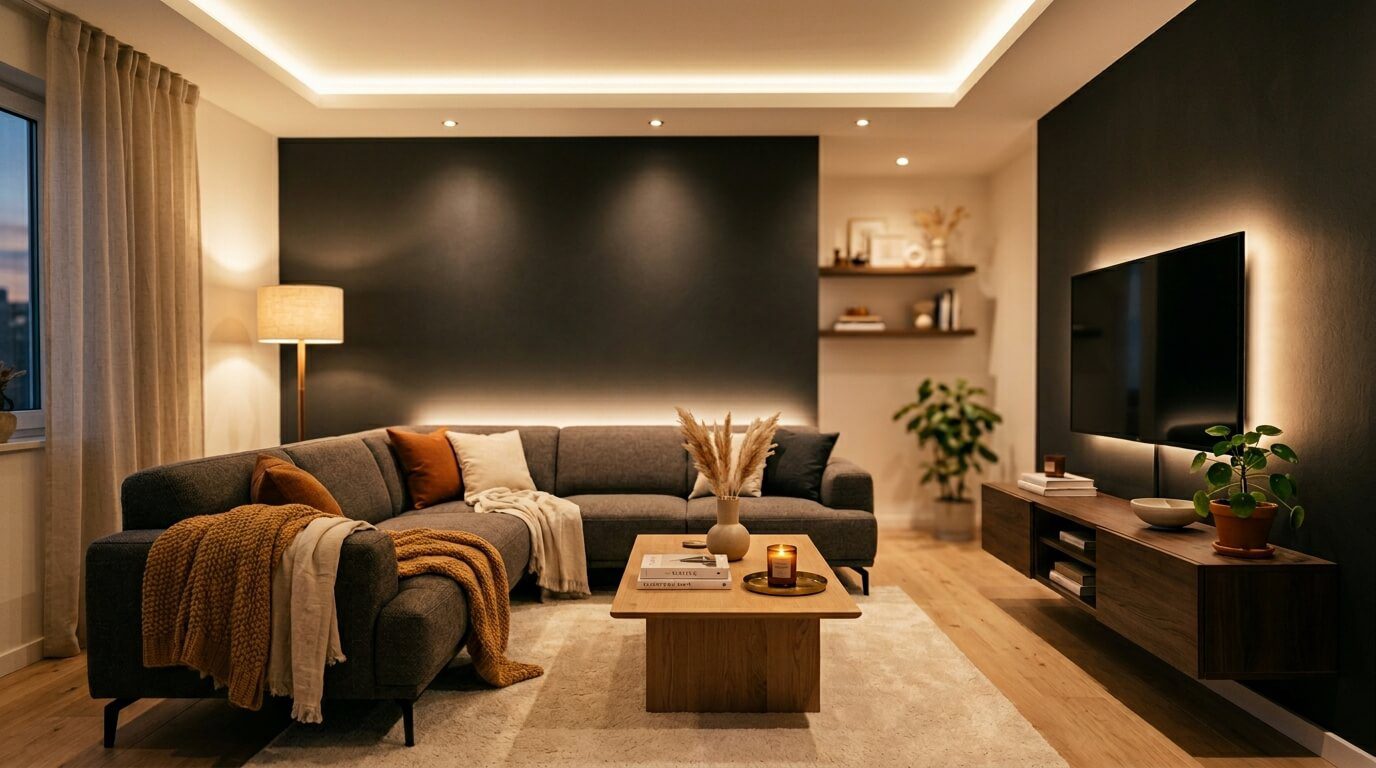

LED Lights for Living Room: Complete Guide to Brightening Your Space
If you’ve been thinking about upgrading your home lighting, LED lights for living room spaces are honestly one of the smartest investments you can make. The difference between a living room that feels flat and one that feels like a magazine spread often comes down to lighting — and LEDs give you more control, more flexibility, and more style per dollar than almost any other option on the market. Whether you’re starting from scratch or looking to swap out old bulbs, this guide covers everything you need to know.
LED living room lights have evolved dramatically over the past decade. What once meant a harsh, bluish glow is now a spectrum of warm tones, dimmable outputs, and color-changing possibilities that can shift the entire mood of a room at the tap of a phone screen. In my experience, even a modest investment in quality LED lighting can completely transform how a space feels — both in the evening when you’re winding down and during the day when you need crisp, clear light for work or reading.
This guide walks you through every dimension of the topic: the types of LED fixtures available, how to choose the right color temperature and brightness, smart home integration, common mistakes people make, placement strategies, and how living room lighting ties into your overall interior vision. By the end, you’ll have a clear picture of exactly what to buy and where to put it.
Types of LED Lights for Living Rooms
The living room lighting world isn’t one-size-fits-all — and that’s a good thing. There are several distinct categories of LED fixtures, and the best setups usually combine at least two or three of them to create what designers call “layered lighting.” Here’s a breakdown of what’s out there.
Recessed downlights (also called can lights or pot lights) sit flush with the ceiling and provide clean, unobtrusive ambient light. They’re a popular choice in modern and minimalist interiors. LED panel lights are flat, surface-mounted fixtures common in contemporary spaces — they offer even illumination across a wide area. Pendant lights hang from the ceiling and serve as both light source and decorative statement, perfect above a coffee table or reading nook.
Then there are LED strip lights — flexible, adhesive-backed ribbons of tiny LED bulbs that can be mounted behind furniture, under shelving, or along ceiling coves. They’re among the most versatile options available. Floor lamps with LED bulbs add warmth in corners and alongside sofas. And smart LED bulbs retrofitted into existing fixtures give you app control and voice assistant compatibility without a full renovation.
According to the U.S. Department of Energy, LED bulbs use at least 75% less energy and last 25 times longer than traditional incandescent bulbs — making them the most cost-efficient lighting choice available for home use.
LED Ceiling Lights for Living Room: What to Know
When most people think about upgrading their living room, ceiling lighting is usually the first thing they consider — and for good reason. It’s the primary ambient source that sets the overall brightness of the room. Living room ceiling lights LED options have expanded enormously, and picking the right one depends on your ceiling height, room size, and aesthetic direction.
For rooms with standard 8–9 foot ceilings, flush-mount or semi-flush LED ceiling fixtures work beautifully. They keep the visual weight low and don’t crowd the space. Rooms with higher ceilings — 10 feet and above — can handle pendant clusters, chandeliers with LED bulbs, or even statement drum shades with integrated LED sources. If you’re going for a completely seamless, architectural look, LED recessed lighting arranged in a grid pattern is the gold standard.
One thing I’ve learned from redoing lighting in several rooms: the number of fixtures matters as much as their individual wattage. Spacing recessed lights roughly 4 feet apart in a grid gives even coverage without hot spots or dark corners. For a 15×18 foot living room, that typically means 6–8 downlights at around 600–800 lumens each.
Always choose dimmable LED ceiling fixtures and pair them with a compatible dimmer switch. The ability to dial from 100% brightness for daytime tasks down to a warm 20% glow for movie nights is what separates a good living room lighting setup from a great one.
If you’re renting or can’t modify your ceiling, surface-mount LED panels or decorative flush-mount LED ceiling lights are easy to install and just as effective. Many modern options look genuinely elegant and are far removed from the institutional look of older fluorescent panels.
Where to Put LED Strip Lights in Your Living Room
Where to Put LED Strip Lights in Living Room for Maximum Impact
Strip lights are one of the most frequently misused tools in home lighting — people either cram them everywhere or stick them in one obvious spot. The real magic happens when placement is intentional. Some of the most effective locations in a living room include behind your TV (creating a bias light effect that reduces eye strain), along the underside of floating shelves, inside built-in bookcases, and along ceiling coves to create an indirect ambient glow.
Behind the television is far and away the most popular placement, and for good reason. A strip of warm white or tunable LED lights running behind the TV panel softens the contrast between the bright screen and the dark wall, making long viewing sessions significantly easier on the eyes. Aim for a color temperature around 6500K (cool white) to match modern screens, or go with a color-changing RGB strip if you want to match the on-screen palette dynamically.
Cove lighting — running LED strips along a ledge or channel near the ceiling so the light reflects off the ceiling rather than pointing directly into the room — creates an incredibly sophisticated ambient glow. It’s a technique used in high-end hotel lobbies and luxury interiors, and it’s entirely achievable in a residential living room with the right aluminum channel housing for your strips.
Other great locations: under the sofa to create a floating effect, along stair risers if your living room has split levels, and around the perimeter of a tray ceiling. Pair these ideas with your modern home decor vision for a cohesive look that feels designed rather than DIY-ed.
How to Install LED Strip Lights in Your Living Room
How to Install LED Strip Lights in Living Room Step by Step
Installation is more approachable than most people expect, especially for adhesive-backed LED strips that don’t require any hardwiring. The basic process involves measuring your surface, cutting the strip to length at designated cut points, cleaning and prepping the mounting surface, peeling the adhesive backing, and pressing the strip firmly into place. Power supply connections are typically plug-and-play for consumer-grade strips.
That said, a few details separate a clean install from a messy one. First, always use aluminum channel housing rather than mounting strips directly to drywall or wood. The aluminum acts as a heat sink, extending the life of your LEDs, and the diffuser cover creates a soft, even glow instead of visible individual LED dots. Channels come in surface-mount, recessed, and corner varieties for under $1–$3 per foot.
For longer runs — anything over 16 feet on a single strip — you’ll need to either use a higher-capacity power supply or run separate strips from the same controller. Voltage drop is real: if you connect too many LEDs in a single run, the far end of the strip will be noticeably dimmer than the near end. A 24V strip has less voltage drop than a 12V strip of the same length, which is worth knowing if you’re planning long cove lighting runs.
Never cut LED strip lights at arbitrary points. LEDs are wired in groups — usually groups of 3 — and cutting mid-group will damage that section. Always cut only at the marked scissor icons printed on the strip itself.
For hardwired installations like ceiling cove lighting or in-wall LED drivers, it’s worth hiring a licensed electrician unless you have solid electrical knowledge. The strip light portion is DIY-friendly; the mains wiring is where you want professional hands.
Choosing Color Temperature and Brightness
Color temperature is measured in Kelvin (K) and determines whether your LEDs produce a warm, neutral, or cool light. For living rooms, the sweet spot is typically between 2700K and 3000K — this is the warm white range that mimics traditional incandescent bulbs and creates a cozy, inviting atmosphere. Go below 2700K and the light can feel slightly orange; push above 3500K and it starts to feel like an office.
That said, some living rooms benefit from a dual-zone approach: warmer light (2700–3000K) for ambient and accent fixtures, and a slightly cooler light (3500–4000K) for task areas like a reading chair or home office corner. Tunable white LED strips and smart bulbs let you dial between these temperatures on the fly, which is genuinely useful as the natural light in the room changes throughout the day.
Brightness is measured in lumens, not watts. A typical living room needs about 1,500–3,000 lumens of total ambient light for general use, though this scales with room size. Use the rough formula of 20 lumens per square foot as a starting baseline — so a 200 square foot living room needs around 4,000 lumens total when you add up all your fixtures. Remember that dimmer switches let you stay on the higher end of lumens while still having flexibility to reduce output.
Always check the Color Rendering Index (CRI) when buying LED bulbs for living spaces. A CRI of 90+ means colors in your room — your furniture, art, and textiles — will look as true and vivid as they do in daylight. Lower CRI bulbs can make even beautiful decor look dull.
LED Living Room Lights and Furniture Pairing
Lighting and furniture don’t live in isolation — they interact constantly, and the best living room setups treat them as a system. Consider how light will fall across your sofa, reflect off your walls, and interact with your art and accessories. If you’re working with a 2 piece living room set with LED lights built into the furniture itself, you’re already thinking in the right direction — but even standard furniture benefits from strategic lighting placement.
Dark-colored sofas and furniture absorb light, so rooms with deep charcoal, navy, or espresso pieces need more overall lumens to feel bright and balanced. Light-colored or white furniture, on the other hand, reflects ambient light back into the room and can make a space feel larger and airier with less output. This is worth factoring into your fixture selection and total lumen calculation.
Accent lighting — small spotlights or LED puck lights directed at wall art, sculptures, or decorative objects — elevates a space dramatically. If you’re incorporating minimalist wall decor into your living room, a simple angled recessed light or adjustable picture light will make even modest artwork look gallery-worthy. The same applies to decorative shelving: LED strip lighting inside built-in shelves can turn a standard bookcase into a real focal point, especially when combined with artificial plants for home decor that add greenery without needing natural light to survive.
Are LED Lights Good for Living Rooms?
Are LED Lights Good for Living Room Environments?
The short answer is yes — emphatically. LEDs are better than every alternative lighting technology currently available for residential use when you consider the full picture: energy efficiency, lifespan, heat output, light quality, and design flexibility. A quality LED bulb rated at 800 lumens uses roughly 8–10 watts; an equivalent incandescent uses 60 watts. Over the course of a year, that difference is significant on your electricity bill.
Beyond efficiency, LEDs are better for the living room environment because they generate far less heat than halogen or incandescent sources. In a room where you spend significant time, that matters — both for comfort and for the longevity of nearby fabrics, art, and finishes. The Department of Energy notes that LEDs emit very little heat compared to traditional bulbs, which convert most energy to heat rather than light.
For flicker sensitivity — something that affects more people than realize it — look for LEDs with a high flicker-free rating. Cheap LEDs can flicker at rates below human perception but still cause eye strain and headaches over extended use. Reputable brands publish their flicker metrics, and it’s worth prioritizing this spec if you spend long hours in your living room. Pairing LEDs with a quality dimmer switch (one rated for LEDs specifically) also prevents the low-level buzz and flicker that can occur with incompatible dimmer hardware.
The design flexibility of LEDs is perhaps their most underappreciated quality. From pencil-thin strip profiles to vintage-style Edison filament bulbs, the same underlying technology spans an enormous aesthetic range. Whatever your home color palette leans toward — warm and earthy, cool and contemporary, or somewhere in between — there’s an LED product that fits it. And if you’re still refining that palette, exploring a cohesive home color palette before finalizing your lighting color temperature is a genuinely worthwhile step.
Cost Breakdown: LED Lighting for Your Living Room
Budgeting for living room lighting is easier when you break it into categories. Here’s a realistic cost breakdown for a typical living room lighting project, ranging from budget-conscious to premium setups.
| Lighting Element | Budget Option | Mid-Range | Premium |
|---|---|---|---|
| LED ceiling light (flush mount) | $20–$40 | $60–$120 | $150–$400+ |
| LED recessed downlights (per fixture) | $8–$15 | $20–$40 | $50–$100 |
| LED strip lights (per 16 ft roll) | $15–$30 | $35–$70 | $80–$150 |
| Aluminum channel housing (per ft) | $0.80–$1.50 | $1.50–$3 | $3–$6 |
| Smart LED bulbs (per bulb) | $8–$15 | $15–$25 | $30–$60 |
| LED floor lamp | $25–$50 | $60–$150 | $200–$600+ |
| Dimmer switches (per switch) | $15–$25 | $30–$55 | $60–$120 |
| Typical Total (mid-range) | $200–$600 for a full living room setup | ||
These costs don’t include electrician fees if you’re doing hardwired installations — budget an additional $100–$300 for a professional electrician to install recessed lighting in an existing ceiling, depending on your location and the number of fixtures.
Common Mistakes to Avoid
After seeing a lot of living room lighting setups, the same errors come up repeatedly. Knowing them upfront saves you money, effort, and the frustration of redoing work.
- Relying on a single overhead fixture as the only light source — this creates flat, shadowless light with no depth or warmth.
- Choosing the wrong color temperature — 5000K+ cool white in a cozy living room makes everything feel cold and clinical.
- Buying non-dimmable LEDs and pairing them with a dimmer switch — the result is flickering, buzzing, and early burnout.
- Using too few recessed lights in a grid, leaving dark corners and uneven coverage.
- Mounting LED strips directly to drywall without aluminum channel housing — the adhesive fails over time and heat builds up unnecessarily.
- Ignoring CRI and buying the cheapest LED option — furniture and textiles look washed out under low-CRI light.
- Overcrowding with too many strip light placements — when everything glows, nothing stands out.
Don’t mix LED bulbs from different manufacturers in the same fixture group without checking their specs. Slight variations in color temperature between brands — even both labeled “2700K” — can create visible inconsistencies that are surprisingly difficult to ignore once you notice them.
Longevity & Maintenance
One of the most compelling arguments for switching to LED living room lights is the dramatically reduced maintenance burden. A quality LED bulb rated at 25,000–50,000 hours means you might go 20+ years without changing a bulb under normal residential use — a stark contrast to incandescents that need replacing every 1,000 hours or so.
That said, “maintenance-free” isn’t quite accurate. Dust accumulation on fixtures and diffusers is the primary enemy of lighting performance over time. Recessed downlights, flush mounts, and strip light diffusers should be wiped down gently with a dry microfiber cloth every few months. Avoid wet cleaning near any wiring or socket areas. For strip lights, inspect the adhesive backing annually — in high-humidity rooms or near exterior walls, the bond can weaken and strips can begin to peel away from their surface.
Smart LED bulbs have a slightly different longevity profile because their wireless radios and control circuits can fail independently of the LED element itself. Expect 10,000–20,000 hours of life from most smart bulbs, which still represents years of daily use. If a smart bulb becomes unresponsive to your app or voice commands but still lights up, it’s usually the radio module rather than the LED — most manufacturers offer firmware updates that can extend functional life significantly. Consumer Reports recommends checking for firmware update options before replacing any smart bulb prematurely.
Keep a small log of when each major fixture was installed — just a note on your phone with the product name and install date. When the time eventually comes to replace something, you’ll know exactly what you’re replacing and can search for an updated version or compatible upgrade rather than starting research from scratch.
Frequently Asked Questions
Where to put LED strip lights in living room for the best effect?
The most impactful placements for LED strip lights in a living room are behind the television, along the underside of floating shelves or media units, inside built-in bookcases, and along ceiling coves for indirect ambient light. Behind-TV bias lighting is particularly effective because it softens the contrast between the bright screen and the darker surrounding wall, reducing eye strain during extended viewing sessions.
For a more dramatic architectural effect, LED strips installed in ceiling coves — where the light bounces off the ceiling rather than projecting directly into the room — create a sophisticated, hotel-quality glow. Under-sofa LED strips add a floating effect that works especially well in contemporary and minimalist interiors. The key is restraint: choose two or three strategic placements rather than lighting every surface.
How to install LED strip lights in living room without hiring an electrician?
Most consumer-grade LED strip lights are designed for DIY installation and don’t require any electrical work beyond plugging into a standard outlet. The basic process is: measure your surface, cut the strip at designated cut points only, clean and dry the mounting surface thoroughly, peel the adhesive backing, and press the strip firmly in place. Run the power cable to the nearest outlet, plug in the transformer/driver, and you’re done.
For a cleaner, more professional result, install the strip inside aluminum channel housing before mounting. The channel protects the strip, acts as a heat sink, and the frosted diffuser cover creates a soft, even glow instead of visible individual LED dots. Channels are inexpensive — usually $1–$3 per foot — and make a significant visual difference. The only situation requiring an electrician is if you want hardwired installation with an in-wall LED driver, which eliminates any visible power cord.
Are LED lights good for living room use on a daily basis?
Yes — LEDs are genuinely the best option for daily living room use across every meaningful metric. They use 75–80% less energy than incandescent bulbs, generate minimal heat (improving comfort in occupied rooms), and last 25–50 times longer, meaning you’re not constantly replacing bulbs. Quality LEDs with a CRI of 90+ render colors accurately, making your furniture, art, and textiles look as vibrant as they do in natural daylight.
For daily comfort, choose LEDs in the 2700–3000K range for main ambient lighting — this warm white tone is relaxing and flattering. Pair with a dimmable setup so you can reduce output in the evenings when lower light signals your body that it’s time to wind down. If you’re sensitive to flicker, look specifically for “flicker-free” LEDs, as cheaper models can produce imperceptible flickering that causes headaches over long exposures.
What color temperature LED is best for a living room?
For most living rooms, a color temperature between 2700K and 3000K produces the most comfortable and flattering light. This range — commonly labeled “warm white” or “soft white” on bulb packaging — mimics the golden tones of traditional incandescent lighting and creates an inviting, cozy atmosphere well-suited to relaxation and conversation.
If your living room doubles as a home office or study space, consider tunable white LED fixtures or smart bulbs that let you shift between warm (2700K) for evenings and a slightly cooler neutral white (3500–4000K) for daytime productivity. Avoid anything above 4000K for primary living room lighting — the cooler blue-white tones are better suited to kitchens and bathrooms where alertness matters more than warmth.
How many lumens do I need to light a living room with LEDs?
A practical rule of thumb is 20 lumens per square foot for general ambient lighting in a living room. So a 200 square foot space needs roughly 4,000 total lumens across all fixtures. That might be eight recessed downlights at 500 lumens each, or a combination of a central ceiling fixture at 2,000 lumens plus several accent and task lights adding up to another 2,000.
Because living rooms serve multiple purposes — movie watching, reading, entertaining, relaxing — it’s much better to install more total lumens than you think you need and use dimmer switches to reduce output as needed. This flexibility is far preferable to having a room that feels dim and requires buying additional fixtures later. Also factor in that darker paint colors absorb more light than lighter shades, so rooms with deep-colored walls need more lumens than the formula suggests.
Can LED strip lights replace overhead lighting in a living room?
LED strip lights can supplement and greatly enhance a living room’s atmosphere, but in most cases they shouldn’t fully replace overhead ambient lighting. Strip lights are typically lower output and more directional than ceiling fixtures — their primary strengths are accent lighting, bias lighting, and creating ambiance rather than providing the broad, even illumination that overhead fixtures deliver.
That said, if you install high-output LED strips in ceiling coves all the way around the room perimeter, combined with under-shelf and accent strips, the cumulative output can approach that of a ceiling fixture. In smaller living rooms or spaces with very light-colored walls and ceilings (which reflect indirect light efficiently), this approach can work beautifully and looks strikingly sophisticated. It just requires careful planning and generally more linear footage of strip lights than people initially expect.
Are smart LED lights worth it for a living room?
Smart LED bulbs and fixtures are worth it for a living room if you value lighting control and customization. The ability to adjust brightness and color temperature from your phone, create scenes and schedules, and integrate with voice assistants like Alexa or Google Home makes smart LEDs far more versatile than standard dimmable LEDs. For movie nights, dinner parties, morning routines, and everything in between, having preset scenes you can activate instantly is genuinely convenient.
The cost premium over standard LEDs has also shrunk considerably. Basic smart LED bulbs from brands like LIFX, Govee, and Sengled start under $15 per bulb, and the ecosystem integration with platforms like Amazon Alexa, Google Home, and Apple HomeKit is more reliable than it was even two or three years ago. If you already own a smart speaker or display, adding smart lighting to your living room is one of the most impactful smart home upgrades you can make in terms of daily quality of life.
What is the difference between LED ceiling lights and LED panel lights for living rooms?
LED ceiling lights is a broad category that includes any LED fixture mounted to or suspended from the ceiling — flush mounts, semi-flush mounts, chandeliers with LED bulbs, pendant lights, and recessed downlights all qualify. LED panel lights specifically refer to flat, typically square or rectangular fixtures that surface-mount or recess into the ceiling and produce very even, shadow-free illumination across their face.
Panel lights are popular in modern and contemporary spaces because they’re thin, clean-lined, and don’t protrude significantly from the ceiling. They work particularly well in rooms with lower ceilings where any hanging fixture would feel intrusive. Traditional decorative ceiling lights — flush mounts with glass shades, chandeliers, and pendant clusters — tend to suit more traditional, transitional, or maximalist living rooms where the fixture itself is meant to be a design statement as much as a light source.
Bringing It All Together: Your Ideal Living Room LED Setup
The living room is the heart of most homes — the place where you relax, entertain, watch films, and spend the majority of your waking hours at home. Getting the lighting right in this space pays dividends every single day. LED lights for living room environments give you unmatched flexibility: from bright, energizing light for daytime tasks to warm, dim ambiance for evening wind-downs, all from the same fixtures.
If you’re starting fresh, prioritize layered lighting: a primary ambient source (ceiling fixture or recessed lights), at least one accent or task layer (floor lamp, picture light, or shelf strips), and an atmospheric layer (LED strips behind the TV or in ceiling coves). This three-layer approach is what separates spaces that feel intentionally designed from those that just feel lit. If you’re improving an existing setup, start with color temperature and dimmer compatibility — those two changes alone can transform a room.
From here, there’s a natural path toward exploring related topics that interact closely with your lighting choices. Your home color palette and wall colors determine how much light you need and how warm or cool it should run. Decor choices — from horse rugs for the home to textile choices and wall art — all look different under different lighting conditions. And if you’re updating the full room, thinking about furniture layout in relation to light sources will help you avoid casting shadows on seating areas or creating uncomfortable glare. Good lighting doesn’t just illuminate a space — it makes everything else in the room look better too.