
Best Artificial Plants for Home Styling: A Complete Guide to Gorgeous Faux Greenery
Estimated read time: 9 minutes
If you’ve ever killed a succulent — and honestly, who hasn’t — then you already understand the quiet appeal of artificial plants decor. The best artificial plants available today look so convincingly lifelike that even seasoned plant lovers do a double-take. Whether you’re searching for the perfect fake plants for home use in a low-light hallway, a sun-drenched living room, or a bathroom that sees zero natural light, there’s a faux option designed exactly for that space. And unlike their living counterparts, they never demand watering schedules, special soil, or anxious Googling at midnight.
The category has genuinely transformed over the past decade. Gone are the dusty plastic monstrosities of the 1990s — today’s faux botanicals are crafted from high-grade silk, real-touch polyester, and UV-resistant materials that hold their color through every season. Designers at boutique hotels, upscale restaurants, and Instagram-worthy apartments have been quietly using realistic fake plants for years precisely because the payoff — lush, permanent greenery — comes without any of the maintenance overhead.
In my experience, the biggest mistake people make when shopping for faux greenery is focusing too much on price and not enough on material quality and scale. A small, cheap bunch of plastic stems jammed into a corner reads as an afterthought. But a well-chosen, generously sized piece — properly potted, thoughtfully placed — elevates an entire room in seconds. This guide will walk you through the best options by category, help you avoid the most common pitfalls, and give you everything you need to style artificial plants with the confidence of a professional interior decorator.
Why Choose Artificial Plants for Your Home?
The case for faux greenery isn’t just about convenience — though that’s a significant part of it. According to the Royal Horticultural Society, most common houseplants require consistent humidity, specific light levels, and careful watering to thrive indoors. For renters in city apartments with north-facing windows, or for homeowners who travel frequently, those requirements simply aren’t realistic. Artificial plants remove every single barrier.
Beyond practicality, faux greenery offers an important design advantage: permanence. When you invest in a beautiful decorative scheme, you don’t want to recalculate it every time a plant dies or drops its leaves seasonally. Artificial plants decor gives you a permanent textural element you can build the rest of your styling around without worry.
There’s also the allergy argument. Many households include members sensitive to pollen, mold spores from soil, or even the volatile organic compounds released by certain live plants. Faux greenery sidesteps all of those concerns entirely. It’s an increasingly smart choice not just for lazy gardeners, but for health-conscious decorators and design-forward households alike.
The global artificial plants and flowers market is projected to surpass $3 billion by 2027, driven largely by interior designers and home decorators seeking low-maintenance, high-impact greenery solutions.
Best Types of Artificial Plants by Room
Not every faux plant works in every space. Matching the scale, shape, and texture of artificial plants to a specific room is what separates a polished result from a haphazard one. Here’s a room-by-room breakdown of what actually works.
Living Room: Go Large and Structural
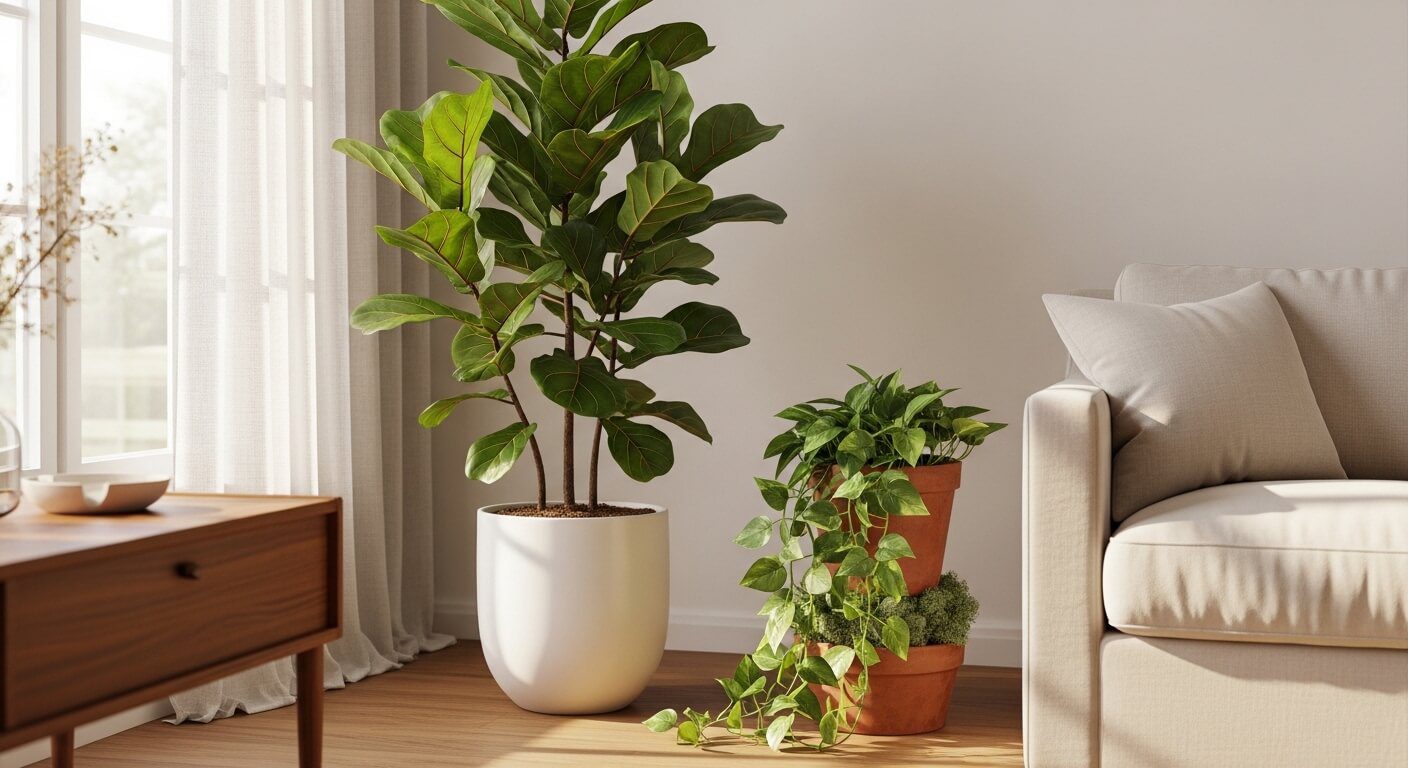
The living room is where scale matters most. A large fiddle-leaf fig (Ficus lyrata) replica or an oversized monstera is one of the most sought-after plants for living room styling, and for good reason — their bold, graphic leaves create visual drama without overwhelming the furniture. Look for varieties with multiple trunks and irregular, natural-looking branching. Anything too perfectly symmetrical will read as fake from across the room.
Tall floor-standing olive trees and bamboo palms are excellent alternatives for corners that need height. The best versions have individually wired branches you can bend and shape, allowing you to customize the silhouette to fit your specific corner dimensions.
Bedroom: Soft, Trailing, and Romantic
Bedrooms call for softer energy. Trailing pothos, eucalyptus stems in a ceramic vase, or a small faux lavender arrangement on a nightstand adds texture and calm without the bedroom clutter of a large structural plant. Indoor faux plants work beautifully on floating shelves in bedrooms — they sit at eye level and get admired up close, so invest in the highest-quality materials you can afford for this placement.
Bathroom: Tropical and Humidity-Resistant
Bathrooms are notoriously difficult for real plants unless you have significant natural light. A faux bird of paradise, trailing string-of-pearls, or silk orchid positioned near the mirror adds a spa-like quality without the mold risk that can come with soil-based plants in high-humidity environments. Stick to UV-stable materials if the bathroom receives any direct sun through a skylight or window.
Kitchen & Dining: Herbs and Topiaries
Faux herb pots — rosemary, basil, lavender — lined up on a kitchen windowsill look charming and practical. Nobody questions them. Small boxwood topiaries flanking a dining room centerpiece create structure and formality that fresh flowers can’t sustain week after week.
Always repot faux plants into real terracotta, ceramic, or concrete planters. The original plastic nursery pots that most artificial plants ship in instantly cheapen the look. Swapping to a proper vessel takes five minutes and transforms the entire perception of quality.
Cost Breakdown: Budget, Mid-Range & Premium
Artificial plants span an enormous price range, and the difference in quality between a $12 plastic stem and a $200 real-touch installation is genuinely dramatic. Here’s what to expect at each tier — so you can match your investment to the placement and its visibility level.
| Tier | Price Range | What You Get | Best For |
|---|---|---|---|
| Budget | $5 – $30 | Basic plastic or low-grade silk; limited color variation; obvious faux appearance up close | Shelves seen from a distance; seasonal decor; temporary styling |
| Mid-Range | $30 – $100 | Better silk or polyester blends; some real-touch leaves; natural-looking trunks; wired branches | Living rooms, bedrooms, offices; any placement under 6 feet away |
| Premium | $100 – $400+ | Real-touch latex or premium silk; hand-painted veining; weighted/textured trunks; UV-stable dyes; full realism up close | Entryways, high-visibility corners, photography, professional spaces |
One useful rule of thumb: spend more on plants placed at eye level or within arm’s reach, and less on plants tucked into ceiling-height shelves or viewed only from across the room. The investment scales naturally with scrutiny level.
What to Look for When Buying Faux Plants
Shopping for artificial plants has its own specific criteria that differ entirely from buying live plants. Here’s what actually matters once you move past aesthetics.
Material Quality
Real-touch polyethylene and latex are the most convincing materials available. They mimic the slight waxy sheen of live leaves and hold up well under close inspection. High-quality silk comes in second — it’s softer and more delicate-looking, ideal for flowers and trailing vines. Avoid hard plastic entirely for any visible placement; it’s fine for back-of-shelf fillers but will undermine any serious styling effort.
Color Accuracy and Variation
The best realistic fake plants feature subtle color variation within individual leaves — lighter centers, darker edges, occasional natural-looking imperfections. Uniform, single-tone leaves are the fastest giveaway that a plant is artificial. Look for products whose photos show variation, and check reviews for comments on color accuracy in person versus the listing photos.
Trunk and Stem Construction
For larger pieces — trees, tall grasses, large shrubs — the trunk or primary stem construction is critical. Fiber-wrapped, textured bark on a solid core is far more convincing than a smooth painted tube. Wired secondary stems that can be repositioned are essential for creating the slightly imperfect silhouette that makes a plant look genuinely alive.
UV Stability
If any artificial plants will be placed near windows with direct sun exposure — or outdoors on a covered patio — UV-stable materials are non-negotiable. Standard dyes used in most indoor faux plants will fade noticeably within a few months of sun exposure. According to research compiled by the University of Maryland Extension, UV degradation is the leading cause of premature deterioration in decorative artificial botanicals.
Never place standard artificial plants in direct outdoor sunlight unless specifically labeled as UV-resistant. Even premium indoor faux plants will bleach and become brittle within weeks of direct sun exposure. Always check the product specifications before use near south- or west-facing windows.
Scale and Proportions
One of the most underestimated factors. A plant that looks generous in a product photo can look underwhelming in a large room. Always check the stated dimensions carefully — height, spread, and pot size. As a general principle, floor plants in living rooms should be at least 5 feet tall to register as intentional rather than incidental. Tabletop plants look best when they occupy at least one-third the width of the surface they sit on.
Styling Tips for Maximum Impact
Knowing which plants to buy is only half the equation. How you style and arrange them determines whether your faux greenery looks like a design decision or a dollar-store afterthought.
Use Odd Numbers
Groupings of three, five, or seven plants always look more natural than even pairings. Whether you’re clustering small potted succulents on a coffee table or arranging a shelf vignette, the odd-number rule creates visual interest and avoids the stiff, symmetrical look that makes artificial arrangements feel manufactured.
Vary Heights Dramatically
Mix tall floor plants, mid-height table plants, and small trailing specimens in the same zone. The layering creates depth. A tall fiddle leaf beside a lower trailing pothos cascading off a side table beside a small succulent cluster on the floor builds a layered, botanical moment that reads as genuine and curated simultaneously.
Combine Textures
Glossy, waxy leaves (like a monstera or rubber plant) look best alongside something matte and delicate (like eucalyptus or grass). Combining leaf textures adds botanical authenticity that a single-plant grouping can never achieve. This is a technique professional interior designers use consistently when working with artificial plants.
For more stylish home decorating ideas and DIY inspiration, visit CraftsnComforts.com, where you’ll find room-by-room guides built specifically for creative home decorators.
Add Real Elements to the Mix
One of the most effective styling tricks: mix a high-quality artificial plant with genuinely real elements nearby. A faux monstera next to a real vase of fresh-cut seasonal stems, or a silk orchid displayed beside a real wooden bowl of citrus fruit — the authentic natural elements lend credibility to the artificial ones. The eye reads “natural environment” rather than singling out the faux pieces.
Styling artificial plants is 70% about placement and container choice and only 30% about the plant itself. Invest in quality pots, use odd-number groupings, and vary heights for a result that looks designed rather than decorated.
Common Mistakes to Avoid
Even experienced decorators make certain predictable errors with artificial plants. Knowing these in advance saves you the frustration of a styling setup that never quite feels right.
Buying Too Small
This is the single most common mistake. A compact artificial plant on a large floor almost always looks like a mistake rather than a choice. Size down in price if needed, but never size down in scale. A large, budget-tier faux tree almost always looks better than a small, premium faux plant in the same position.
Skipping the Repotting Step
The original containers that most artificial plants arrive in — usually thin plastic nursery pots or inexpensive foam-filled baskets — are designed for transport, not display. Repotting into a quality ceramic, terracotta, woven rattan, or stone planter is the single highest-return styling step you can take. It takes less than ten minutes and can easily double the perceived quality of the plant.
Ignoring Dust Accumulation
Faux plants don’t need watering, but they do accumulate dust over time — and dusty leaves are an instant giveaway. A plant that was beautifully realistic when installed can start looking obviously fake simply from dust buildup. A quick wipe with a damp microfiber cloth every few weeks keeps leaves looking fresh.
Using the Same Species Everywhere
A home filled exclusively with faux fiddle-leaf figs in every room looks like a showroom staging rather than a lived-in space. Real homes feature botanical variety. Mix leaf shapes, colors, and plant types across different rooms for a cohesive yet varied botanical story throughout the house.
Placing at Wrong Eye Levels
Tall plants placed on elevated surfaces (like a floor plant on top of a cabinet) look disproportionate and unnatural. Floor plants belong on the floor. Trailing plants need edges to fall from. Each type of artificial plant has its natural placement logic — work with it rather than against it for the most convincing results.
Longevity & Maintenance of Artificial Plants
One of the primary selling points of faux greenery is its durability — but “low maintenance” doesn’t mean “zero maintenance.” With minimal care, a quality artificial plant can look excellent for five to ten years or longer. Here’s how to protect that investment.
Cleaning Routine
For most faux plants, a monthly wipe-down with a slightly damp microfiber cloth is sufficient. For plants with complex textures — grass tufts, small-leafed herbs, moss arrangements — a soft paintbrush or a burst of compressed air gets into the crevices more effectively than a cloth. According to interior care guidelines published by Better Homes & Gardens, regular dusting is the single most impactful maintenance step for preserving the realism of artificial plants over time.
Storage and Rotation
If you store faux plants seasonally, wrap them in tissue paper and store upright wherever possible — especially trees and larger pieces. Compression damage to branches during storage is difficult to reverse fully. Smaller plants can be stored in their pots in breathable fabric bags that protect from dust without trapping moisture.
UV Protection
For any indoor faux plant that receives strong indirect light or occasional direct sun, rotating the plant periodically (just as you would a live plant) prevents uneven fading on sun-facing sides. Applying a UV-protective spray designed for artificial foliage — available at most craft and home goods stores — every six to twelve months significantly extends color vibrancy. Research from ScienceDirect’s materials science resources confirms that UV exposure is the primary degradation mechanism for polymer-based decorative materials, including artificial plants.
Reshaping Over Time
Premium artificial plants with wired branches benefit from periodic reshaping. Over months of life in a home, branches can shift or droop from being brushed past or repositioned. Spending fifteen minutes every season gently bending stems back into their intended positions — adding a slight outward curve to heavy branches, lifting drooping stems — restores the plant’s natural-looking silhouette. This single habit is what separates an artificial plant that looks impeccable after three years from one that starts looking tired after one.
Add a thin layer of decorative moss, river pebbles, or preserved reindeer moss to the top of your planter after repotting. It conceals the foam or filler base that holds the plant’s stems, adds a completely convincing “soil” appearance, and takes the realism level up dramatically — especially for plants viewed from above on low coffee tables or floor level.
Frequently Asked Questions
Are artificial plants tacky or outdated for modern home decor?
Not at all — this perception is genuinely outdated. Today’s best artificial plants use real-touch materials, hand-painted detailing, and botanically accurate proportions that are virtually indistinguishable from live plants to the casual observer. Interior designers at the highest levels regularly incorporate faux greenery into professional projects, particularly in commercial and hospitality spaces where live plant maintenance is impractical. When chosen carefully and styled well, artificial plants look intentional and sophisticated in any modern interior.
What are the most realistic artificial plants available?
The most realistic artificial plants are typically made from real-touch polyethylene or latex, which mimic the slightly waxy, irregular texture of live foliage. Popular realistic species include fiddle-leaf figs, monsteras, snake plants, olive trees, and tropical palms. Premium versions feature individually hand-finished leaves with color variation, weighted and textured bark trunks, and adjustable wired branches. For maximum realism, look for products that show close-up photography of leaves — the detail level in those shots reflects what you’ll actually receive.
How do I keep artificial plants looking clean and new?
Regular dusting is the most important maintenance habit. Wipe smooth-leafed faux plants monthly with a slightly damp microfiber cloth. For textured or small-leafed plants, use a soft paintbrush or compressed air to remove dust from crevices. Avoid harsh chemical cleaners, which can strip color or damage the materials. For plants near windows, apply a UV-protective spray for artificial foliage every six to twelve months to prevent fading and preserve color vibrancy over time.
Can artificial plants be used outdoors?
Yes, but only if they are specifically rated as UV-stable or outdoor-safe. Standard indoor artificial plants will fade, bleach, and become brittle within weeks of direct sun exposure. Outdoor-rated faux plants use UV-resistant dyes and weather-tolerant materials designed to withstand sun, wind, and seasonal temperature changes. They work well in covered patios, pergolas, balconies with overhead shade, and entryways with indirect light. Always confirm the UV rating in the product specifications before placing any artificial plant in an outdoor environment.
What size artificial plant should I choose for my living room?
For living rooms, floor-standing artificial plants should be at least 5 feet tall to read as an intentional design element rather than an afterthought. In large open-plan spaces, 6 to 7-foot trees work even better. The spread of the plant matters as much as height — look for plants whose natural branching fills the corner adequately without appearing sparse. For tabletop placements in living rooms, choose plants that occupy at least one-third the width of the surface they sit on. Scale is the single most important factor in making plants for living room displays look genuinely impressive.
Is it worth spending more on premium artificial plants?
It depends entirely on placement and visibility. For high-visibility spots — entryways, prominent living room corners, bedrooms where things are examined up close — investing in mid-range to premium real-touch plants is absolutely worth it. The quality difference is dramatic and immediately visible. For high shelves, secondary rooms, or positions viewed only from a distance, mid-range or even budget options perform adequately. The best strategy is to spend more on the one or two hero plants in your most-used spaces and use budget options as filler in lower-visibility positions.
How do I make artificial plants look more realistic?
Several styling techniques dramatically increase realism: repot into quality ceramic or terracotta containers; add a top layer of decorative moss, pebbles, or preserved reindeer moss to mimic soil; bend and adjust wired branches into slightly irregular, asymmetrical shapes; mix them with genuine natural elements nearby such as fresh-cut flowers or real fruit in a bowl; keep leaves dust-free with regular wiping; and ensure the plant scale is appropriate to the room — undersized plants always look more obviously artificial than properly scaled ones.
Are artificial plants safe for homes with pets and children?
Generally yes, with some caveats. Unlike many live plants — which can be toxic to pets and children when ingested — artificial plants pose no poisoning risk. However, small decorative elements like pebbles, moss, or wire stems on faux plants can be choking hazards for very young children or pets that chew. Some low-grade artificial plants may use dyes or coatings that are not entirely safe if chewed or swallowed. For homes with young toddlers or pets known to chew on plants, keep faux plants elevated or choose products that are explicitly labeled non-toxic.
Conclusion
Artificial plants decor has crossed a threshold that would have seemed impossible two decades ago — today’s best options are genuinely beautiful, convincingly realistic, and practically maintenance-free. Whether you’re outfitting a minimalist apartment with a single statement fiddle-leaf fig or building out a layered botanical scheme across an entire home, the principles remain the same: invest in material quality for high-visibility placements, prioritize scale over price, repot into quality containers, and style with the same intentionality you’d bring to any other design element.
The best artificial plants aren’t a compromise — they’re a practical, design-forward choice that gives you the aesthetic benefits of lush, year-round greenery without any of the conditions, care schedules, or seasonal failures that come with living plants. One thing I’ve learned after years of styling homes: the best faux plant, well chosen and properly placed, will generate more compliments than a mediocre live one every single time. Start with one impactful piece in your most-used room, and let the rest of the scheme build from there.