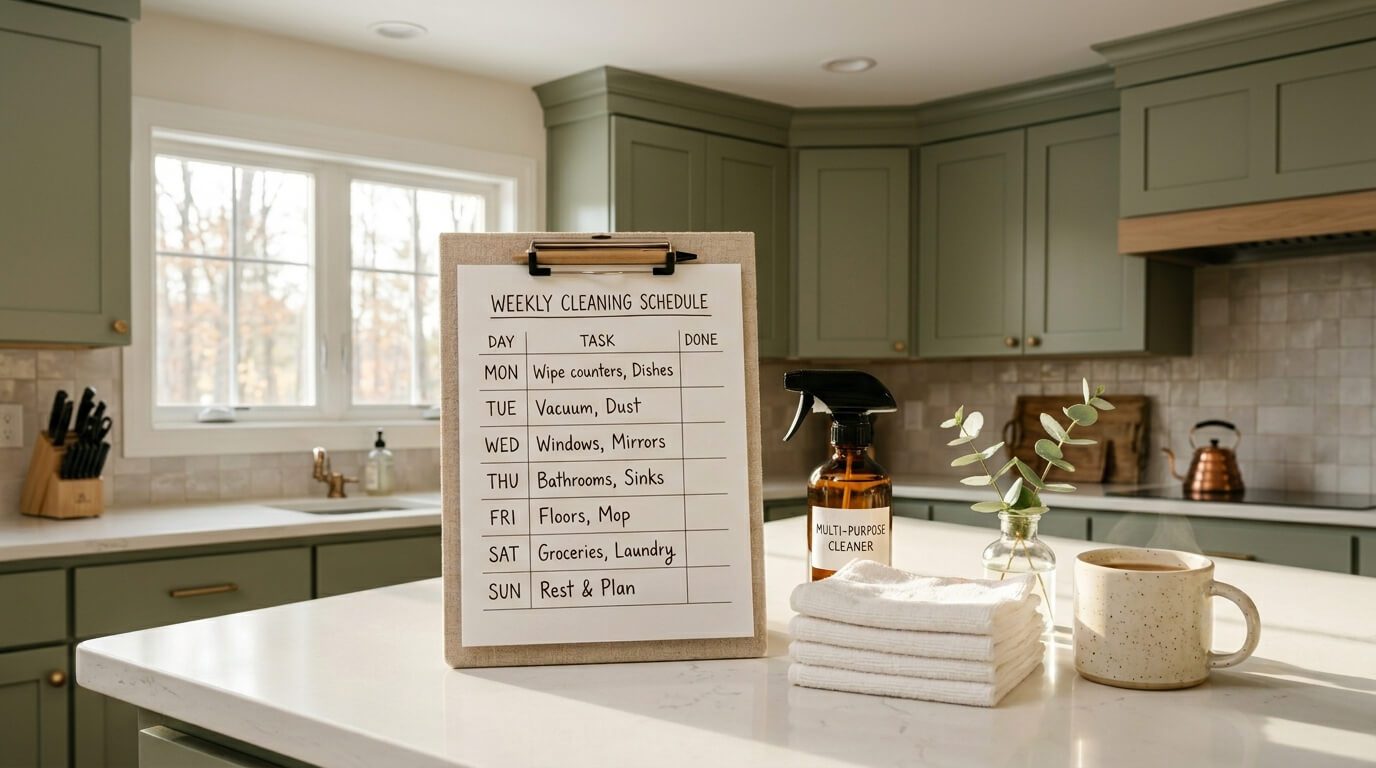

Cleaning Schedule: The Complete Guide to a Cleaner, Calmer Home
A solid cleaning schedule is one of the most underrated tools you can have in your home. Not a complicated app, not a color-coded spreadsheet that takes three hours to build — just a clear, realistic plan that tells you what to clean, how often, and in what order. Once you have that structure in place, keeping your home tidy stops feeling like a constant emergency and starts feeling almost automatic. That shift alone makes an enormous difference in how you experience your own living space.
Most people approach cleaning reactively. They ignore things until they’re visibly dirty, then spend an entire weekend trying to catch up — scrubbing grout, decluttering counters, wondering how the bathroom got this bad. Sound familiar? The problem isn’t a lack of effort. It’s a lack of a system. A well-designed cleaning schedule for home environments breaks the cycle by distributing small tasks across your week so nothing ever gets truly out of control.
Whether you live alone in a studio apartment or manage a five-bedroom house with pets and kids, the principles in this guide apply to you. We’ll walk through how to structure your daily, weekly, and monthly routines, what a master cleaning schedule should actually contain, how to customize a cleaning schedule template for your specific lifestyle, and which tools make every task faster. By the end, you’ll have everything you need to build a system that works — and actually sticks.
Why a Cleaning Schedule Changes Everything
There’s a reason professional housekeepers and cleaning services all operate from strict schedules — it’s simply the most efficient way to maintain any space. When you know exactly what needs to happen on Monday versus Thursday, you eliminate the decision fatigue of standing in a messy room wondering where to even start. That mental clarity is worth more than people realize.
Studies from Princeton University’s Neuroscience Institute have found that physical clutter competes for your attention, reducing your ability to focus and increasing cortisol levels. A consistent cleaning routine — even a modest one — keeps that visual noise in check. The ripple effects extend into your sleep quality, productivity, and overall mood. This isn’t just about having a tidy home; it’s about reducing a genuine source of low-level stress that most people have learned to live with unnecessarily.
In my experience, the biggest shift happens about three weeks into following a real schedule. By then, the tasks have become habitual. You’re wiping down the stovetop after cooking without thinking about it. You’re doing a 10-minute bathroom reset on Friday morning before you even look at your to-do list. Small, consistent actions compound into a home that feels genuinely welcoming — without the marathon Saturday cleaning sessions.
A cleaning schedule doesn’t add work to your life — it redistributes it. Instead of big, exhausting sessions, you do a little every day, and the cumulative result is a consistently cleaner home with far less effort.
What a Master Cleaning Schedule Should Contain
What Information Should a Master Cleaning Schedule Contain?
A master cleaning schedule is more than a list of chores. It’s a comprehensive reference document that accounts for every area of your home, every time frame (daily, weekly, monthly, seasonal), and every type of task — from quick resets to deep cleans. Done right, it becomes the single source of truth for your household’s cleanliness system.
At minimum, a master schedule should include the following components: a task inventory (every cleaning job in the home, broken down by room), a frequency assignment (how often each task actually needs doing), a time estimate (how many minutes each task realistically takes), a responsibility assignment (who does what, especially important in shared households), and a seasonal or annual section for tasks that only come up a few times a year.
The seasonal layer is one most people skip — and it’s a mistake. Things like cleaning behind the refrigerator, washing window tracks, descaling the water heater, and wiping down ceiling fan blades don’t need weekly attention, but ignoring them for years creates real maintenance issues. Building them into a quarterly or biannual schedule means they actually get done.
Walk through every room of your home with a notepad and write down every surface, appliance, and fixture that could need cleaning. You’ll likely end up with 60–80 individual items. That list becomes the backbone of your master schedule.
One thing I’ve learned from years of refining home routines: tasks without assigned frequencies always get skipped. If your schedule just says “clean kitchen,” it means nothing. “Wipe down cabinet fronts — monthly” is actionable. Specificity is what separates a cleaning schedule that actually works from a wishful list that gets abandoned by week two.
Building Your Daily, Weekly & Monthly Cleaning Schedule
The daily weekly monthly cleaning schedule is the three-tier framework that most professional organizers recommend — and for good reason. Each tier serves a distinct purpose, and together they cover virtually every cleaning need in any home without overwhelming any single day.
⚡ Daily Tasks
- Make the bed
- Wipe kitchen counters
- Wash dishes / run dishwasher
- Quick bathroom wipe-down
- Pick up clutter in main rooms
- Sweep or spot-vacuum high-traffic areas
- Empty small trash bins if needed
📅 Weekly Tasks
- Full vacuum all floors
- Mop hard floors
- Scrub toilets, sinks & tub/shower
- Clean bathroom mirrors
- Change bed linens
- Wipe down appliances
- Take out all trash & recycling
- Dust surfaces & fans
📆 Monthly Tasks
- Clean inside microwave & oven
- Wipe cabinet fronts
- Descale coffee maker & kettle
- Clean shower curtain or door tracks
- Vacuum under furniture
- Wipe baseboards & door frames
- Deep clean fridge interior
Daily tasks should average 10–15 minutes total. If your daily routine takes more than 20 minutes, you’ve either assigned too many tasks or your weekly sessions aren’t happening consistently enough. The sweet spot is a daily reset that’s so quick it never becomes a reason to skip it.
Your weekly house cleaning schedule is where the real maintenance happens. Blocking out 60–90 minutes once a week — or splitting it across two shorter sessions — is enough to handle all the weekly tasks listed above for a standard 2–3 bedroom home. Larger homes may need 2 hours, but rarely more. If it’s consistently taking longer, the monthly tasks are probably bleeding in because they’ve been deferred too long.
According to the Bureau of Labor Statistics American Time Use Survey, the average American spends about 2.3 hours per week on household cleaning activities. A structured cleaning schedule can accomplish more in less time by eliminating wasted decision-making and duplicated effort.
Room-by-Room House Cleaning Schedule Breakdown
A house cleaning schedule becomes far more useful when it’s organized by room rather than by task type alone. Different rooms accumulate dirt and grime at different rates, and understanding that helps you allocate time more realistically.
How Do You Organize a Cleaning Schedule?
The most effective organizational method combines frequency tiers with room-by-room assignments. Rather than trying to clean every room every day, you assign specific rooms to specific days of the week while maintaining daily resets for high-traffic areas. Here’s a realistic example for a three-bedroom home:
- Monday: Kitchen deep clean (inside appliances, cabinet fronts, floor mopping)
- Tuesday: All bathrooms (scrub toilets, sinks, showers, mirrors, floors)
- Wednesday: Living room (vacuum, dust all surfaces, wipe electronics)
- Thursday: Bedrooms (vacuum, dust, change linens, tidy closets)
- Friday: Entryways, hallways, stairs — any overflow from the week
- Saturday: One monthly task from your master list
- Sunday: Rest — daily resets only, nothing extra
This “zone cleaning” approach is used by professional housekeepers worldwide because it’s sustainable. You’re never doing everything at once, which means you’re never so overwhelmed that you skip the whole thing. Each day’s session is short enough to fit into a real life with work, kids, and everything else competing for your time.
The kitchen and bathrooms deserve extra attention in any house cleaning schedule. These are the rooms where bacteria and mold actually threaten health — not just aesthetics. The kitchen, in particular, requires both daily maintenance (counters, dishes) and weekly deep attention (stovetop, sink basin, floor). If you’re short on time during the week, these two room types should always be prioritized over bedrooms and living spaces.
Don’t try to build a perfect cleaning schedule all at once and implement it immediately. Start with just your daily tasks for two weeks. Once those feel automatic, layer in the weekly schedule. Adding everything simultaneously is the fastest path to abandoning the system entirely.
How to Create a Cleaning Schedule Template That Sticks
A cleaning schedule template is only valuable if it reflects your actual life — not an idealized version of it. The most beautifully designed template in the world is useless if it assumes you have two free hours every day or if it doesn’t account for the fact that you travel four days a week for work. Personalization is everything.
How to Make a Cleaning Schedule That Fits Your Real Life
Start by auditing your current week. Where do you genuinely have 10–15 free minutes? Maybe it’s right after the morning drop-off, or during the 20-minute window between finishing dinner and starting your evening routine. Those pockets of time become your daily cleaning slots. Don’t create a schedule that requires you to restructure your entire day — find the natural gaps and slot tasks into them.
Next, inventory your home honestly. A cleaning schedule for home use needs to reflect how many rooms you have, how quickly each gets dirty, and which areas actually bother you most when they’re messy. For some people, a dirty kitchen is intolerable; for others, it’s a dusty living room. Prioritize accordingly. Your schedule should reflect your standards, not a magazine’s.
Once you’ve drafted your template, test it for one full week without judging yourself for what doesn’t get done. Treat it as a data-collection exercise. Note which tasks were too time-consuming, which felt unnecessary, and where the schedule broke down. Then revise and test again. Most people land on their ideal cleaning routine after two or three iterations, not on the first try.
| Household Size | Daily Time Needed | Weekly Deep Clean Time |
|---|---|---|
| Studio / 1BR | 8–10 minutes | 45–60 minutes |
| 2–3 Bedroom Home | 12–18 minutes | 75–90 minutes |
| 4+ Bedroom / Family Home | 20–30 minutes | 2–2.5 hours |
| With Pets | Add 10–15 min | Add 20–30 min |
If you share your home with others, assigning tasks is just as important as scheduling them. Ambiguity about who’s responsible for what leads directly to nothing getting done. Even young children can handle age-appropriate tasks like making their own bed, picking up toys, and wiping down their bathroom sink. Distributing the load makes the whole system more sustainable for everyone.
Tools & Products That Make Your Cleaning Schedule Easier
The right equipment doesn’t just make cleaning faster — it makes it more effective, which means fewer repeat sessions and more durable results. You don’t need a closet full of specialty gadgets, but a few well-chosen tools genuinely transform how smoothly your schedule runs.
For flooring, a reliable vacuum is probably your most-used tool across the entire schedule. If you have pets, this becomes even more critical. Investing in one of the best cordless vacuums for pet hair can cut your vacuuming time dramatically — cordless models are faster to grab and use, which means you’ll actually use them for the quick daily sweep rather than pulling out a heavy corded machine only on weekends.
Beyond your vacuum, modern cleaning gadgets have become genuinely impressive. Steam cleaners, UV sanitizers, robotic vacuums for maintenance between weekly sessions, and electric spin scrubbers for grout and tile all reduce physical effort and improve results. You don’t need all of them — identify the two or three tasks you dread most on your schedule and find the tool that removes the friction from those specific jobs.
On the products side, what you clean with matters as much as how often you clean. Harsh chemicals are sometimes necessary, but for routine maintenance tasks — daily counter wiping, bathroom resets, floor mopping — gentler formulas are better for surfaces, for indoor air quality, and for the environment. Incorporating eco-friendly cleaning products into your regular rotation is a smart upgrade that doesn’t compromise effectiveness when you choose the right ones.
One of the most versatile and cost-effective products in any home cleaning arsenal is white vinegar. Diluted with water, it handles everything from descaling coffee makers to cleaning glass stovetops to removing soap scum from shower walls. If you haven’t explored the full range of cleaning hacks with vinegar, you’re leaving a lot of effectiveness and money on the table. It genuinely replaces several expensive specialty products.
Keep a small cleaning caddy stocked with your daily essentials — microfiber cloths, an all-purpose spray, and a glass cleaner — and carry it room to room during your daily reset. Eliminating the time spent fetching supplies from a central location saves 3–5 minutes per session, which adds up to meaningful time over a year.
Speaking of microfiber — don’t overlook cloth quality. Cheap cloths smear more than they clean, especially on glass and polished surfaces. High-quality microfiber has a dramatically different performance profile. The same principle applies to car interiors and detailing; well-made microfiber car cloths are a worthwhile upgrade that produces noticeably better results with less effort. The same logic applies to household cloths — buy a decent set and they’ll last years while actually cleaning rather than just redistributing dust.
Common Mistakes People Make with Cleaning Schedules
Building a cleaning schedule is easy. Sticking to one is where most people run into trouble — often for predictable, avoidable reasons. These are the patterns that consistently derail even the most motivated people.
- Overloading the schedule immediately: Adding 20 tasks from day one creates overwhelm. Start with a handful of daily tasks, then add layers gradually as each tier becomes habitual.
- Being too rigid about timing: Life happens. If you miss Tuesday’s bathroom cleaning, do it Wednesday. A schedule is a framework, not a punishment system. Flexibility is what makes it sustainable long-term.
- Skipping the seasonal layer: Monthly tasks are the ones most often deferred, but seasonal tasks — cleaning behind appliances, washing curtains, descaling water fixtures — are almost universally ignored. They matter for both hygiene and home maintenance.
- Not owning the right tools: Trying to vacuum pet hair with an underpowered machine, or mop tile floors without the right cleaner, means tasks take twice as long and still don’t look right. Friction in the process is a major reason people skip tasks.
- Building someone else’s schedule: A cleaning schedule for home should reflect your home’s specific needs. Copying a template without adapting it to your space, lifestyle, and standards means it’ll stop fitting within weeks.
- Neglecting the street cleaning schedule for your area: If you park on the street, ignoring your local street cleaning schedule today costs you parking tickets. Cities like San Francisco have strict street cleaning schedules that vary by block — checking the san francisco street cleaning schedule (or your local equivalent) takes 30 seconds and saves real money.
The most dangerous mistake of all is treating a missed day as a failure. Perfectionism is the enemy of consistency. The person who follows their cleaning schedule 80% of the time will always have a cleaner, calmer home than the person who follows it perfectly for two weeks and then abandons it because they missed one session.
Progress over perfection. A cleaning schedule that’s followed imperfectly for a year produces exponentially better results than a perfect schedule followed for two weeks. Build in flexibility and give yourself grace when life intervenes.
Longevity & Maintenance — Making Your Routine Last
The cleaning schedules that stand the test of time share a few characteristics: they’re realistic about time constraints, they’re reviewed and updated quarterly, and they’re tied to existing habits rather than requiring entirely new ones. One effective strategy is “habit stacking” — attaching cleaning tasks to things you already do. Wiping the bathroom sink while your coffee brews. Doing a quick kitchen counter wipe while your dinner heats. These micro-tasks take under two minutes each and prevent buildup without requiring dedicated time blocks.
Review your cleaning schedule every three months. As seasons change, tasks change. Spring calls for window washing and deep carpet cleaning. Winter calls for more attention to entryways and mudrooms. A schedule that evolves with your life and your home’s seasonal patterns will stay relevant — and that relevance is what keeps you following it.
Frequently Asked Questions
What information should a master cleaning schedule contain?
A master cleaning schedule should contain a complete task inventory organized by room, a frequency assignment for each task (daily, weekly, monthly, or seasonal), a realistic time estimate for each task, and — in shared households — a responsibility assignment indicating who handles what. It should also include a seasonal or annual layer covering tasks that only need attention a few times per year, such as cleaning behind major appliances, washing window tracks, or descaling the water heater. The most effective master schedules are living documents that get reviewed and updated quarterly as household needs shift. Without all these components, a cleaning schedule tends to be incomplete and gets abandoned because it inevitably misses things.
How do you organize a cleaning schedule effectively?
The most effective method combines frequency tiers (daily, weekly, monthly) with room-based zone assignments. Rather than attempting to clean every room every day, you assign specific zones to specific weekdays — for example, kitchen on Monday, bathrooms on Tuesday, living areas on Wednesday. Daily tasks remain consistent across every day and focus on high-traffic resets that take 10–15 minutes total. Weekly deep cleans are assigned by zone and typically take 60–90 minutes for an average home. Organizing this way prevents overwhelm, keeps sessions short enough to realistically fit into a working week, and ensures every area gets proper attention on a reliable rotation without anything being neglected for too long.
How to make a cleaning schedule that I’ll actually follow?
The key to making a cleaning schedule you’ll actually follow is building it around your real life, not an idealized version of it. Start by auditing your week to find natural pockets of 10–15 minutes where cleaning tasks can slot in without requiring you to restructure your day. Implement only daily tasks for the first two weeks — once those feel automatic, layer in the weekly schedule. Choose a template format that works for how your brain functions: some people prefer paper checklists, others use apps, and some do best with a simple whiteboard on the wall. Test the schedule for a full week, note what didn’t work, and revise. Most people find their sustainable rhythm after two or three iterations. Flexibility and self-compassion are more important than strict adherence, especially at the start.
What is a good daily cleaning schedule for home?
A good daily cleaning schedule for home keeps total time under 15 minutes and focuses exclusively on tasks that prevent visible mess from accumulating. Core daily tasks include making the bed (which has a dramatic visual impact on the whole bedroom), wiping kitchen counters and stovetop after cooking, washing dishes or running the dishwasher, doing a quick bathroom wipe-down of sink and counter, doing a general tidy of main living areas (putting things back in their places), and spot-sweeping or vacuuming high-traffic floors. These six categories cover the areas that most affect how a home looks and feels day-to-day. Everything else — deeper scrubbing, dusting, floor mopping — belongs in the weekly schedule.
How often should a weekly house cleaning schedule be done?
A weekly house cleaning schedule should be executed once every seven days for most households, though the specific day can flex based on your schedule. The weekly session covers tasks that accumulate visibly within a week but don’t require daily attention: full vacuuming of all floors, mopping hard surfaces, scrubbing bathrooms (toilet, tub, shower, sink), cleaning mirrors, changing bed linens, dusting furniture and fans, and handling all trash and recycling. For households with young children, pets, or more than four people, some of these weekly tasks — particularly vacuuming and bathroom cleaning — may realistically need to happen twice a week to maintain the same standard. Block the time as a recurring calendar event to make it non-negotiable.
What’s the difference between a cleaning schedule and a cleaning routine?
A cleaning schedule is a structured document — a plan that assigns specific tasks to specific timeframes, whether that’s particular days of the week, monthly dates, or seasonal windows. A cleaning routine, by contrast, is a habitual pattern of behavior — the actual sequence of actions you take when it’s time to clean. The schedule tells you what to do and when; the routine is how you do it efficiently once you’re in motion. Both are necessary for a truly effective system. The schedule provides the framework that ensures nothing gets missed or forgotten, while the routine — developed through repetition — ensures that when you do sit down to clean, you’re working efficiently without wasting time deciding what to do next.
How do I include seasonal tasks in my cleaning schedule template?
Seasonal tasks work best when added as a dedicated fourth tier in your cleaning schedule template, distinct from daily, weekly, and monthly tasks. Divide the calendar into four quarters and assign seasonal deep-clean tasks to each one: spring (window washing, curtain laundering, patio furniture cleaning, air vent vacuuming), summer (exterior surface cleaning, ceiling fan blade wiping, refrigerator coil vacuuming), fall (gutter cleaning, chimney inspection, grout resealing), and winter (heating vent cleaning, under-appliance deep clean, basement organization). Mark these tasks on your regular calendar — either the last Saturday of each season or spread across the months in that quarter. Treating seasonal tasks as scheduled appointments rather than vague intentions is the only reliable way to ensure they actually happen.
Are there cleaning schedule apps that actually help?
Yes, several well-designed apps can meaningfully support your cleaning schedule by providing reminders, task tracking, and household member assignments. Popular options include Tody, which tracks when each task was last done and how “dirty” it is based on elapsed time; OurHome, which works well for families with task assignment and gamification; and Habitica, which gamifies routine tasks including cleaning. That said, many people find a simple paper checklist or whiteboard just as effective — and significantly faster to update. The best format is the one you’ll actually use consistently. If you’ve tried apps before and abandoned them, it’s worth trying a physical format: a printed weekly cleaning schedule template inside a page protector that you can mark with a dry-erase marker and reset each week.
Conclusion: Build Your Schedule and Start Today
A cleaning schedule is one of those things that sounds mundane but genuinely transforms daily life when you actually implement one. The homes that always seem effortlessly clean aren’t cleaned by people with more time — they’re maintained by people with better systems. The daily, weekly, and monthly framework outlined in this guide is that system, and it scales to any home size, any lifestyle, and any budget.
The best version of your cleaning schedule is the one you actually follow — not the most comprehensive one or the one someone else swears by. Start small. Lock in your daily tasks. Add your weekly layer. Incorporate monthly jobs as those become routine. Within a month, you’ll have built a foundation that keeps your home in genuinely good shape with a fraction of the effort you’re probably spending right now.
As you build out your routine, you’ll naturally encounter adjacent topics worth exploring: choosing the right cleaning products for different surfaces and materials, upgrading the tools that handle the most time-consuming tasks on your schedule, and discovering the small environmental swaps that make your cleaning routine both more effective and less harmful. The cleaning schedule you build today is really the beginning of a broader system — one that makes your home the comfortable, well-maintained space you actually want to live in every day.