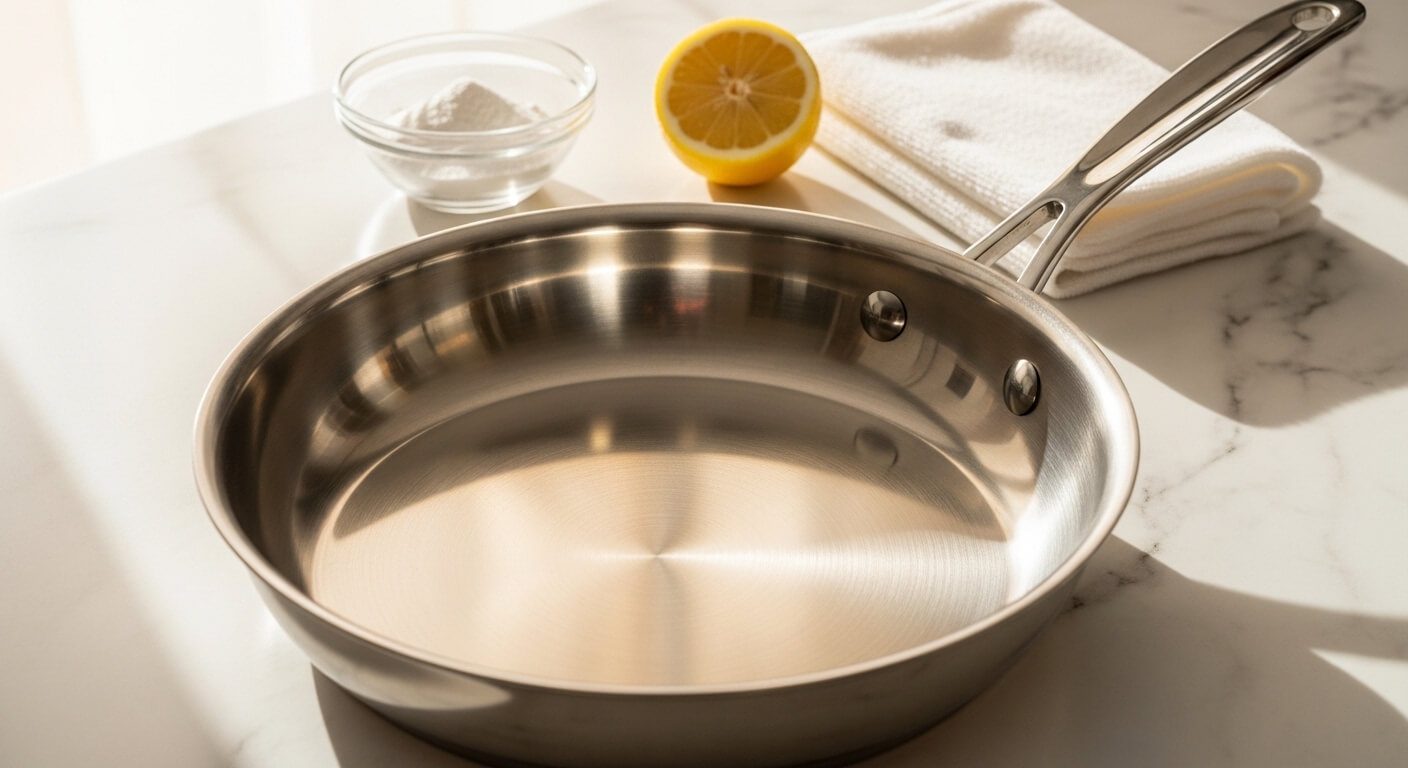

How to Clean Stainless Steel Pans: The Complete Guide to Spotless, Like-New Cookware
🕒 Estimated read time: ~9 minutes
If you’ve ever stared at a stainless steel pan with a stubborn ring of burnt oil around the base and wondered whether it was ruined for good — you’re not alone. Learning how to clean stainless steel pans properly is something most people figure out through frustrating trial and error rather than being taught upfront. And that’s a shame, because the right method isn’t complicated. It just requires knowing which products to use, which to avoid, and a few techniques that make the whole process take five minutes rather than forty-five.
Stainless steel is one of the best cookware materials available. It’s durable, non-reactive, and distributes heat evenly when used correctly. But it also shows every water spot, grease smear, and high-heat discoloration in vivid detail. That’s not a flaw — it’s just the nature of the material. Once you understand why staining and residue happen, cleaning becomes much less of a mystery. Burnt-on food, rainbow discoloration, white mineral deposits from hard water — each one has a specific fix, and none of them require aggressive scrubbing that damages the surface.
This guide covers everything: daily cleaning habits, deep-cleaning methods for tough stains, the best way to clean stainless steel for each type of mess, how to handle discoloration, and the common mistakes that quietly wear your cookware down over time. Whether you have a single skillet or a full set of pans, these methods apply across the board.
Why Stainless Steel Pans Stain and Discolor
Understanding what you’re dealing with makes cleaning far less frustrating. Stainless steel gets its name from a chromium oxide layer that forms on the surface — this invisible layer is what makes it corrosion-resistant. But it’s not invincible. Heat, certain foods, hard water minerals, and harsh cleaning chemicals can all disrupt this layer or leave deposits that look like permanent damage even when they’re not.
The most common culprits are: burnt-on food proteins and sugars that bond to the steel surface under high heat; calcium and magnesium deposits left behind when hard water evaporates (those white rings and spots); rainbow-colored heat tinting caused by oxidation when the pan gets too hot; and grease polymerization, where cooking oil bakes onto the surface and turns into a dark, almost varnish-like coating. Each of these responds to a different cleaning approach, which is why the generic “just scrub harder” advice so often fails.
According to materials science research on stainless steel, the chromium oxide layer that protects stainless steel actually self-repairs when exposed to oxygen — but only if it hasn’t been scratched too deeply by abrasive scrubbing. This is why protecting the surface finish matters far beyond just aesthetics.
Everyday Cleaning: The Right Routine After Each Use
The single best thing you can do for your stainless steel cookware is establish a solid post-cooking routine. Let the pan cool completely before cleaning — never plunge a hot stainless steel pan into cold water. Thermal shock can warp the base, and warped pans don’t sit flat on the hob, which leads to uneven cooking every single time after that. Give it ten minutes minimum.
Once cooled, add a small amount of warm water and a drop of dish soap. Use a soft sponge or a non-scratch nylon scrubber and work in the direction of the grain — stainless steel has a brushed grain pattern that runs in one direction, and cleaning with the grain prevents micro-scratches that dull the finish over time. For light residue, this is all you need. Rinse thoroughly and dry immediately with a clean cloth. Air-drying stainless steel causes water spots, especially in hard water areas.
That last step — drying by hand — is one of the most underrated habits in cookware care. It takes 20 extra seconds and it’s the difference between pans that look pristine after years of use and ones that look tired and spotted within a few months. If you’re into making your cleaning routine smarter and more efficient across the whole kitchen, our guide to the most useful cleaning gadgets covers a range of tools that make this kind of daily maintenance genuinely effortless.
To prevent food from sticking in the first place — which makes cleaning dramatically easier — always preheat your stainless steel pan properly before adding oil. Heat the empty pan over medium heat for about 2 minutes, add oil, let it shimmer, then add food. The Leidenfrost effect causes water molecules on the food surface to form a vapor layer that prevents sticking. Proper preheat equals dramatically less burnt residue to clean.
How to Clean a Stainless Steel Pan with Burnt Food
How to Clean Stainless Steel Pans When Food Is Stuck
Burnt food is the most common complaint, and the temptation is always to reach for a steel wool pad and start scrubbing. Resist that urge — steel wool scratches deeply and permanently into the stainless surface. Instead, the method that works consistently is deglazing with water while the pan is still warm (not scorching hot, just warm). Pour about half a cup of water into the warm pan and let it sit for two to three minutes. The residual heat and the water work together to loosen even fairly stubborn burnt bits.
For heavier burnt-on food, the baking soda method is your best friend. Fill the pan with just enough water to cover the burnt area, bring it to a gentle simmer on the hob, then add two tablespoons of baking soda. Let it simmer for five minutes. The alkaline reaction lifts the carbonized food from the metal surface without any aggressive scrubbing. Once cooled, most of the residue will wipe away with a soft sponge. For anything remaining, a paste of baking soda and a small amount of dish soap applied with a nylon scrubber will handle it.
White vinegar is another extremely effective tool for stubborn residue on a stainless steel pan. Add equal parts water and white vinegar, bring to a simmer for a few minutes, then let cool and wipe clean. The acetic acid dissolves carbonized residue and mineral deposits simultaneously. There’s a whole world of smart uses for vinegar in kitchen cleaning — something we explore in depth in our article on cleaning hacks with vinegar that extends well beyond just cookware.
Never use bleach or chlorine-based cleaners on stainless steel cookware or appliances. Chlorine breaks down the chromium oxide protective layer, creating pitting and corrosion that is genuinely permanent and cannot be reversed. This applies even to diluted bleach solutions used for “sanitizing” — they’re not necessary on stainless and they cause real, lasting damage.
Dealing with Rainbow Discoloration and Heat Stains
That iridescent rainbow sheen you sometimes see on a stainless steel pan after high-heat cooking is called heat tinting or temper coloring. It’s actually a thin oxidation layer on the surface — a sign the pan got very hot. It’s not damage in a structural sense, and it doesn’t affect cooking performance at all, but it looks unsightly on an otherwise clean pan.
The fix is simple: white vinegar. Dampen a soft cloth with undiluted white vinegar and rub it gently over the discolored area in the direction of the grain. The acid dissolves the oxidation layer almost immediately. Rinse with warm water and dry immediately. For stubborn discoloration that vinegar alone doesn’t fully address, a paste of cream of tartar and water (about one tablespoon of cream of tartar to two tablespoons of water) worked gently in the direction of the grain is remarkably effective.
White mineral deposits — those chalky-looking rings and spots left by hard water — respond well to lemon juice or a vinegar-water solution. The citric acid in lemon juice dissolves calcium deposits without any scrubbing. Squeeze half a lemon directly onto the deposit, let it sit for two minutes, then wipe clean. If you’re in a very hard water area, this might need to happen every couple of weeks as part of your regular maintenance.
Rainbow discoloration and white mineral spots are surface-level issues only — they don’t indicate damage to your pan and both respond quickly to acid-based cleaning (vinegar, lemon juice, cream of tartar). There’s no need for commercial chemical cleaners or aggressive scrubbing for either of these common problems.
The Best Way to Clean Stainless Steel: A Method Comparison
Different messes call for different approaches. Here’s how the most commonly recommended methods stack up against each other in terms of effectiveness, effort, and surface safety:
Dish soap and warm water is the foundation. It handles everyday residue, grease, and light food debris without any risk to the surface. Use it after every cook. Limitation: it does nothing for burnt-on food, mineral deposits, or discoloration.
Baking soda paste (baking soda mixed with a little water or dish soap to form a thick paste) is the go-to for moderate burnt food and grease buildup. It’s mildly abrasive enough to lift residue but fine-grained enough to not scratch. Apply, leave for five minutes, scrub gently with a nylon pad in the direction of the grain, rinse. Works on 90% of tough cleaning jobs.
White vinegar is the best tool for mineral deposits, water spots, and rainbow discoloration. It’s also useful as a final rinse after baking soda cleaning — since baking soda is alkaline and vinegar is acidic, using both sequentially (baking soda first, then a vinegar rinse) neutralizes any residue and leaves the surface clean and streak-free.
Bar Keepers Friend (a commercial oxalic acid-based powder cleaner) is the heavy artillery for seriously stubborn staining. Good Housekeeping’s cleaning experts rate it as one of the most effective products for restoring stainless steel to a like-new finish. Use it sparingly — it’s more abrasive than baking soda — and always work in the direction of the grain. Rinse thoroughly afterward.
Boiling water with baking soda is best for pans with extensive burnt residue covering most of the cooking surface. Fill, simmer with baking soda, cool, and wipe. It requires the least manual effort of any method and is the best first step for pans that have been badly neglected.
The best way to clean stainless steel is ultimately the simplest one that addresses the specific type of mess you have. Matching method to problem saves time and protects your cookware.
Cleaning Stainless Steel Beyond the Pan: Appliances, Sinks, and Surfaces
How to Clean Stainless Steel Appliances Without Streaks
The principles for how to clean stainless steel appliances are nearly identical to those for pans — but the scale and the tools are different. Fridges, dishwashers, ovens, and range hoods all have the same brushed grain finish and the same sensitivity to scratches and chlorine. The most common mistake people make with appliances is using paper towels, which actually create fine scratches on the stainless surface over repeated use. Always use a microfiber cloth instead.
For everyday fingerprints and smudges on a stainless steel fridge, a few drops of mineral oil on a microfiber cloth buffed in the direction of the grain works beautifully. It cleans the surface and leaves a very thin protective layer that resists future fingerprints. For deeper cleaning — grease splatters around a range, for example — a solution of mild dish soap and warm water applied with a microfiber cloth, followed by a clean water rinse and immediate dry, handles the job without leaving streaks. The same microfiber cleaning logic that works wonders on kitchen appliances also applies to other household surfaces — something that’s worth exploring if you’re looking at microfiber car cloths that double as excellent home cleaning tools.
How to Clean a Stainless Steel Sink
Sinks take more abuse than almost any other stainless surface in the home — constant water exposure, food contact, and utensil contact create a cocktail of potential staining issues. The most effective routine for a stainless steel sink is a weekly clean with baking soda. Sprinkle baking soda generously over the wet sink surface, let it sit for a few minutes, then scrub gently with a soft nylon brush or cloth in the direction of the grain. Rinse thoroughly. This removes water spots, light staining, and food residue without scratching.
For more stubborn rust spots (which are often not rust from the steel itself but iron deposits from hard water), a paste of lemon juice and cream of tartar left on the spot for five minutes will dissolve them without damage. After cleaning, a light coating of mineral oil buffed in — same as for appliances — keeps the sink looking polished and reduces water spotting dramatically between cleans.
Always keep a dedicated microfiber cloth near the sink for quick daily wipe-downs after use. Taking 30 seconds to wipe the sink dry after washing dishes prevents hard water deposits from building up entirely. It sounds tediously simple, but this single habit reduces your deep-cleaning time by more than half. If you’re looking to build a greener, more sustainable cleaning kit, our guide to eco friendly cleaning products has great recommendations for natural alternatives to chemical sink cleaners.
Common Cleaning Mistakes That Damage Stainless Steel
Most of the damage I see on stainless steel cookware and appliances is self-inflicted — not by heavy cooking, but by well-intentioned but incorrect cleaning habits. These are the ones worth knowing about.
Using steel wool or harsh abrasive scrubbers. Steel wool leaves deep scratches that permanently dull the finish and create grooves where bacteria can hide. Once the surface is scratched this way, there’s no going back. Always use nylon scrubbers or soft cloths.
Leaving wet food or salty water in the pan. Salt is corrosive to stainless steel, especially when left in contact with the surface for extended periods. Always rinse and dry after cooking salty foods. Never salt your water before it boils in a stainless pot — add salt to already-boiling water to minimize contact time with the cool steel surface, where pitting is more likely.
Cleaning against the grain. Every stainless steel surface has a directional grain from the brushing process. Cleaning across the grain creates visible cross-hatching scratches over time. Take a few seconds to identify which direction the grain runs (look in natural light) and always clean parallel to it.
Putting stainless steel in the dishwasher repeatedly. Most stainless cookware is technically dishwasher-safe, but the high heat, harsh detergents, and water jet action degrade the finish faster than hand washing. For pans you want to keep looking good long-term, hand washing is worth the small extra effort.
Using cooking sprays. Aerosol cooking sprays contain additives that polymerize under heat and build up on stainless surfaces as a golden-brown coating that’s remarkably difficult to remove. Use a small amount of oil applied directly to the pan instead. This is a clean stainless steel pan killer that almost nobody talks about.
According to Wirecutter’s cookware experts, the number one factor in how long stainless steel cookware maintains its appearance is consistent, correct cleaning — far more than the quality of the pan itself.
Longevity and Long-Term Care of Stainless Steel
Well-maintained stainless steel cookware can genuinely last decades. It’s one of the most durable materials in the kitchen — but only if you treat it with appropriate care from the start. Here’s how to build habits that extend your cookware’s life significantly.
Store pans properly. Stacking stainless steel pans directly on top of each other causes scratching on the cooking surface. Place a soft cloth or pan protector between stacked pans, or hang them on a pot rack if space allows. The internal cooking surface is more important to protect than the exterior, since scratches there can affect non-stick performance over time.
After deep cleaning, particularly after using baking soda or Bar Keepers Friend, a very light rub with a small amount of cooking oil buffed in with a soft cloth restores the surface sheen and provides a thin protective coating. This is the same principle used for cast iron seasoning, just far lighter in application.
Periodically inspect your pans for pitting — small, crater-like holes in the surface that indicate the protective chromium layer has been compromised. Minor surface scratches are cosmetic and don’t affect safety, but deep pitting, especially inside the cooking surface, can harbor bacteria and is a sign that the pan may need replacing. High-quality stainless steel from reputable brands, properly maintained, should not pit within 5 to 10 years of regular use.
According to Healthline’s nutrition and cookware research, stainless steel cookware is considered one of the safest materials for food contact because it doesn’t leach chemicals into food under normal cooking conditions. The chromium-nickel alloy is stable and non-reactive with most foods — making proper maintenance not just about appearance, but about keeping that protective layer intact for food safety reasons too.
Finally, if you have a complete home cleaning system — vacuums, mops, microfiber cloths, and so on — consider how your stainless cleaning fits into that routine. A good cordless vacuum handles the debris before it reaches the floor and kitchen surfaces, which means less cooking mess landing on and around your pans during food prep. A joined-up cleaning approach always makes individual tasks faster and easier.
Frequently Asked Questions
How to clean stainless steel pans with badly burnt food?
The most effective approach for badly burnt food in a stainless steel pan is the baking soda boil method. Fill the pan with enough water to cover the burnt area, bring it to a gentle simmer on the hob, then add two tablespoons of baking soda and let it simmer for five minutes. Remove from heat, allow to cool completely, and the burnt residue should lift away with minimal effort using a soft nylon scrubber. For anything remaining, a paste of baking soda and dish soap applied for a few minutes before scrubbing — always in the direction of the grain — will handle it. Avoid steel wool at all stages, as it scratches the surface permanently.
How to clean stainless steel without scratching it?
The keys to scratch-free cleaning are: always identify and clean in the direction of the grain (it runs in one direction on every brushed stainless surface), use only soft nylon scrubbers or microfiber cloths rather than steel wool or abrasive sponges, and choose fine-grained cleaners like baking soda paste rather than coarsely abrasive powders. For appliances specifically, microfiber cloths are essential — paper towels, despite feeling soft, create micro-scratches with repeated use. When using a commercial cleaner like Bar Keepers Friend, apply with a soft cloth and use gentle pressure. More pressure does not mean more cleaning — it means more scratching.
How to clean stainless steel appliances like a fridge or dishwasher?
For everyday cleaning of stainless steel appliances, the most effective and streak-free method is a few drops of mineral oil on a microfiber cloth, buffed in the direction of the grain. This simultaneously cleans fingerprints and smudges while leaving a thin protective layer that resists future marks. For deeper cleaning — grease buildup around a range hood, for example — warm water with a small amount of dish soap on a microfiber cloth, followed by a clean-water wipe and immediate dry, works without leaving streaks. Never use chlorine-based cleaners or bleach on stainless appliances, as these permanently damage the protective surface layer. Always dry immediately after any wet cleaning to prevent water spots.
What is the best way to clean stainless steel that has discolored?
Rainbow-colored discoloration (heat tinting) responds excellently to white vinegar — dampen a soft cloth with undiluted white vinegar and rub in the direction of the grain. The acid dissolves the thin oxidation layer almost immediately. For persistent discoloration, a paste of cream of tartar and water applied for five minutes before wiping clean is even more effective. White mineral deposits from hard water respond to lemon juice or a 50/50 vinegar-water solution left on the surface for two to three minutes before wiping. In nearly all cases, these natural acid-based approaches will fully restore the original finish without any commercial products required.
Can I use vinegar to clean stainless steel pans?
Yes — white vinegar is one of the safest and most effective cleaners for stainless steel pans. It’s particularly useful for dissolving mineral deposits, removing rainbow heat tinting, and cutting through grease residue. Use it diluted (equal parts water and vinegar) for general cleaning, or undiluted on a cloth for targeted discoloration treatment. One important note: after using vinegar, always rinse thoroughly with water and dry immediately. Leaving vinegar on stainless steel for extended periods — more than 30 minutes — can start to affect the surface if the steel is of lower quality. For regular-quality cookware and appliances, this isn’t a practical concern with normal usage.
How do I remove white spots from stainless steel pans?
White spots on stainless steel pans are almost always mineral deposits from hard water — calcium and magnesium left behind when water evaporates. They’re not corrosion and they’re not permanent. The fix is an acid-based cleaner: squeeze half a lemon directly onto the spots and leave for two to three minutes, then wipe clean with a soft cloth. Alternatively, a solution of equal parts white vinegar and water simmered in the pan for three minutes, then cooled and wiped, will dissolve the deposits. To prevent them from recurring, develop the habit of drying the pan by hand immediately after rinsing rather than leaving it to air-dry.
Is Bar Keepers Friend safe for stainless steel cookware?
Yes — Bar Keepers Friend is widely regarded by cookware manufacturers and cleaning experts as a safe and effective cleaner for stainless steel cookware and appliances. Its active ingredient is oxalic acid, which dissolves rust stains, mineral deposits, and heat discoloration without the harshness of bleach-based cleaners. Always use it as a paste mixed with water (not dry), apply with a soft cloth or nylon scrubber in the direction of the grain, and rinse thoroughly afterward. Don’t leave it on the surface for more than one minute without rinsing, and avoid using it on the exterior of pans that have a colored coating or special finish.
How often should I deep-clean my stainless steel pans?
For pans used regularly — several times per week — a monthly deep-clean with baking soda or Bar Keepers Friend is a reasonable frequency to remove any cumulative buildup of grease and mineral deposits that daily washing misses. If you cook on high heat frequently, or if you notice the interior of the pan looking dull or grey rather than shiny silver, that’s a good visual cue that a deep-clean is due. Pans used less frequently may only need a deep-clean every two to three months. The daily cleaning habit — warm water, dish soap, dry immediately — is what makes deep-cleaning sessions shorter and less effortful.
Conclusion
Knowing how to clean stainless steel pans properly is one of those kitchen skills that pays dividends every single week. Your pans last longer, they perform better, and honestly — there’s real satisfaction in a set of cookware that still looks great after years of heavy use. The methods aren’t complicated: baking soda for burnt food, vinegar for discoloration and mineral deposits, gentle nylon scrubbers instead of steel wool, and the discipline to always dry by hand rather than air-dry.
The same principles extend well beyond your pans. Whether you’re figuring out how to clean stainless steel appliances like your fridge and dishwasher, or tackling a stainless steel sink that’s built up mineral deposits over months, the tools and techniques transfer directly. If you want to take your home cleaning routine to the next level, there’s a lot of value in building a smarter, more natural product lineup — our coverage of eco friendly cleaning products walks through the best options for kitchens in particular. And if you want to understand how the right cleaning tools make these tasks faster and less effortful, the cleaning gadgets guide is worth a read.
Take care of your stainless steel the right way, and it will take care of you for a very long time.