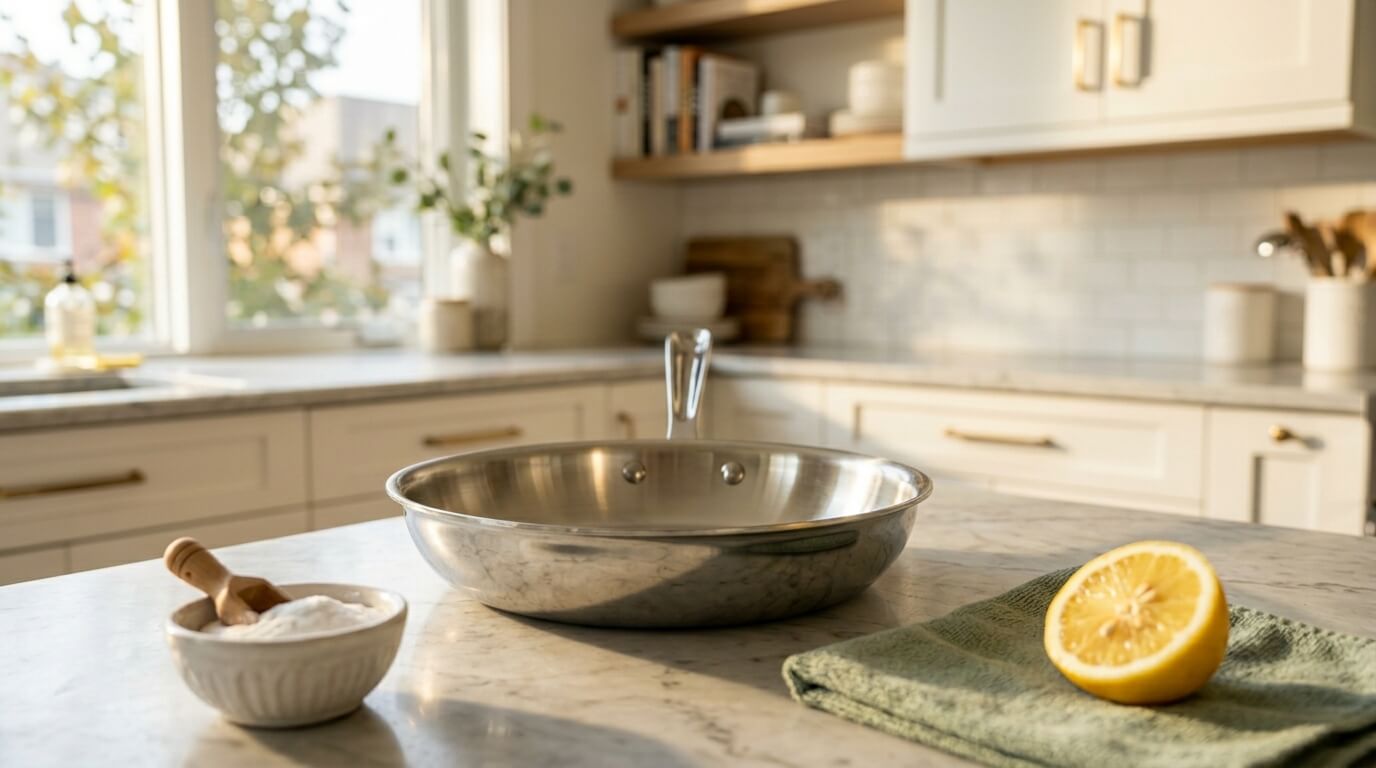

How To Clean Stainless Steel Pans: The Complete Guide to Spotless, Long-Lasting Cookware
Estimated read time: 9 minutes
Knowing how to clean stainless steel pans properly is one of those kitchen skills that separates good cooks from great ones. It sounds simple enough, but if you’ve ever dealt with a rainbow-stained pan, stuck-on grease that refuses to budge, or the dreaded white residue left behind after boiling water, you know it’s anything but basic. Stainless steel cookware is an investment — and treating it right means it will serve you beautifully for decades.
The good news is that cleaning stainless steel is far less complicated than most people think, once you understand the material itself. Stainless steel is non-reactive, durable, and designed to handle high heat — but it does have its quirks. The wrong cleaning method can scratch the surface, cause pitting, or strip the protective oxide layer that keeps your pans looking pristine. In my experience, the biggest cleaning mistakes happen not from neglect, but from using the wrong tools or products.
Whether you’re dealing with burnt-on food from last night’s sear, a yellowish tinge from high-heat cooking, or just trying to keep your everyday pans gleaming, this guide has you covered. We’ll walk through the best techniques for every scenario — from quick daily rinses to deep cleaning sessions — and share the professional tips that will genuinely transform the way you care for your cookware.
Why Stainless Steel Pans Get Dirty (and What That Means for Cleaning)
Before you dive into scrubbing, it helps to understand what you’re actually dealing with. Stainless steel is an alloy — primarily iron, chromium, and nickel — and that chromium content is what forms the passive oxide layer that resists rust and corrosion. This layer is invisible to the naked eye but critically important. When it gets compromised by harsh abrasives, bleach-based cleaners, or extreme temperature changes, your pan becomes more vulnerable to staining and pitting.
The most common culprits behind a dirty stainless steel pan are proteins from meat and eggs (which bond to the steel surface during cooking), mineral deposits from hard water, carbonized food residue from high-heat searing, and polymerized oils that leave a brownish, sticky film. Each of these requires a slightly different approach — which is exactly why a one-size-fits-all scrub isn’t always the answer.
Understanding this science also explains why timing matters so much. Letting a hot pan cool naturally before adding water (or letting a dirty pan soak briefly) dramatically reduces the effort needed to clean stainless steel, because thermal shock can actually weld food proteins to the surface even more firmly. It’s a small habit that makes a big difference.
The Best Way to Clean Stainless Steel Pans Every Day
The best way to clean stainless steel on a daily basis is simpler than most people expect — and it doesn’t require any specialty products. Here’s what actually works, consistently, without damaging your cookware:
How to Clean a Stainless Steel Pan After Regular Cooking
After cooking, allow the pan to cool down to the point where you can comfortably handle it — but don’t let it go stone cold, because warm pans are significantly easier to clean. Add a small amount of warm water while the pan is still slightly warm and let it sit for 2–3 minutes. This loosens most everyday food residue without any aggressive scrubbing.
Apply a few drops of dish soap and use a soft non-scratch sponge or a high-quality microfiber cloth to work in circular motions, following the grain of the steel when possible. Rinse thoroughly with warm water and dry immediately with a clean cloth — air drying is one of the primary causes of water spots on stainless steel. That’s really it. Simple, quick, and effective for day-to-day use.
One thing I’ve learned from years of cooking: never leave a stainless steel pan soaking in water for hours on end. While brief soaks (5–15 minutes) are helpful for loosening stuck food, prolonged soaking can cause pitting, especially if your water is high in chlorides. A quick soak followed by a thorough rinse is always the smarter play.
How to Remove Burnt Food and Stubborn Residue
Burnt-on food is the scenario that intimidates most home cooks. It looks permanent, but in almost every case, it isn’t. The key is choosing the right technique for the type of residue you’re dealing with. Here are the three most effective approaches:
How to Clean Stainless Steel Using the Deglazing Method
This is the fastest method for freshly burnt-on food that hasn’t had time to harden and set. While the pan is still warm (but not scorching), add about half a cup of water and return it briefly to medium heat. As the water heats up, use a wooden spoon or silicone spatula to scrape the bottom — you’ll see the burnt bits releasing almost instantly. This “deglazing” technique works because the thermal action and moisture combine to loosen the bond between the food and the metal. Dump the liquid, rinse, then proceed with your normal wash.
How to Clean Stainless Steel with Baking Soda
For tougher, dried-on burnt residue, baking soda is your best friend. Sprinkle a generous layer of baking soda over the entire burnt area, add just enough water to form a paste, and let it sit for 15–20 minutes. The mild alkalinity of baking soda works to break down carbonized food without scratching the steel surface. After soaking, scrub with a non-scratch pad using circular motions. For particularly stubborn spots, you can gently use a fine steel wool specifically rated for stainless steel — but only as a last resort, and always follow the grain.
Baking soda works beautifully alongside other cleaning hacks. In fact, combining it with a splash of white vinegar creates a fizzing reaction that helps lift residue — one of the most popular cleaning hacks with vinegar that actually delivers real results.
Bar Keepers Friend: The Professional’s Secret
If you haven’t discovered Bar Keepers Friend yet, consider this your introduction. This mild oxalic acid-based powder cleaner is the go-to product for restoring severely stained and burnt stainless steel cookware — and it’s what professional kitchens use. Wet the pan, sprinkle the powder, rub with a damp cloth in the direction of the steel grain for 30 seconds, then rinse thoroughly. The difference is remarkable. Just avoid leaving it on too long (no more than 60 seconds) and never use it on cast iron or non-stick surfaces by mistake.
| Method | Best For | Time Required |
|---|---|---|
| Warm Water + Dish Soap | Everyday light residue | 2–3 minutes |
| Deglazing with Water | Fresh burnt-on food | 5 minutes |
| Baking Soda Paste | Dried burnt residue, grease | 20–30 minutes |
| Vinegar Soak | Rainbow stains, white mineral deposits | 10–15 minutes |
| Bar Keepers Friend | Severe staining, discoloration | 3–5 minutes |
How to Clean Stainless Steel Appliances and Surfaces Too
The same principles that apply to your pans translate directly to other stainless steel surfaces in your kitchen. Knowing how to clean stainless steel appliances — your refrigerator, dishwasher, oven, or sink — keeps your entire kitchen looking cohesive and well-maintained.
How to Clean Stainless Steel Appliances Without Streaks
The number one issue with appliances is streaking. Unlike pans, which you can scrub vigorously, appliance surfaces have a visible directional grain (look closely — you’ll see fine parallel lines running either horizontally or vertically). Always wipe in the direction of the grain, never against it or in circles. This prevents micro-scratches that catch light and make your appliances look dull.
For everyday fingerprints and smudges, a lightly dampened microfiber cloth is all you need. For grease splatter — especially around your range hood or stovetop — a small amount of dish soap diluted in warm water works wonders. Rinse with a clean damp cloth, then immediately buff dry. For your best way to clean stainless steel fridge panels specifically, apply a few drops of mineral oil or dedicated stainless steel polish after cleaning — this leaves a thin protective layer that repels fingerprints for days.
How to Clean a Stainless Steel Sink
Stainless steel sinks deserve their own mention because they endure more abuse than almost any other surface in the kitchen. Hard water deposits, soap scum, rust from metal cans left sitting in the basin — all of these accumulate quickly. The most effective routine is a weekly baking soda scrub: sprinkle baking soda liberally over the wet sink, let it sit for 5 minutes, then scrub with a soft brush in the direction of the grain. Rinse thoroughly and follow with a white vinegar spray (let it sit for 2 minutes) to dissolve any mineral deposits, then rinse again.
For a truly professional finish, rub a small amount of olive oil or mineral oil into the clean, dry sink surface — this polishes the steel to a beautiful sheen and creates a temporary barrier against future water spots. This is also one of those practical vinegar-based cleaning approaches that make a real difference without any harsh chemicals.
Deep Cleaning Stainless Steel: Discoloration, Rainbow Stains & White Residue
Even well-maintained stainless steel pans develop some form of discoloration over time. The good news is that most of these are entirely reversible with the right approach. Let’s break down the three most common deep-cleaning scenarios:
Rainbow or blue/purple discoloration is caused by overheating — specifically by exposing the chromium oxide layer to temperatures above 450°F (230°C) without food or liquid in the pan. It looks alarming, but it’s purely cosmetic. A paste of baking soda and a splash of white vinegar, applied and scrubbed gently, removes this discoloration beautifully. You can also use Bar Keepers Friend for more stubborn cases.
White, chalky residue on the interior of pans is almost always calcium or mineral deposits from hard water. The fix is simple: fill the pan with a 1:3 ratio of white vinegar to water, bring it to a simmer for 5 minutes, then discard the liquid and rinse. The mild acetic acid in vinegar dissolves mineral deposits without any scrubbing required. This is genuinely one of the most satisfying cleaning moments — you watch the residue simply lift away.
Brown, oily residue or dark patches are typically polymerized oil — oil that has baked onto the surface at high heat. This requires a more aggressive approach: a thick paste of baking soda and dish soap, left to sit for 30 minutes, followed by a thorough scrub with a non-scratch pad. If that doesn’t fully work, a dedicated eco-friendly cleaning product formulated for cookware can handle even the most tenacious buildup without resorting to harsh chemicals.
According to the FDA’s food safety guidelines, maintaining clean cooking surfaces is directly linked to preventing cross-contamination and foodborne illness — yet another reason that deep cleaning your cookware regularly isn’t just about aesthetics.
Common Mistakes When Cleaning Stainless Steel
Over years of home cooking and testing, I’ve seen — and made — most of these mistakes firsthand. Avoiding them will save your pans and keep them performing at their best.
- Cleaning a too-hot pan with cold water. Thermal shock can warp the pan and cause food proteins to bond more aggressively to the surface. Always let the pan cool to warm (not hot) before cleaning.
- Using chlorine bleach or bleach-based sprays. Chlorine destroys the chromium oxide layer, leaving your pan vulnerable to rust, pitting, and permanent discoloration. Even a single exposure can cause lasting damage.
- Washing in the dishwasher regularly. The harsh detergents and high heat cycles in dishwashers can cause pitting and dullness over time. Hand washing is always preferable for quality stainless steel cookware.
- Leaving the pan wet after washing. Air drying allows water minerals to settle on the surface, creating white spots and dullness. Always dry immediately with a clean cloth.
- Using coarse steel wool or harsh abrasive pads. These create microscopic scratches that dull the finish and create hiding spots for bacteria. Non-scratch pads or dedicated stainless steel scrubbers are the right choice.
- Soaking in salty water for extended periods. Salt accelerates corrosion in stainless steel. Never let salted water sit in a pan overnight, and always rinse immediately after cooking.
The right cleaning gadgets genuinely make all the difference here. Investing in quality tools means you’re less likely to reach for damaging shortcuts. Exploring dedicated cleaning gadgets designed specifically for cookware can turn a frustrating chore into a satisfying 5-minute routine.
Longevity & Maintenance: Keeping Your Pans Like New
Great cleaning habits are only half the equation. The other half is ongoing maintenance — the small daily decisions that determine whether your stainless steel cookware lasts 5 years or 50 years. Here’s what genuinely works:
Seasoning Your Stainless Steel Pan
Many people don’t realize that stainless steel pans can be lightly “seasoned” — much like cast iron — to create a more non-stick surface and improve their resistance to staining. The process is simple: heat the dry pan over medium heat until it’s hot, add a thin layer of oil with a high smoke point (grapeseed, flaxseed, or avocado oil work best), wipe out the excess with a paper towel, and let the remaining thin film heat until it just begins to smoke. Let the pan cool naturally. Doing this two or three times per year can dramatically reduce sticking and make cleaning easier.
Proper Storage to Avoid Scratches
Scratches on stainless steel pans often don’t come from cooking or cleaning — they come from improper storage. Stacking pans directly on top of each other grinds metal against metal. A simple solution: place a soft cloth, silicone pan protector, or even a paper towel between stacked pans. This one habit preserves the finish far longer than any cleaning technique.
Keeping an orderly kitchen also extends beyond the cookware itself. If you’re serious about maintaining a clean home, it’s worth looking into how eco-friendly cleaning products and the right tools work together — and for larger cleaning projects, having reliable equipment like a best cordless vacuum for pet hair helps you maintain the whole space while you focus on the details.
According to Consumer Reports’ cookware buying guide, properly maintained stainless steel cookware can last decades with minimal performance degradation — far outlasting non-stick alternatives that typically need replacement every 3–5 years. This makes proper cleaning and maintenance not just a cosmetic concern, but a genuine long-term investment.
Regular cleaning also aligns with broader household maintenance habits. Whether you’re deep-cleaning the kitchen or refreshing your living space, reliable products and the right approach matter everywhere. For those curious about gentle, effective tools for the whole home, exploring dedicated cleaning gadgets is always time well spent.
Finally, consider doing a monthly “deep inspection” of your stainless steel cookware. Run your fingers along the cooking surface — if it feels rough or gritty, a quick Bar Keepers Friend treatment will restore it. Check handles for any loosening screws, inspect the pan bottom for warping (a flat pan on a flat surface should show no rocking), and make sure lids fit snugly. These 5-minute checkups catch issues early and keep everything performing at peak level.
The New York Times Wirecutter stainless steel skillet review notes that the best-performing pans over time share one characteristic: they’ve been cleaned consistently and correctly. It’s not about spending more on equipment — it’s about caring for what you have.
Frequently Asked Questions
How to clean stainless steel pans that are badly burnt?
How to clean stainless steel without scratching it?
How to clean stainless steel pans with vinegar?
How to clean stainless steel appliances to prevent fingerprints?
Is it safe to use baking soda on stainless steel pans?
How to clean stainless steel pans to remove discoloration?
Can you put stainless steel pans in the dishwasher?
How often should you deep clean stainless steel pans?
Final Thoughts: Clean Pans, Better Cooking
Learning how to clean stainless steel pans isn’t just about aesthetics — it genuinely improves your cooking. A clean, well-maintained pan heats more evenly, releases food more readily, and gives you better searing results than one coated in invisible layers of old grease and residue. The methods in this guide — from a simple warm-water rinse to a baking soda deep clean — cover every scenario you’ll encounter, without requiring expensive specialty products.
The most important takeaways? Always follow the grain, dry immediately, never use bleach, and treat discoloration as the cosmetic issue it is rather than evidence of a ruined pan. Your stainless steel cookware is one of the most durable things in your kitchen — give it the consistent, thoughtful care it deserves and it will last decades.
If you found this guide useful, there’s a whole world of related topics worth exploring on CraftsnComforts.com. Our guides on eco-friendly cleaning products take a deeper dive into sustainable alternatives that work just as effectively as harsh chemicals. Our round-up of the best cleaning gadgets features tools that make every cleaning task in your home faster and easier. And if you’re a fan of natural, affordable cleaning solutions, don’t miss our deep dive on cleaning hacks with vinegar — one of the most practical reads on the site.