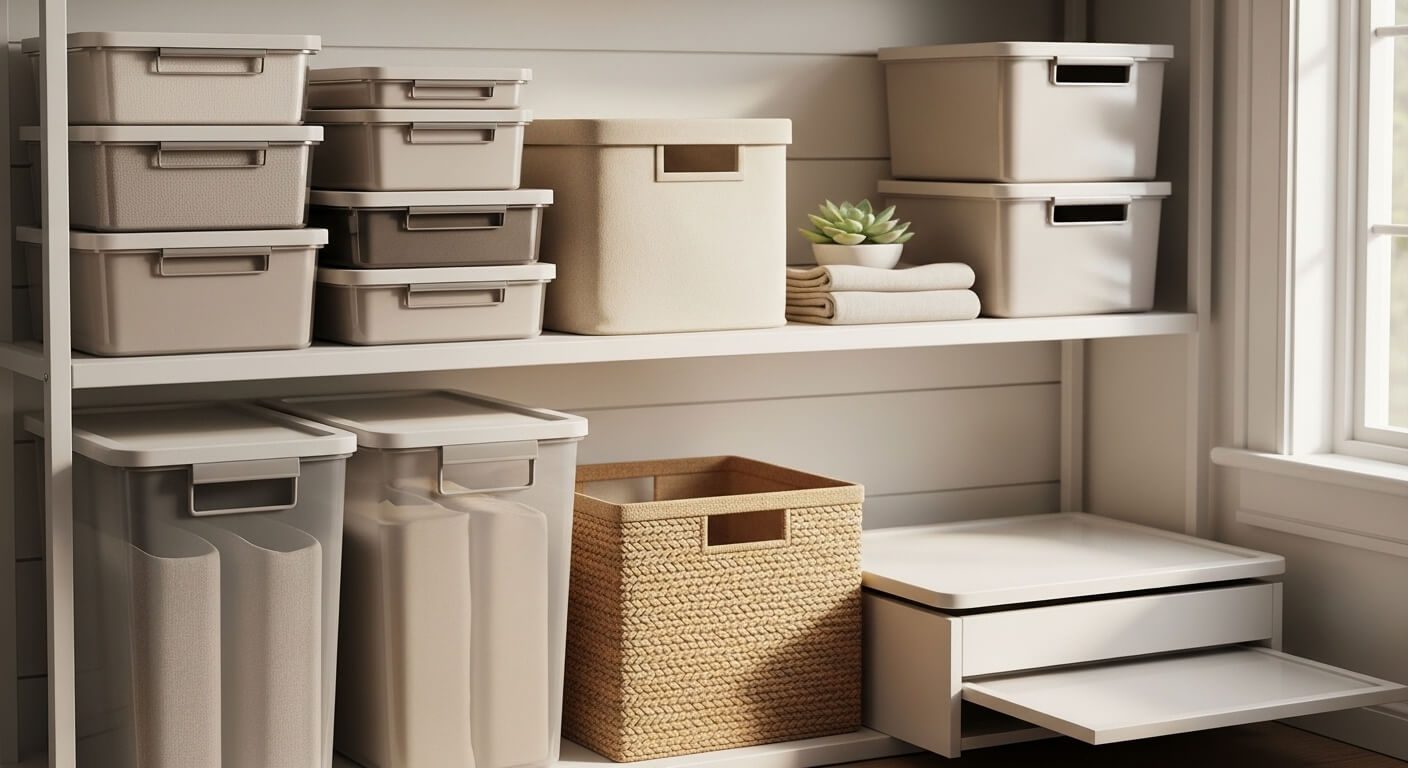

The Ultimate Guide to Storage Bins: Everything You Need to Know
Storage bins are one of the most versatile and underappreciated tools in home organization. Whether you’re tackling a cluttered garage, reorganizing a child’s playroom, or finally getting that overflowing linen closet under control, the right storage bins can completely transform a chaotic space into something functional and even beautiful. Yet walk into any store and you’ll find dozens of styles, sizes, and materials that make choosing feel overwhelming.
In my experience helping readers at CraftsnComforts.com reclaim their homes, the single biggest organizing mistake people make is buying bins without a plan. They grab whatever’s on sale, haul them home, and then discover the bins are too tall for the shelf, too small for the items, or impossible to stack. This guide exists to end that frustration. We’re going to cover every major type of storage bin available — from clear storage bins to canvas options, budget dollar-store finds to premium modular systems — so you can shop with confidence and actually build an organization system that lasts.
By the time you finish reading, you’ll know exactly which bin material suits which room, how to calculate the right size for your space, what to look for in lids and labeling, and how to avoid the most common pitfalls. Let’s get into it.
Types of Plastic Storage Bins Explained
When most people think of storage bins, they picture the classic plastic storage bins — and for good reason. Plastic is durable, moisture-resistant, easy to clean, and available in virtually every size imaginable. But not all plastic bins are created equal, and understanding the distinctions will save you money and frustration.
The most common plastics used in storage bins are polypropylene (PP) and high-density polyethylene (HDPE). Polypropylene bins tend to be lightweight and semi-translucent, making them popular for pantry and closet use. HDPE bins are denser and tougher — great for garages, basements, and outdoor sheds. If you’re storing items in a damp area, always look for HDPE or bins specifically labeled as moisture-resistant.
You’ll also encounter “open-top” vs. “lidded” bins, narrow “drawer organizer” style trays, deep laundry bins, and shallow utility trays. Open-top plastic bins work beautifully in pantries and craft rooms where you need frequent access. Lidded bins are more protective and stackable — ideal for long-term storage in attics or garages. It’s worth noting that plastic bins are a key component of effective pantry organization, where visibility and moisture resistance both matter.
Size labeling in plastic bins can be confusing because manufacturers don’t follow a universal standard. One brand’s “large” may be another brand’s “XL.” Always measure your shelf or drawer dimensions before buying and compare them against the bin’s listed exterior dimensions — not interior. Leave at least a quarter inch of clearance on each side for easy removal.
Stackable Storage Bins: Maximizing Vertical Space
Vertical space is the most underused real estate in any home. Stackable storage bins let you turn a single shelf footprint into a multi-level storage column — and the difference this makes in a small apartment or compact closet is genuinely remarkable. I’ve seen people triple their effective storage capacity simply by switching to a proper stackable system.
True stackable bins are specifically designed with a raised rim or interlocking base that prevents the upper bin from sliding off. Don’t assume any plastic bin can be safely stacked — round bins and bins with sloped sides rarely stack securely. When shopping, look for the words “stackable,” “nestable,” or “interlocking” in the product description, and ideally test a two-bin stack before buying multiples.
For closet organization, stackable bins paired with adjustable shelving give you maximum flexibility. You can rearrange the layout as your storage needs evolve — something a built-in cabinet can’t offer. This is especially useful when implementing broader closet organization ideas that evolve room-by-room over time.
The best stackable bins for home use tend to be in the 6-quart to 18-quart range. Larger bins (32+ quarts) get very heavy when full and can strain the structure below them. If you need to store heavy items like books or tools, keep large bins on the bottom and use lighter-weight bins at the top.
Why Clear Storage Bins Are an Organizer’s Best Friend
Clear storage bins are, in the opinion of most professional organizers, the single most effective upgrade you can make to any storage system. The reason is dead simple: when you can see what’s inside without opening anything, you actually use what you store. Out of sight really does mean out of mind.
Clear storage bins with lids are especially popular in pantries, under sinks, and in medicine cabinets — anywhere you need to quickly locate something specific. They eliminate the “rummage and give up” cycle that causes clutter to build right back up after a fresh organizing session. Clear bins also make it much easier for other household members to find things without asking you.
The main trade-off with clear bins is aesthetics in open-shelf settings. A row of clear storage bins filled with various items can look busy or chaotic in a living room or dining area. In those spaces, consider using clear bins inside cabinets or drawers, and reserving decorative canvas or woven bins for visible shelving. For spaces like kitchen drawer organizers, clear plastic inserts are almost always the better choice over opaque alternatives.
Storage Bins with Lids: When and Why You Need Them
Storage bins with lids serve several purposes that go beyond simple containment. Lids protect contents from dust, moisture, insects, and the inevitable household chaos of spills and curious pets. For seasonal items, off-site storage, or anything you won’t be accessing frequently, a lidded bin is almost always the right choice.
Large storage bins with lids are the gold standard for attic and basement storage. A 60-quart bin with a snap-lock lid, for example, can safely hold an entire season’s worth of clothing or a small collection of holiday decorations — and the lid keeps everything fresh even if the space gets dusty or slightly damp over the months.
Lid types matter more than people realize. Snap-lock lids (with clips on the sides) are the most secure but require two hands to open. Hinged lids are convenient for frequent access. Detachable flat lids are the most stackable. If a bin’s lid creates a perfectly flat top surface, you can stack additional bins on it — this is the magic feature that makes large lidded bins so useful in garages and storage rooms.
One underrated feature: many modern storage bins with lids are also designed with built-in handles on the sides. When the bin is full — especially a large storage bin with lids — handles are the difference between safe carrying and an awkward, back-straining fumble. Always check for reinforced handles if you plan to move bins frequently.
Under Bed Storage Bins: The Overlooked Space-Saver
The space under your bed is some of the most valuable and least utilized storage in any home. Under bed storage bins are specifically designed with a low-profile shape — typically 4 to 7 inches tall — that slides effortlessly beneath a standard bed frame. This makes them ideal for seasonal clothing, extra bedding, shoes, holiday gifts, and anything else you need to keep close but out of sight.
Under bed storage bins are almost always better with lids, since the area under a bed collects more dust and pet hair than almost anywhere else in the house. Flat lids also mean you can slide the bins in and out without the lid catching on the bed frame. Look for bins with wheels or smooth-bottomed designs if you plan to access them regularly — dragging a heavy bin across hardwood floors daily will scratch the finish over time.
Pair your under bed storage system with proper under bed storage accessories like dividers or vacuum storage bags inside the bins for even more capacity. A single queen bed can have up to 60 square inches of usable under-bed space — that’s the equivalent of a full drawer unit when properly utilized.
Canvas Storage Bins for Soft, Stylish Organization
Canvas storage bins occupy a completely different niche from plastic bins. Where plastic wins on durability and moisture resistance, canvas wins on aesthetics, flexibility, and quiet — fabric bins don’t clunk and clatter when handled. They’re a popular choice for living rooms, nurseries, and open shelving where visual warmth matters.
Most canvas storage bins have a collapsible design, which is a genuine practical advantage: when you don’t need them, they fold flat for compact storage. This makes them especially useful for seasonal use — think fabric bins for holiday ornaments that can collapse to nothing when January rolls around.
The main downside of canvas bins is that they’re not moisture-resistant and can absorb odors over time. They’re best kept in dry indoor spaces and should not be used in bathrooms, garages, or damp basements. Canvas bins also lack structural rigidity — a mostly-empty canvas bin tends to slump, making contents harder to access. Cardboard inserts or lightweight rigid liners can solve this nicely.
Canvas storage bins are a natural fit for cable management in living rooms and media consoles — they’re soft enough to tuck cords into without scratching them, stylish enough to leave on an open shelf, and available in colors and patterns that coordinate with home décor.
Budget Options: Dollar Tree and Dollar General Storage Bins
Are Dollar Tree Storage Bins Actually Worth It?
Dollar Tree storage bins are among the most searched storage topics online, and the honest answer is: it depends entirely on what you’re using them for. Dollar Tree bins — typically small plastic open-top trays in the $1.25–$3 range — are legitimately excellent for drawer dividers, desk organization, junk drawer sorting, and bathroom cabinet trays. For these light-duty applications, they perform as well as bins costing four times more.
Where Dollar Tree storage bins fall short is durability under heavy loads and precise sizing. The plastic tends to be thinner and more brittle than name-brand options, meaning bins used in high-traffic areas or loaded with heavy items may crack or warp within a year. For closet organizing where you’re stacking full bins, it’s worth investing a few extra dollars for a more robust product. That said, for sorting small items in shallow drawers, dollar tree storage bins are a genuinely smart, budget-friendly solution.
What to Expect from Dollar General Storage Bins
Dollar General storage bins tend to occupy a slightly higher quality tier than their dollar-store counterparts. Dollar General carries a rotating mix of national brands alongside their own store-brand products, so you’ll sometimes find recognizable bin brands at a meaningful discount. Their seasonal clearance events — particularly after major holidays — can yield excellent storage bins at 50–70% off retail price.
The key with dollar general storage bins is to shop in-store rather than relying on the website. The inventory varies dramatically by location, and the best deals are on physical shelves. Bring your measurements and a small tape measure. A bin that seems like a great deal online might be a completely different size than what you expect.
Cost Breakdown: Budget vs. Mid-Range vs. Premium
Here’s a realistic snapshot of what you can expect to spend across the storage bin market. Prices are approximate and reflect the U.S. retail market as of 2024.
| Category | Budget | Mid-Range | Premium |
|---|---|---|---|
| Small plastic bins (1–6 qt) | $1 – $4 | $5 – $12 | $15 – $25 |
| Medium plastic bins (12–18 qt) | $5 – $10 | $12 – $22 | $25 – $50 |
| Large lidded bins (32–60 qt) | $8 – $15 | $18 – $35 | $40 – $80 |
| Under bed storage bins | $10 – $18 | $20 – $40 | $45 – $90 |
| Canvas storage bins | $6 – $12 | $15 – $30 | $35 – $65 |
| Clear stackable bins (set) | $12 – $20 | $25 – $50 | $55 – $120 |
Premium bins from brands like The Container Store, IRIS USA, or Sterilite’s commercial line offer tighter manufacturing tolerances (lids that actually snap), UV-resistant materials, and warranties. They’re worth the investment for systems you’re building for the long term. Mid-range bins from Target, IKEA, or Amazon Basics hit a sweet spot for most households. Budget bins are ideal for temporary storage needs or low-visibility areas.
Room-by-Room Storage Bin Recommendations
Different rooms have different demands from their storage solutions. Here’s a quick breakdown of what works best where.
Kitchen: Clear storage bins with lids excel here for pantry staples like pasta, grains, and snacks. Small open-top bins work well for grouping like items (baking supplies, condiment packets, tea bags). Avoid fabric bins in the kitchen — spills and humidity are inevitable.
Bedroom and closet: Stackable clear bins for folded clothing, stackable storage bins for accessories, and under bed storage bins for off-season items are the closet organizer’s trifecta. Label everything — a label maker pays for itself in the time it saves searching.
Bathroom: Smaller plastic storage bins in drawers and under the sink. Moisture resistance is critical here. Bins with handles make it easy to pull out a “first aid” or “hair tools” bin without disturbing everything else.
Garage: Large storage bins with lids, ideally in a heavy-duty HDPE plastic. Stackable storage bins with interlocking bases are essential — garage shelving units are often utilitarian wire racks that don’t constrain bin movement. Color-coding bins by category (tools, sports equipment, seasonal décor) makes the garage far more navigable.
Kids’ rooms: Canvas storage bins or soft fabric bins with playful patterns for toys and stuffed animals. Open-top designs make cleanup easier and faster for small hands. Avoid anything with pinch points or heavy lids in young children’s rooms.
Common Mistakes to Avoid
Buying without measuring. This is the cardinal sin of bin shopping. Always measure your shelf depth, height, and width before purchasing. Write the dimensions on your phone and refer to them in the aisle.
Choosing style over function. Beautiful woven baskets look incredible on open shelves, but if you need to access those items daily, a non-lidded bin with a smooth bottom will serve you far better. Organization systems should be designed for actual use patterns, not for Instagram photos.
Overbuying bins at once. It’s tempting to buy an entire set of matching bins to “do the whole house” in one shopping trip. The problem is that needs vary dramatically by space. Buy a few, install them, live with them for a week, then reassess before buying more.
Ignoring weight limits. Plastic storage bins and shelving units have weight ratings that most people never read. Overloaded bins crack, and overloaded shelves collapse. Check both the bin’s weight rating and your shelving unit’s load capacity before stacking full bins.
Forgetting about access frequency. Items you use daily should be in open-top bins at eye level. Seasonal items belong in lidded bins up high or under beds. Mixing these up means you’ll constantly be moving things to get to what you actually need.
Consulting expert home organization resources like the National Association of Productivity and Organizing Professionals (NAPO) can offer additional guidance for tackling major organizing projects room by room.
Longevity and Maintenance
A good set of storage bins can last a decade or more if maintained properly. Plastic storage bins should be washed periodically — especially food-storage bins in pantries — using warm water and a mild dish soap. Avoid harsh solvents or abrasive scrubbers that can scratch the surface and create micro-grooves where bacteria can grow.
Clear storage bins can yellow over time when exposed to direct sunlight or UV light. If you’re storing clear bins in a garage or near a window, look for UV-resistant formulations. Alternatively, a simple fix is to keep bins away from direct light — a curtain or shade is often all it takes.
Lids are the most common failure point in plastic storage bins. The hinges and snap clips take repeated stress and can crack over time. Most manufacturers sell replacement lids for their popular bin sizes, which is worth keeping in mind when choosing a brand — a bin system with available replacement parts will outlast one that doesn’t.
Canvas storage bins should be spot-cleaned with a damp cloth for small stains. Many canvas bins can be machine-washed on a gentle cycle, but always check the care label first. Removing the structural insert (if there is one) before washing and air-drying rather than machine-drying will extend the life of fabric bins significantly.
The Consumer Reports home and garden section regularly publishes storage product longevity ratings — a useful resource when you’re deciding how much to spend on a storage system meant to last.
Frequently Asked Questions About Storage Bins
Are dollar tree storage bins good quality?
What are the best dollar general storage bins to buy?
What’s the difference between stackable storage bins and regular bins?
How do I choose the right size storage bins for my shelves?
Are clear storage bins with lids better than opaque bins?
How do under bed storage bins work, and what should I store in them?
Can I use storage bins for long-term storage in a garage or basement?
Where can I find storage bins near me?
Final Thoughts: Building an Organization System That Actually Works
Choosing the right storage bins isn’t just about buying containers — it’s about building a system that fits your life, your space, and your actual habits. The best organizing systems in the world are the ones that people can maintain effortlessly, not the ones that look perfect for a week and then fall apart under everyday pressure.
Start by identifying your problem areas, measuring your spaces, and thinking honestly about how you use them. From there, the bin type selects itself: plastic for kitchens and garages, canvas for living spaces and nurseries, clear for anything you need to find fast, and stackable whenever vertical space is available. Use budget bins wisely in hidden areas, and invest in quality where it will be seen and used every day.
Once your bin system is in place, the next natural step is expanding your organization strategy room by room. Tackling the kitchen benefits enormously from thinking through your full pantry organization approach — not just the bins, but the shelving, labels, and item categories. Similarly, the closet is a whole ecosystem unto itself, and a set of matching stackable bins is just one piece of a broader closet organization system. Don’t forget the small details either — things like kitchen drawer organizers and cable management solutions work hand-in-hand with storage bins to create spaces that feel effortlessly controlled, not just temporarily tidy.
One more thing: give yourself permission to experiment. Organization is iterative. The first arrangement you set up may need adjusting after a few weeks of real use — and that’s completely normal. The goal is to keep refining until the system disappears into the background of daily life, quietly doing its job without demanding your attention.