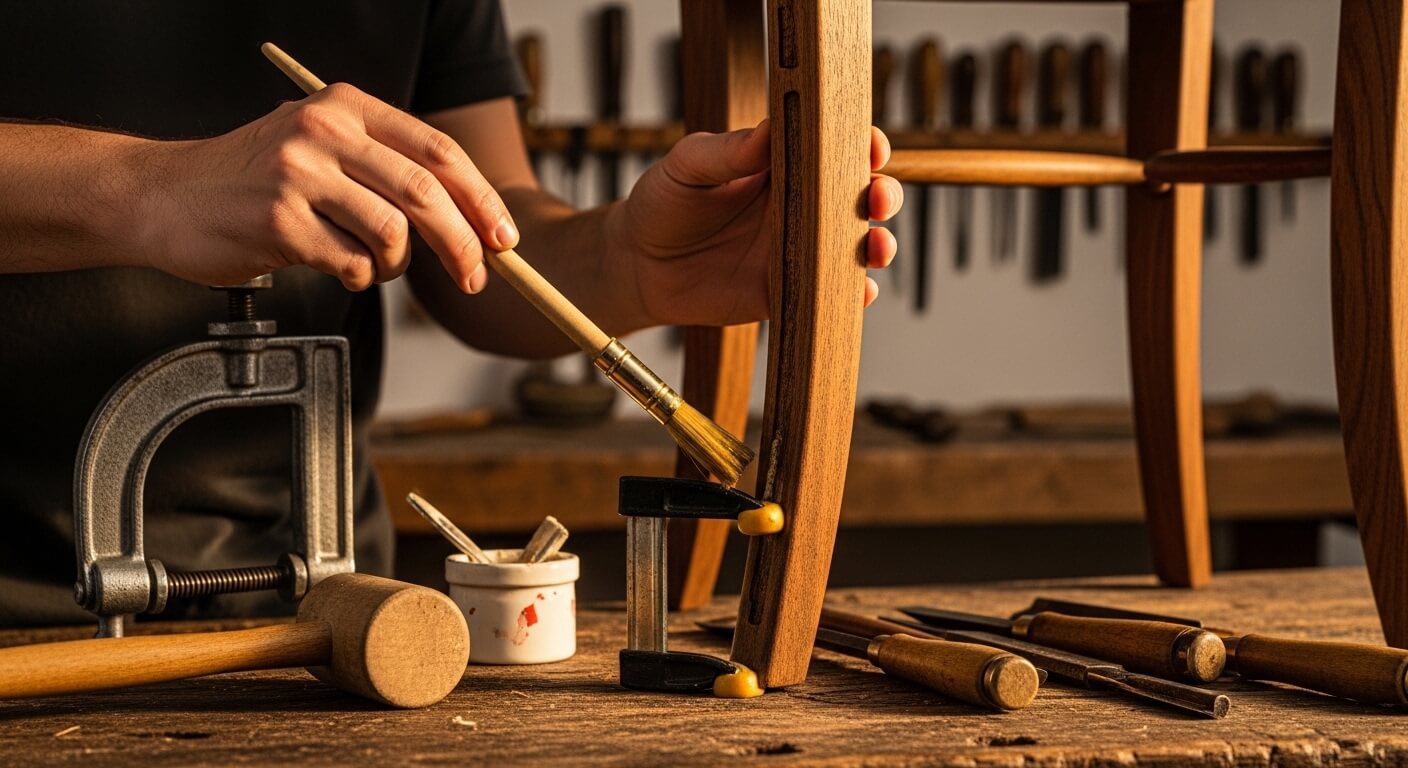

How to Repair Loose Joints in Antique Wooden Chairs: Fix Wobbly Chair Joints the Right Way
There is something deeply satisfying about sitting in a well-made antique wooden chair — the kind that has a story embedded in every grain and curve. But when that same chair starts to wobble, creak, or feel structurally unsafe, the charm can quickly turn into a frustration. Learning how to fix wobbly chair joints is one of the most practical and rewarding skills you can develop as a homeowner, because furniture structural repair does not always require a professional. With the right approach, you can repair antique chair joints at home and restore decades — or even centuries — of craftsmanship to its full, stable glory.
Antique wooden chairs are especially prone to joint failure for a simple reason: the wood moves. Over generations of use, seasonal humidity changes cause wood to expand and contract, slowly degrading the original glue bonds. What held firm in a workshop a hundred years ago has been through countless winters and summers since then. The result is a joint that has progressively worked itself loose — and once that process begins, every sit in the chair accelerates it further. Understanding this dynamic is the first step toward a repair that actually lasts.
This guide covers everything you need to know: why antique chair joints fail in the first place, what materials work best for different joint types, how to approach the repair without damaging irreplaceable original wood, common mistakes that cause repairs to fail within months, and how to keep your restored chair structurally sound for the long term. Whether you are dealing with a single wobbly leg or a chair that feels like it might collapse entirely, there is a clear and effective path forward — and it is more accessible than you might think.
Why Antique Chair Joints Fail
The joinery used in antique wooden chairs — mortise-and-tenon, dowel, and traditional woodworking joints of all kinds — was designed to be strong and flexible. The craftsmen who built these pieces understood that wood moves with the seasons, and the original hide glue they typically used was actually ideal for this behavior. Hide glue is reversible, slightly elastic, and creeps with the wood rather than fighting against it.
The problem is time. Hide glue, for all its virtues, degrades over decades. Moisture, heat, and the cumulative stress of everyday use break down the adhesive bond molecule by molecule. What starts as microscopic play in the joint grows into visible wobble. Once you can feel or hear movement in a joint, the glue bond is already substantially compromised — and the mechanical wear from that movement will begin to erode the wood fibers themselves.
Most antique furniture was originally assembled with hide glue derived from animal collagen. This glue was specifically chosen because it is reversible — meaning restorers can reactivate or dissolve it with moisture and heat. That reversibility is why carefully repairing antique joints without destroying them is entirely possible.
Environmental factors accelerate this process significantly. Chairs kept near heating vents, radiators, or in rooms with poor humidity control tend to deteriorate much faster than those in stable, climate-controlled environments. Central heating — a relatively modern comfort — is actually one of the leading causes of joint failure in antique furniture, because it creates the kind of extremely dry winter conditions that the original craftsmen never anticipated.
Repeated re-gluing with incompatible modern adhesives compounds the problem. Many well-meaning owners have applied PVA (white glue), epoxy, or construction adhesive into a loose joint without properly cleaning the old glue first. These modern adhesives do not bond well to residual hide glue, resulting in a repair that fails even faster than the original joint and often leaves the wood surfaces harder to work with in the future.
Assessing the Damage Before You Begin
Before ordering any materials or reaching for a glue bottle, a thorough assessment is essential. Place the chair on a flat, level surface and apply gentle pressure in multiple directions — front to back, side to side, and diagonally. Note which joints move and which remain firm. Press on individual legs, stretchers (the horizontal rungs connecting legs), and back spindles one at a time. A systematic approach here saves significant time and prevents the frustration of re-doing work.
Categorizing Joint Damage
Joints typically fall into one of three categories. The first is a loose but intact joint — the tenon or dowel is still present and undamaged, the glue has simply failed. This is the best-case scenario and the easiest repair. The second category is a joint with worn surfaces — the tenon has shrunk or the mortise has worn wider, leaving genuine play in the fit even without any glue. This requires rebuilding techniques in addition to re-gluing. The third and most serious category is a broken joint — a tenon has snapped off, a mortise wall has cracked, or a dowel has sheared. These repairs are more complex and may require fabricating replacement components.
In my experience, most antique chair repairs fall into the first or second category. Truly broken joints are less common unless the chair has been subjected to sudden impact or has been used while already severely compromised. Take photographs before you disassemble anything — they are invaluable for reassembly, particularly on chairs with complex back structures.
Resist the temptation to re-glue only the joints that feel loose. When one joint in a chair fails, the stress redistributes to surrounding joints — which means other joints are usually compromised even if they feel firm. Partial repairs often result in a different joint failing within months. When possible, fully disassemble the affected subassembly and re-glue everything at once.
Checking for Wood Damage
While you have the chair in hand, inspect the wood itself carefully. Look for cracks along the grain, checking around mortise openings where the wood is most stressed. Run your fingers along the underside of the seat rails and the tops of the legs. Fine cracks that follow the grain are often stable and can be repaired with thin cyanoacrylate glue (super glue), wicked in by capillary action. Cross-grain cracks are more serious structural concerns. Any component with a significant cross-grain crack should be evaluated carefully before trusting it to bear weight after re-gluing.
Choosing the Right Furniture Joint Glue
The choice of adhesive is arguably the single most consequential decision in any furniture structural repair project. The wrong glue — or even the right glue applied over inadequately prepared surfaces — will produce a repair that fails far sooner than it should. Here is what you need to know about the main options.
Hide Glue: The Traditional Standard
For antique chair repair, hide glue remains the gold standard among serious restorers. It can be purchased as liquid hide glue (which has a longer open time and requires no heating) or as granules that must be mixed with water and heated in a glue pot. Hide glue bonds strongly to itself, meaning it adheres exceptionally well to surfaces that still carry traces of original hide glue — an enormous advantage when working on antiques. It also remains reversible: future restorers (or you, if a repair needs redoing) can release the joint again without damaging the wood.
The limitation of hide glue is its relatively short open time — typically two to six minutes, depending on temperature — and its sensitivity to cold. Working in a warm room (above 65°F) is important. You need to have clamps ready and positioned before applying glue, or the joint will begin to set before you achieve full closure.
PVA and Aliphatic Resin Glues
Standard yellow wood glue (aliphatic resin, such as Titebond Original) is perfectly adequate for many wood chair repair DIY projects, particularly on chairs that are not true antiques and were not originally assembled with hide glue. It is widely available, inexpensive, has a reasonable open time, and forms a very strong bond when joints are clean and fit well. The drawback for antique work is that it is not reversible — once set, it can only be removed mechanically, which risks damage to the wood.
Before applying any adhesive to a joint, do a dry-fit first. Close the joint completely without glue and clamp it up. If the joint closes fully and the chair sits level and stable in the dry run, your glue-up will go smoothly. If there is still play or the chair rocks even when clamped, you need to address the mechanical fit before gluing — no adhesive can compensate for a joint that does not fit properly.
Epoxy: When and When Not to Use It
Two-part epoxy is sometimes used for severely deteriorated joints where the surfaces are too degraded for conventional wood glue. Its gap-filling properties can compensate for a poor mechanical fit. However, epoxy should generally be avoided on antique furniture unless there is no other option — it is essentially permanent, extremely difficult to remove without damaging the wood, and does not move with the wood through seasonal changes, which can actually cause new stress fractures over time. If you do use epoxy, choose a slower-setting variety (30-minute or longer cure time) rather than the five-minute formulas, which are brittle and prone to failure under cyclic loading.
Preparing Surfaces for Gluing
Regardless of which adhesive you choose, surface preparation is non-negotiable. Old glue must be thoroughly removed from both the tenon and the mortise (or both dowel surfaces) before any new adhesive will bond properly. Use a sharp chisel, dental pick, or stiff wire brush to mechanically remove old glue. For hide glue removal, warm water applied with a cotton swab will soften and lift residue without damaging the wood. For stubborn PVA, careful scraping is usually required. Sanding wood furniture surfaces inside the joint is also sometimes necessary — though sanding wood furniture surfaces requires care to avoid changing the dimensions of a joint that already fits properly. The goal is clean wood fiber, not a smooth surface.
Cost Breakdown: Budget, Mid-Range & Premium Approaches
The cost of repairing loose chair joints varies considerably depending on how many joints need attention, the quality of materials you choose, and whether you already own basic clamping equipment. The table below outlines typical investment ranges across three approaches.
| Item / Approach | Budget | Mid-Range | Premium |
|---|---|---|---|
| Furniture Joint Glue | $5–$10 (PVA) | $12–$20 (Titebond / Liquid Hide Glue) | $25–$45 (Hot hide glue kit) |
| Clamps (if needed) | $0 (rope/strap clamp) | $15–$35 (band clamp set) | $40–$80 (bar clamp set) |
| Surface Prep Tools | $0 (household items) | $10–$20 (chisels, picks) | $30–$60 (full kit) |
| Joint Rebuilding (if needed) | $0 (toothpick shim) | $8–$15 (cotton fiber + glue method) | $20–$40 (replacement dowels/tenons) |
| Finish Touch-Up | $5–$10 (paste wax) | $12–$22 (stain marker + wax) | $30–$60 (matched finish products) |
| Estimated Total | $10–$25 | $57–$112 | $145–$285 |
For most single-chair repairs involving a few loose joints, the mid-range budget is more than sufficient and will produce professional-quality results. The premium approach is typically reserved for chairs of significant monetary or sentimental value where you want the highest-quality restoration possible, or for cases where multiple chairs need attention simultaneously.
The Repair Process: What to Expect at Each Stage
Disassembly
Careful disassembly is the foundation of a successful repair. On chairs with original hide glue, gently working moisture and heat into the joint will soften the adhesive enough to allow the joint to be separated without force. A damp cloth held against a joint, followed by gentle wiggling, is often sufficient. Never strike chair components with a hammer directly — use a rubber mallet and a block of scrap wood to distribute force and protect the surface.
Some joints will simply not release without more aggressive intervention. In these cases, injecting a small amount of warm water deep into the joint using a syringe, then waiting 20–30 minutes, can break the bond without damage. Keep a record of which joints required significant force to open — these areas may have more residual glue contamination that will need extra attention during cleaning.
Cleaning and Rebuilding Loose Fits
Once disassembled, clean all joint surfaces thoroughly as described in the previous section. For tenons that have shrunk slightly — leaving a loose fit even when the joint is closed — the traditional fix is to wrap the tenon in thin cotton gauze or unspun thread before gluing. This adds just enough material to take up the play without changing the joint geometry. Another approach is to apply thin layers of glue to the tenon, allow them to cure, and lightly sand wood furniture surfaces back to the right dimension — building up the tenon diameter over multiple coats.
A joint that fits well mechanically — where the parts close snugly with hand pressure — will produce a repair that lasts for decades. A joint that relies entirely on adhesive to fill a gap is always weaker than one with proper mechanical contact. The extra time spent achieving a good fit before gluing is never wasted.
Gluing and Clamping
Apply glue to both mating surfaces — not just one. For mortise-and-tenon joints, coat the entire tenon surface and the inside walls of the mortise. For dowel joints, coat the dowel shank and both socket openings. Work quickly, especially with hide glue, and have your clamps pre-positioned. Close the joint fully and apply clamping pressure immediately. Chair-specific band clamps (which wrap around all four legs simultaneously) are ideal because they apply even pressure from multiple directions.
Check for square and level before the glue sets. Place the chair on a known-flat surface and sight across the top of the seat rails. If the chair rocks, adjust clamp positions or add shims before the adhesive cures. Squeeze-out is normal and desirable — it confirms that adhesive reached all surfaces. Wipe squeeze-out with a damp cloth promptly on water-based glues; for hide glue, you can also allow it to fully cure and then chisel it off cleanly once hardened.
Allow full cure time before removing clamps and stressing the joint. For most PVA and aliphatic glues, this means 24 hours minimum. Hide glue can often be unclamped after a few hours but still benefits from 12–24 hours of rest before the chair is put back into use. According to research published by the USDA Forest Products Laboratory, wood glue joints reach approximately 80% of their final strength within the first few hours of cure, but achieving maximum bond strength requires the full cure period.
Common Mistakes That Cause Repairs to Fail
Gluing Over Old Adhesive
This is the most common and damaging mistake in wood chair repair. Applying new glue over old — without completely removing the previous adhesive — creates a layered bond where the new glue adheres not to wood fiber but to degraded adhesive. The result almost always fails faster than the original joint did. There are no shortcuts around thorough surface preparation.
Using the Wrong Clamp Type
Standard bar clamps or C-clamps applied to chair legs create uneven, localized pressure that can actually rack the chair rather than draw the joint together evenly. Chair joints require multidirectional clamping. A band clamp, rope tourniquet, or specialized chair clamp that wraps around the entire leg assembly produces the even, concentric pressure that chair joints need. One thing I’ve learned after working on dozens of chairs is that improvised clamping almost always produces a worse result than taking the extra time to source the right tool.
If you do not have band clamps, a length of sturdy rope makes an excellent emergency chair clamp. Loop it around all four legs, insert a stick or pencil into the loop, and twist to tighten. This distributes pressure evenly around the entire chair base and costs nothing. It is the same technique used by traditional chairmakers for centuries.
Rushing the Disassembly
Forcing a joint open before the old glue has softened enough is a reliable way to split a mortise wall or snap a tenon — turning a simple re-glue job into a complex reconstruction. Patience during disassembly pays enormous dividends. If a joint resists gentle persuasion, add more moisture, more time, and more patience. There is almost no circumstance in which brute force produces a better outcome than chemistry and patience.
Ignoring Related Joints
As noted earlier, chair structures are interdependent systems. Repairing only the most obviously loose joint while leaving compromised neighboring joints untouched simply transfers the mechanical stress. The repaired joint holds; the next one fails within a season or two. The correct approach is to treat the entire subassembly — all four legs and their connecting stretchers, for example — as a unit to be addressed together.
Skipping the Finish Touch-Up
After re-gluing, the joint area will often show some disruption to the surrounding finish — glue haze, slight surface lifting, or visible squeeze-out residue. Leaving these cosmetic issues unaddressed not only looks unprofessional, it can also allow moisture to penetrate through the disturbed finish into the joint area, potentially accelerating future failure. A simple touch-up with a matched stain marker and a coat of paste wax is usually sufficient to restore the appearance and reseal the surface.
Longevity & Maintenance After the Repair
A well-executed furniture structural repair on an antique wooden chair can last for decades — but only if the underlying environmental factors that caused the original failure are addressed. The most important thing you can do after re-gluing is to stabilize the humidity in the room where the chair lives. According to the Library of Congress preservation guidelines for furniture, maintaining relative humidity between 45% and 55% dramatically reduces the wood movement that stresses glue joints over time. A simple humidifier in winter and a dehumidifier in particularly damp summers makes a significant practical difference.
Routine Inspection
Develop the habit of gently testing your repaired chairs for wobble every six to twelve months — particularly after the first winter following the repair, when the change in humidity is typically most dramatic. Early intervention on a joint that is just beginning to loosen is far easier and more effective than waiting until the joint has completely failed again. A tiny amount of movement caught early can often be stabilized by injecting thin hide glue into the joint with a syringe, without full disassembly.
Surface Care
Regular application of a good quality paste wax or furniture polish serves two purposes: it maintains the appearance of the finish and creates a protective barrier that slows moisture exchange at the wood surface. This modest protective layer contributes meaningfully to joint longevity by reducing the amplitude of the wood’s seasonal movement. Avoid silicone-based polishes, which can interfere with future repairs or refinishing work. For a deeper guide on caring for wood furniture surfaces, including how to approach sanding wood furniture as part of periodic refinishing, the team at CraftsnComforts.com has covered these topics in depth.
Beyond waxing, keep antique wooden chairs away from direct sunlight, which bleaches and dries the wood and finish, and away from heating vents or radiators. These simple positioning choices cost nothing and significantly extend the life of both the finish and the structural glue joints beneath it.
When it comes to sanding wood furniture as part of maintenance — for example, if you need to smooth a raised grain after applying moisture during the repair process — always work with the grain and use the finest grit that will accomplish the task. Aggressive sanding on antique pieces can remove original patina that is genuinely irreplaceable. The goal of maintenance on antique furniture is preservation, not perfection. The honest signs of age are part of what makes these pieces meaningful.
Frequently Asked Questions
What is the best glue for repairing antique chair joints?
For true antique furniture, liquid hide glue or hot hide glue is widely considered the best option by professional restorers. It bonds excellently to surfaces that carry traces of original hide glue, remains reversible for future repairs, and moves with the wood through seasonal changes. For non-antique chairs, aliphatic resin (yellow wood glue such as Titebond Original) is a strong, reliable, and widely available alternative. Avoid using epoxy unless the joint is so degraded that conventional adhesives cannot achieve adequate contact — epoxy is essentially permanent and does not flex with wood movement over time.
Can I fix a wobbly chair without fully disassembling it?
In some cases, yes — particularly when only one or two joints are affected and the joint gap is accessible. You can inject thin hide glue or low-viscosity wood glue into an open joint using a glue syringe, then clamp and allow to cure. However, this approach is less reliable than full disassembly and re-gluing because you cannot clean the old adhesive from the surfaces, and the new glue must bond over existing residue. Full disassembly, cleaning, and re-gluing almost always produces a more durable repair.
How do I remove old glue from antique chair joints without damaging the wood?
For original hide glue (common in antiques), warm water is your most effective tool. Apply it carefully with a cotton swab or small brush, allow a few minutes for the glue to soften, then gently scrape or pick away the residue with a wooden or plastic tool to avoid scratching. For stubborn residue, very gentle mechanical scraping with a sharp chisel held nearly flat works well. For PVA or other modern glues that were applied in a previous repair, careful scraping with a sharp chisel is usually required. Always work carefully to avoid removing wood fiber along with the glue.
My chair’s tenon is too thin — the joint is loose even without any glue. How do I fix that?
A shrunk or worn tenon is a common problem in antique chairs and can be addressed in several ways. The traditional approach is to wrap the tenon with thin cotton gauze or unspun thread before gluing, which adds just enough material to take up the play. Another method is to apply multiple thin coats of glue to the tenon surface, allowing each coat to cure fully, building up the diameter gradually. For severely degraded tenons, a replacement tenon can be fabricated from matching wood stock. The choice depends on how much material needs to be added and the relative value of the piece.
How long should I wait before using the chair after re-gluing?
Most wood glues and hide glues reach handling strength within a few hours, but achieving maximum bond strength requires the full cure period. For PVA and aliphatic wood glues, a minimum of 24 hours with clamps in place is recommended, followed by another 24–48 hours of rest before putting the chair under normal use stress. For hide glue, clamps can typically come off after 4–6 hours, but the chair should still rest for 12–24 hours before use. Rushing this process risks stressing the joint before the adhesive has fully polymerized, which can result in a weak bond even if it initially seems fine.
Should I refinish the chair after repairing the joints?
A full refinish is not always necessary after joint repair, and on true antiques, preserving original finish is generally preferable if possible. In most cases, a targeted touch-up of the area immediately around each repaired joint is sufficient — using a matched stain marker to address any color disruption and a coat of paste wax to restore the sheen and seal the surface. If squeeze-out during gluing disturbed a larger area of finish, a localized application of appropriate finish products can restore the appearance without stripping and re-doing the entire chair. Sanding wood furniture unnecessarily risks removing irreplaceable original patina.
How do I prevent antique chair joints from loosening again in the future?
The single most effective measure is humidity control. Maintaining indoor relative humidity between 45% and 55% year-round dramatically reduces the wood movement that stresses glue joints. Keep chairs away from heating vents, radiators, and direct sunlight. Apply paste wax regularly to protect the finish and slow moisture exchange at the wood surface. Perform periodic inspections — gently test for wobble every six to twelve months — and address any emerging movement early, before it becomes a full joint failure. These simple habits will extend the life of even a recently repaired antique chair significantly.
Is it worth repairing an antique chair myself, or should I hire a professional restorer?
For chairs of modest monetary value where the goal is functional stability rather than museum-quality restoration, a careful DIY approach is entirely reasonable and can produce excellent results. For genuinely valuable antiques — pieces with significant age, provenance, maker’s marks, or monetary value — consulting a professional furniture conservator is worthwhile. Professional conservators have access to specialized materials and techniques, can properly identify original adhesives and finishes, and can document the restoration appropriately. The cost of professional restoration is often much less than the potential loss in value from a poorly executed home repair on a significant piece.
Conclusion
Repairing loose joints in antique wooden chairs is genuinely achievable for anyone willing to invest the time to understand what they are working with. The keys are patience in assessment, thoroughness in surface preparation, the right adhesive for the job, proper clamping technique, and the wisdom to address all compromised joints in a single repair session rather than chasing individual wobbles one at a time. These principles hold whether you are fixing a modest chair that has sentimental value or a genuinely significant piece of antique furniture.
What makes antique wooden chairs worth repairing — beyond their obvious utility — is the story they carry. The craftsmanship embedded in a well-made joint, the character of hand-planed surfaces, the richness of wood that has aged gracefully over generations: these qualities cannot be replicated by modern manufacturing and deserve to be preserved. When you repair antique chair joints with care and the right materials, you are not just fixing a piece of furniture. You are extending a piece of history. That is a task worth doing thoughtfully, and doing well.
Keep the humidity in your home stable, inspect your repaired chairs regularly, and do not let small amounts of movement become large problems. The investment of an afternoon and a modest amount of materials can give a beloved antique chair another generation — or more — of honest, confident daily use.