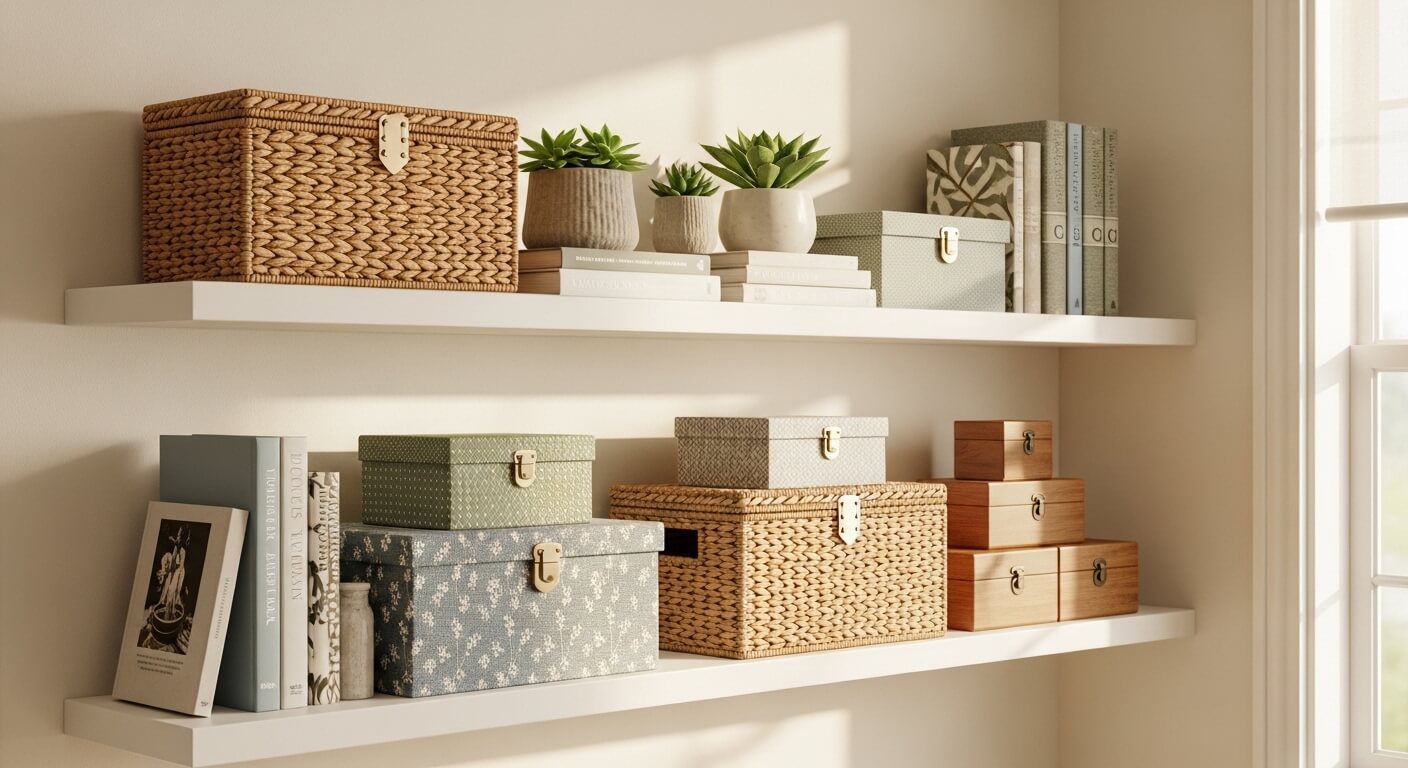

Decorative Storage Boxes: Complete Guide to Stylish Organization
Estimated read time: 12 minutes
Decorative storage boxes have revolutionized the way we think about home organization, seamlessly blending functionality with aesthetic appeal. These versatile containers transform cluttered spaces into visually pleasing, well-organized areas while adding personality to any room. Whether you’re looking to tame bedroom chaos, organize a home office, or create streamlined living spaces, the right storage solution can make all the difference.
Gone are the days when storage meant sacrificing style for practicality. Today’s market offers an incredible range of options, from handcrafted wooden pieces to sleek modern designs, ensuring there’s a perfect match for every interior style and organizational need. The beauty of these containers lies in their dual purpose: they hide away clutter while serving as intentional decor elements that enhance your space.
In this comprehensive guide, I’ll walk you through everything you need to know about selecting, using, and maintaining these organizational powerhouses. We’ll explore different materials, sizes, and styles, discuss strategic placement throughout your home, and share insider tips for maximizing both storage capacity and visual impact.
Types and Materials of Decorative Boxes for Storage
The material you choose for your storage boxes significantly impacts both their durability and how they complement your existing decor. Each material brings unique advantages, and understanding these differences helps you make informed decisions for different spaces in your home.
Wooden storage boxes offer timeless elegance and remarkable durability. They work beautifully in traditional, rustic, or farmhouse-style interiors, and many feature intricate carvings or natural wood grains that serve as standalone decorative pieces. The weight of wooden boxes makes them ideal for storing heavier items like books, craft supplies, or collectibles. According to Wood Magazine, properly maintained wooden storage can last for decades.
Fabric-covered boxes provide softness and versatility that’s hard to match with other materials. These containers often feature removable fabric covers, allowing you to change colors and patterns as your decor evolves. They’re particularly well-suited for bedroom closets, nurseries, and living spaces where a softer aesthetic is desired. The lightweight nature makes them easy to move and rearrange.
Metal storage boxes bring an industrial or modern edge to organizational systems. Galvanized steel, copper, and powder-coated aluminum options resist moisture and wear exceptionally well. I’ve found these particularly useful in garages, mudrooms, and outdoor storage areas where durability matters most.
Mix materials throughout your home to create visual interest while maintaining cohesive organization. A combination of wicker baskets in the living room, wooden boxes in the home office, and fabric containers in bedrooms creates layers of texture without overwhelming your space.
Wicker and rattan boxes offer natural, breathable storage that’s perfect for items like blankets, linens, or children’s toys. These materials add warmth and organic texture to any room while providing sturdy, structured storage. The woven construction allows air circulation, making them ideal for storing textiles.
Acrylic and clear plastic boxes serve a specific purpose in modern organization systems. While they may lack the decorative appeal of other materials, their transparency allows you to quickly identify contents without opening each box. These work exceptionally well for craft supplies, makeup organization, or pantry organization where visibility matters.
Decorative Storage Boxes with Lids: Benefits and Best Uses
Storage boxes with lids elevate organization to the next level by providing dust protection, stackability, and a cleaner visual appearance. The lid transforms a simple container into a versatile storage solution that works in visible and hidden spaces alike.
Dust protection stands as one of the most practical benefits of lidded boxes. Items stored for extended periods—seasonal decorations, off-season clothing, or archived paperwork—remain clean and protected from environmental elements. This feature proves particularly valuable in open shelving systems where boxes are exposed to daily household activities.
Stackability multiplies your storage capacity vertically, making efficient use of closet height, under-bed space, or garage shelving. Lidded boxes create stable, secure stacks that won’t topple when you need to access lower containers. One thing I’ve learned from years of organizing is that vertical space is often the most underutilized resource in homes.
Lidded storage boxes reduce visual clutter by creating uniform, finished surfaces. This makes them ideal for open shelving in living rooms, bedrooms, or home offices where you want organized storage without the busy appearance of exposed contents.
Security and privacy become important when storing personal documents, valuable collections, or sensitive items. Lidded boxes keep contents concealed from casual view while remaining easily accessible when needed. Some boxes feature locking mechanisms for additional security.
The aesthetic uniformity of lidded boxes creates a cohesive, intentional look in any space. When displayed on shelves or in organizational systems, they present clean lines and consistent shapes that contribute to a sense of order. This visual harmony works especially well in closet organization ideas where multiple boxes are visible at once.
Large Decorative Storage Boxes with Lids for Maximum Organization
Large storage boxes with lids tackle your biggest organizational challenges, handling bulky items, seasonal storage, and high-volume organization needs. These workhorses of the storage world combine substantial capacity with the aesthetic appeal that keeps your space looking intentional rather than cluttered.
Seasonal storage represents one of the most practical applications for large lidded boxes. Holiday decorations, winter clothing, seasonal bedding, and outdoor equipment all find safe haven in these containers. Dimensions typically range from 18 to 24 inches in length and 12 to 16 inches in height, providing ample room for bulkier items while remaining manageable to move and store.
Toy storage solutions benefit enormously from large decorative boxes. These containers can hold extensive collections of building blocks, stuffed animals, or sports equipment while maintaining a tidy appearance in playrooms or family rooms. The lidded design makes cleanup straightforward—children can simply toss toys into the box and replace the lid for an instant organized look.
Selecting the Right Size for Your Space
Measure your storage areas before purchasing large boxes to ensure proper fit. Consider closet shelf depth, under-bed clearance, or garage shelving dimensions. A box that’s too large for its designated space creates frustration and wasted capacity. I always recommend leaving 2-3 inches of clearance on all sides for easy access and air circulation.
Weight capacity becomes crucial with larger boxes. While a box might physically hold many items, consider whether you’ll be able to move it when full. Fabric or cardboard boxes work well for lighter items like linens or seasonal clothing, while wooden or plastic options better handle heavier loads like books or tools.
Avoid overfilling large storage boxes beyond their weight capacity. This can damage the box structure, make handling unsafe, and cause contents to shift and wrinkle. Fill boxes to about 80% capacity for optimal longevity and usability.
Labeling large boxes becomes essential for efficient organization. Whether you prefer adhesive labels, chalkboard tags, or clear label holders, marking contents saves time and prevents unnecessary opening of multiple boxes to find specific items. Consider including a brief contents list inside the lid for detailed inventory tracking.
Decorative Cardboard Storage Boxes Home Organization Solutions
Cardboard storage boxes offer an affordable, lightweight, and surprisingly versatile option for home organization. Modern decorative cardboard boxes bear little resemblance to plain moving boxes—they feature sophisticated patterns, durable construction, and designs that complement any decor style.
The affordability factor makes cardboard boxes accessible for large-scale organizational projects. You can outfit an entire closet, home office, or craft room without significant financial investment. This budget-friendly aspect also allows for seasonal updates or decor changes without guilt about replacing storage solutions.
Lightweight construction means cardboard boxes can be easily moved, rearranged, and transported. This quality makes them ideal for higher shelves where you don’t want to struggle with heavy containers, or for children’s rooms where kids might need to access their own storage. According to The Container Store’s organization guides, lightweight storage increases the likelihood of maintaining organized systems.
Environmental considerations favor cardboard as a storage material. Most decorative cardboard boxes use recycled materials and remain recyclable at the end of their useful life. For eco-conscious households, this creates a sustainable organizational solution that doesn’t compromise on style or functionality.
Reinforced Construction Features
Quality decorative cardboard boxes incorporate reinforced corners, double-wall construction, and sturdy lid support. These features significantly extend the box’s lifespan and load capacity. Look for boxes with metal corner supports or internal bracing for items that will be frequently accessed or stacked.
Many high-end cardboard storage boxes feature acid-free materials that protect delicate items like photographs, documents, or textiles from deterioration. This makes them suitable for archival storage at a fraction of the cost of specialty archival boxes.
Pattern and finish options for cardboard boxes have expanded dramatically in recent years. From minimalist solid colors to vibrant geometric patterns, floral designs, or faux textures mimicking linen or leather, the aesthetic possibilities rival those of more expensive materials. This variety allows you to coordinate storage with existing decor or create visual interest through complementary patterns.
Maintenance requirements for cardboard boxes remain minimal but important. Keep them away from moisture-prone areas like basements or bathrooms, as water damage can compromise structural integrity. For cable management or garage storage, consider more water-resistant materials.
Small Decorative Storage Boxes for Detailed Organization
Small decorative storage boxes excel at corralling the tiny items that create the most frustrating clutter in our homes. These compact containers bring order to jewelry, office supplies, craft materials, and countless other small objects that tend to scatter across surfaces and get lost in larger storage systems.
Desktop organization benefits tremendously from small decorative boxes. Group paper clips, rubber bands, sticky notes, and other office essentials in separate small containers that sit on your desk or in shallow drawers. This keeps frequently used items within reach while maintaining a clean, professional workspace appearance.
Jewelry storage finds an ideal solution in small decorative boxes with compartments or velvet lining. These protect delicate pieces from tangling and scratching while keeping accessories organized by type or frequency of use. Stack several small boxes vertically in a dresser drawer to maximize space while maintaining easy access to your collection.
Bathroom counters benefit from small boxes that corral hair accessories, cosmetics, or daily skincare products. Choose moisture-resistant materials like acrylic, ceramic, or treated wood for this application. The contained presentation keeps counters looking tidy while preventing small items from rolling into sinks or falling behind fixtures.
Drawer Organization Systems
Small boxes transform chaotic junk drawers into functional organizational systems. Measure your drawer interior and select boxes that fit snugly together, creating a customized compartmentalized system. This approach works brilliantly for kitchen utensil drawers, bathroom vanity drawers, or bedroom dresser organization.
Create a cohesive look with small boxes by selecting a consistent color palette or material, even if boxes are different sizes. This visual unity elevates your organization from functional to decorative, turning even open drawers into pleasing displays.
Craft supply organization relies heavily on small storage solutions. Beads, buttons, sequins, thread, needles, and countless other tiny materials need separated, visible storage. Clear acrylic small boxes or small lidded containers with transparent sides allow you to quickly locate specific supplies without opening multiple boxes.
Travel and portable organization becomes easier with small decorative boxes. Pack jewelry, medication, or small electronics in dedicated boxes that protect items during transit while keeping them organized within luggage or carry-on bags. This prevents the frustrating tangling and searching that often happens with loose small items in travel situations.
Dollar General Decorative Storage Boxes and Budget Options
Budget-friendly storage solutions from retailers like Dollar General prove that effective organization doesn’t require premium prices. These accessible options provide functional storage with attractive designs that work well in various spaces throughout your home.
Dollar General decorative storage boxes typically feature cardboard construction with decorative paper or fabric covering, offering sizes ranging from small accessory boxes to medium storage containers. Seasonal offerings often include holiday-themed designs perfect for temporary or festive storage needs. The price point allows you to experiment with organizational systems without significant financial commitment.
Quality considerations at budget retailers require closer inspection. Check for sturdy construction, reinforced corners, and secure lid attachment. While these boxes may not last as long as premium options, they serve admirably for lighter items, temporary storage, or spaces where boxes aren’t frequently handled.
Maximizing Budget Storage Quality
Enhance budget storage boxes with simple modifications. Add fabric lining to protect delicate items, attach decorative ribbon or trim to elevate appearance, or apply protective sealant to extend cardboard longevity. These small investments transform basic boxes into customized storage solutions.
Strategic placement helps budget boxes perform optimally. Use them in low-traffic areas, for seasonal storage that’s only accessed occasionally, or in children’s spaces where wear and tear is expected. Reserve premium storage solutions for high-visibility areas or frequently accessed locations.
Budget storage boxes work best when grouped together to create cohesive organizational systems. Purchase multiple boxes in the same style or complementary patterns to create visual unity that makes the collection look intentional rather than mismatched.
Other budget-friendly retailers offering decorative storage include discount stores like Ross, TJ Maxx, and HomeGoods, where designer overstock appears at reduced prices. Thrift stores and yard sales often yield vintage storage boxes with character and charm at minimal cost. According to Good Housekeeping’s organization experts, mixing high and low price points creates balanced, sustainable organizational systems.
Online marketplaces provide another avenue for budget storage finds. Sites like Amazon, Walmart.com, and Target.com offer competitive pricing on storage boxes, often with customer reviews that help identify quality options. Watch for clearance sales and multi-pack deals that significantly reduce per-box cost.
How to Make Decorative Storage Boxes at Home
Creating your own decorative storage boxes allows complete customization of size, style, and function while providing a satisfying creative project. DIY boxes can be tailored exactly to your space requirements and aesthetic preferences, often at lower cost than purchasing comparable ready-made options.
Covering existing boxes represents the simplest DIY approach. Start with plain cardboard boxes, shoe boxes, or unfinished wooden boxes from craft stores. Transform these bases with decorative paper, fabric, paint, or wallpaper remnants. This method requires minimal tools—scissors, glue or mod podge, and your chosen covering material.
Fabric-Covered Box Tutorial
Select medium-weight cotton fabric that coordinates with your room decor. Measure and cut fabric pieces for each side of the box, adding 2 inches to all dimensions for overlap. Apply fabric glue or mod podge to one box surface at a time, smoothing fabric from center outward to eliminate bubbles. Fold and glue overlap to inside edges for clean finish. Add decorative ribbon around the top edge to conceal raw fabric edges and create polished appearance.
Paper crafting techniques expand your decorative possibilities. Scrapbook paper, wrapping paper, or even maps and magazine pages can transform plain boxes into unique storage pieces. Layer different papers for dimensional interest, or create decoupage designs with multiple images. Seal paper-covered boxes with clear acrylic sealer to protect the surface and add durability.
When using hot glue on fabric or paper projects, work in small sections to prevent the glue from cooling before you position materials. Keep a damp cloth nearby to quickly remove any excess glue that seeps through fabric or paper.
Paint transformations offer endless creative options for wooden or heavy cardboard boxes. Chalk paint creates a matte, vintage-inspired finish that doesn’t require priming or extensive prep work. Spray paint provides smooth, even coverage in countless colors and finishes. Stenciling, stamps, or hand-painted designs add personalized artistic touches.
Upcycling materials creates eco-friendly storage while adding unique character. Old books hollowed out become hidden storage boxes for small items. Vintage suitcases stack beautifully and provide substantial storage with built-in nostalgia. Wine crates, fruit boxes, or wooden shipping containers sand down and stain or paint into rustic storage solutions perfect for under bed storage or open shelving.
Adding Hardware and Embellishments
Elevate DIY boxes with hardware additions. Attach leather pulls, rope handles, or metal corner protectors for functional upgrades. Label holders, decorative knobs, or vintage hinges add character while improving usability. These details transform homemade boxes into pieces that rival store-bought quality.
Construction from scratch suits those comfortable with basic woodworking or heavy cardboard crafting. Create custom sizes that fit specific spaces perfectly—narrow boxes for tight shelves, tall boxes for vertical storage, or specialized shapes for unusual storage needs. Online tutorials and templates provide guidance for various construction methods and difficulty levels.
Where to Buy Decorative Storage Boxes: Complete Shopping Guide
Finding the perfect decorative storage boxes requires knowing where to shop for different needs, budgets, and style preferences. The retail landscape offers diverse options, each with distinct advantages for various organizational projects.
Home goods retailers like HomeGoods, TJ Maxx, and Marshalls provide excellent selection at mid-range prices. These stores rotate inventory frequently, offering designer brands and unique finds at discounted prices. The treasure hunt shopping experience sometimes requires visiting multiple times, but rewards patient shoppers with high-quality pieces at fraction of retail cost.
Container stores specialize in organizational products with extensive storage box selections. The Container Store, for example, offers boxes in standardized sizing systems that work together cohesively. Expert staff can assist with space planning and product recommendations. While prices run higher than discount retailers, the quality and selection justify the investment for serious organizational projects.
Craft stores like Michael’s, Hobby Lobby, and Joann Fabrics stock unfinished wooden boxes, papier-mâché boxes, and decorative boxes suitable for DIY customization. These retailers frequently offer significant coupons and sales, making them budget-friendly sources for boxes you plan to personalize. Their extensive craft supply selection also provides everything needed for decoration projects.
Online Shopping Advantages
Amazon dominates online storage box sales with vast selection spanning all price points, materials, and styles. Customer reviews and photos provide valuable insights into quality and true appearance. Prime shipping offers convenience, though examining items in person before purchase isn’t possible. Search filters help narrow options by size, color, material, and customer ratings.
Save online product photos and links in a digital folder while shopping across multiple retailers. This allows easy comparison of prices, dimensions, and styles before making final decisions. Many retailers will price match if you find identical items cheaper elsewhere.
Wayfair and Overstock specialize in home goods with competitive pricing and regular sales events. These sites excel for purchasing multiple matching boxes or complete organizational systems. Free shipping thresholds encourage buying complete sets, while user reviews help identify quality products worth the investment.
Target and Walmart offer reliable middle-ground options combining physical store shopping with robust online inventories. Their storage box selections balance affordability with quality, and both retailers feature exclusive designer collaborations that bring trendy styles to accessible price points. In-store pickup combines online shopping convenience with immediate availability.
Specialty boutiques and Etsy shops provide handcrafted, artisanal storage boxes that serve as both functional storage and decorative art pieces. These sources offer unique designs unavailable in mainstream retail, supporting small businesses and independent craftspeople. Prices reflect handmade quality and exclusivity, making them ideal for special spaces or gifts.
Secondhand and Vintage Sources
Thrift stores, consignment shops, and estate sales yield vintage storage boxes with character and history. Antique stores stock genuine vintage pieces, while thrift stores offer budget-friendly options that can be restored or customized. Inspect secondhand boxes carefully for structural damage, odors, or pest evidence before purchasing.
According to Apartment Therapy’s buying guides, mixing new and vintage storage pieces creates eclectic, personalized organizational systems with depth and interest that purely retail purchases can’t achieve.
Room-by-Room Placement and Styling Tips
Strategic placement of decorative storage boxes maximizes both organizational efficiency and aesthetic impact throughout your home. Each room presents unique storage challenges and opportunities that benefit from thoughtful box selection and positioning.
Living room storage boxes work beautifully on open shelving, in entertainment centers, or alongside seating areas. Store remote controls, charging cables, magazines, or throw blanket collections in boxes that complement your color scheme. Stack two or three coordinating boxes of different sizes to create visual interest while efficiently using vertical space. Place frequently accessed items in boxes on lower shelves for easy reach.
Bedroom applications include dresser-top organization, closet shelving systems, and under-bed storage. Use small boxes on dressers for jewelry, watches, or pocket items. Medium boxes on closet shelves organize accessories, off-season clothing, or linens. Large flat boxes slide under beds to store seasonal items or extra bedding while maintaining clean sightlines in the room.
Home Office Organization
Office spaces benefit from coordinated box systems that create visual calm while organizing supplies. Designate specific boxes for different categories: one for writing instruments, another for paper supplies, one for electronics and cables. Label boxes clearly and arrange them on shelving in order of use frequency. This systematic approach reduces decision fatigue and maintains organizational momentum.
In home offices, visibility affects productivity. Use open-front boxes or clear-labeled containers for items you access daily, reserving lidded boxes for supplies used less frequently. This balance between accessibility and aesthetics keeps workspaces both functional and attractive.
Kitchen and pantry storage boxes organize everything from recipe cards to specialty cooking tools. Use small boxes in drawers to separate measuring spoons, bag clips, or decorating tips. Medium boxes on storage bins shelving hold tea collections, snack bars, or baking supplies. Ensure kitchen boxes use food-safe, easy-to-clean materials that withstand moisture and temperature fluctuations.
Bathroom storage requires moisture-resistant materials like plastic, ceramic, or sealed wood. Small boxes on counters corral daily essentials, while medium boxes under sinks organize cleaning supplies or toiletry backup stock. Choose boxes that wipe clean easily and resist water damage from humid conditions.
Entryway and mudroom boxes serve active storage needs for items used during comings and goings. Store gloves, hats, sunglasses, or dog walking supplies in clearly labeled boxes on shelving or in cubbies. This high-traffic area benefits from durable boxes that withstand frequent opening and closing.
Styling Techniques
Create cohesive looks by repeating box styles throughout connected spaces. Use the same box design in multiple rooms with different sizes to create visual flow while maintaining unique organization in each space. This repetition establishes intentional design while accommodating varied storage needs.
Mix box orientations for visual interest. Combine vertical and horizontal box placements on shelves, varying sizes to create rhythm and movement. This technique prevents the rigid, monotonous appearance of identically oriented boxes while maintaining organizational structure.
Layer boxes with other decorative objects to create curated shelf displays. Intersperse storage boxes with books, plants, or decorative items to prevent shelving from looking purely functional. This integration makes organization feel like intentional design rather than afterthought storage.
Common Mistakes to Avoid
Understanding common pitfalls in decorative storage box selection and use helps you create more effective, longer-lasting organizational systems. These mistakes often seem minor but significantly impact both functionality and appearance over time.
Purchasing boxes before measuring spaces leads to frustration and wasted money. Boxes that don’t fit shelving, drawers, or designated areas sit unused while clutter remains unresolved. Always measure storage areas—height, width, and depth—before shopping, and bring measurements with you or keep them in your phone for reference.
Choosing style over function creates pretty but impractical storage systems. A beautiful wicker box with no lid won’t protect stored items from dust. Boxes too heavy to move when full become obstacles rather than solutions. Match box features to intended use, prioritizing functionality while still considering aesthetics.
Avoid storing heavy items in cardboard boxes intended for lightweight storage. Exceeding weight capacity causes bottom failure, damaged contents, and potential injury. Check manufacturer specifications and use appropriate materials for intended contents.
Neglecting to declutter before organizing means you’ll simply organize items you don’t need or use. Edit belongings first, keeping only items that serve current purposes or hold genuine value. This ensures storage boxes house only useful, valued items rather than organized clutter.
Forgetting about accessibility when stacking or placing boxes creates organizational systems that become too difficult to maintain. Frequently needed items buried under multiple boxes or on high shelves eventually get abandoned in favor of easier, messier storage. Store most-used items in most accessible locations.
Material Mismatches
Using inappropriate materials for specific environments shortens box lifespan and effectiveness. Cardboard in humid bathrooms deteriorates quickly. Fabric boxes in garages collect dust and dirt that’s difficult to clean. Metal boxes in children’s rooms create safety concerns with sharp corners. Select materials appropriate for intended location and use.
Over-organizing with too many small categories and boxes creates maintenance complexity that’s unsustainable long-term. While detailed organization appeals initially, systems requiring extensive sorting and decision-making for every item often collapse under real-world use. Aim for broad, intuitive categories that make putting things away easy.
Failing to label boxes—especially in closed storage areas—necessitates opening multiple containers to find specific items. This wastes time and energy, eventually leading to organizational system abandonment. Consistent, clear labeling maintains functionality and efficiency.
Mixing too many box styles, colors, and materials creates visual chaos rather than organized calm. While variety adds interest, too much diversity looks haphazard and unintentional. Establish a cohesive palette or style family and work within those parameters for unified appearance.
Longevity and Maintenance
Proper care extends decorative storage box lifespan while maintaining their appearance and functionality. Different materials require specific maintenance approaches, but consistent attention keeps all boxes looking fresh and performing well for years.
Regular cleaning prevents dust and grime buildup that degrades materials and creates unhygienic storage conditions. Wooden boxes benefit from occasional dusting with microfiber cloths and very light application of furniture polish or wood conditioner. Avoid excess moisture that can warp wood or loosen adhesives. Clean fabric-covered boxes with vacuum attachments or lint rollers for surface dust, spot-cleaning stains immediately with gentle detergent solutions.
Cardboard boxes require the most careful handling to maximize lifespan. Keep them in climate-controlled spaces away from moisture, extreme temperatures, and direct sunlight that fades decorative coverings. Reinforce corners and edges with clear tape if they begin showing wear. Replace cardboard boxes showing structural compromise rather than continuing use with weakened containers.
Seasonal Rotation and Inspection
Inspect stored boxes seasonally, especially those holding infrequently accessed items. Check for pest activity, moisture damage, or deteriorating contents. This proactive approach prevents small issues from becoming major problems and ensures boxes continue protecting stored items effectively.
Place cedar blocks, lavender sachets, or silica gel packets in storage boxes to prevent moisture, odors, and pest issues. These natural additions protect contents while keeping boxes fresh-smelling and free from dampness that causes mildew.
Metal boxes benefit from occasional wiping with appropriate cleaners for their specific finish. Powder-coated boxes clean easily with damp cloths and mild soap. Prevent rust on galvanized or bare metal boxes by keeping them dry and applying protective coatings if necessary. Address any scratches or chips in painted finishes promptly to prevent rust formation.
Wicker and rattan boxes require gentle handling to prevent splitting or breaking of woven elements. Vacuum with brush attachments to remove dust from woven textures. Wipe with barely damp cloths if deeper cleaning is needed, ensuring boxes dry completely before returning to use. Tighten any loose woven pieces with small dabs of hot glue or wood glue.
Plastic and acrylic boxes resist damage well but can scratch or discolor over time. Clean with non-abrasive cleaners and soft cloths to maintain clarity and appearance. Avoid harsh chemicals that can cloud acrylic or degrade plastic materials. Store plastic boxes away from direct sunlight to prevent yellowing or brittleness.
Repair and Restoration
Minor damage often responds to simple repairs rather than requiring full replacement. Reglue loose corners or edges on cardboard or wooden boxes. Replace torn fabric covering with fresh material. Touch up paint scratches on wooden or metal boxes. These small repairs extend box life significantly while maintaining appearance.
Know when replacement makes more sense than repair. Boxes with structural failure, extensive water damage, pest infestation, or irreparable breakage should be replaced rather than repaired. Investing in quality replacements proves more economical than repeatedly fixing severely damaged boxes.
Frequently Asked Questions
What are the best decorative storage boxes with lids for closet organization?
The best lidded storage boxes for closets depend on your specific needs and closet configuration. For standard shelving, medium-sized fabric or cardboard boxes with lids (approximately 12x12x6 inches) work beautifully for accessories, off-season clothing, or linens. Look for boxes with reinforced construction if you plan to stack them, as closet shelving often allows for vertical storage. Wicker or woven boxes add texture while maintaining breathability for stored textiles. Clear acrylic boxes with lids work exceptionally well when you want to quickly identify contents without opening each container. Consider coordinating box colors or patterns for visual cohesion that makes your closet feel intentional rather than cluttered.
Where can I find large decorative storage boxes with lids for bulky items?
Large decorative storage boxes with lids are widely available at home goods retailers like HomeGoods, TJ Maxx, and The Container Store, where you can examine size and quality in person. Online retailers including Amazon, Wayfair, and Target offer extensive selections with detailed dimensions and customer reviews to guide purchases. For the largest options, consider storage ottoman-style boxes that double as seating or furniture pieces while providing substantial storage capacity. Craft stores like Michael’s sell large unfinished wooden boxes you can customize to exact specifications and style preferences. If you need very specific dimensions, custom woodworking shops or Etsy craftspeople create made-to-order boxes that fit unique spaces perfectly.
Are decorative cardboard storage boxes durable enough for long-term use?
Quality decorative cardboard storage boxes can absolutely serve long-term storage needs when used appropriately and maintained properly. Look for boxes featuring reinforced corners, double-wall construction, and sturdy lid support—these construction features significantly extend lifespan and load capacity. Keep cardboard boxes in climate-controlled spaces away from moisture, as humidity and water exposure are their primary vulnerabilities. They work excellently for storing lighter items like clothing, linens, craft supplies, or paperwork, but aren’t ideal for very heavy objects or items requiring moisture protection. With proper care, quality cardboard boxes can last many years, especially when used for seasonal storage that’s accessed infrequently. Replace any boxes showing structural weakness or water damage to maintain effective storage systems.
How do I make decorative storage boxes look cohesive when I have different sizes?
Creating visual cohesion with varied sizes involves establishing unifying elements that tie different boxes together aesthetically. Choose boxes in the same color family, even if exact shades vary slightly—this creates harmony while allowing size flexibility. Alternatively, select boxes made from the same material (all wicker, all fabric-covered, all wood) regardless of size, as material consistency provides visual connection. Pattern mixing works when you maintain consistent color palette or style—geometric patterns in blue and white, for example, can include stripes, dots, and chevrons while still feeling coordinated. Arrange mixed-size boxes intentionally on shelves by grouping similar sizes together or creating balanced asymmetrical arrangements. Adding uniform labels to all boxes, regardless of size or style, also creates cohesive appearance through consistent organizational system.
What should I store in small decorative storage boxes versus larger ones?
Small decorative storage boxes excel at organizing categories of tiny items that create clutter when stored together or loose in drawers. Use them for jewelry separated by type, office supplies like paper clips and binder clips, craft supplies including buttons and beads, bathroom items like hair elastics or cotton rounds, or tech accessories like charging cables and earbuds. Medium boxes work well for items like accessories (scarves, belts), office documents, craft projects in progress, or grouped bathroom products. Reserve large boxes for bulkier items including seasonal clothing, bedding, holiday decorations, toy collections, or items you access less frequently. This size-to-contents matching ensures you’re not wasting space with oversized containers for small items or cramming large items into inadequate boxes, creating efficient, functional storage systems.
Can I use decorative storage boxes in humid environments like bathrooms?
You can absolutely use decorative storage boxes in bathrooms, but material selection becomes critical for longevity and functionality in humid conditions. Choose moisture-resistant materials like plastic, acrylic, ceramic, or sealed/treated wood specifically designed for bathroom use. Avoid cardboard and unsealed fabric boxes, as these materials deteriorate quickly in humid environments and can develop mildew or odor problems. Metal boxes work if they feature powder-coating or rust-resistant finishes, but avoid bare metal that will rust. Ensure bathroom ventilation functions properly to minimize moisture exposure even for moisture-resistant boxes. Clean bathroom storage boxes more frequently than those in other rooms, as humidity and product residue create conditions conducive to grime buildup. Wicker can work in well-ventilated bathrooms with good air circulation, though plastic or acrylic proves more practical for most bathroom applications.
How many decorative storage boxes do I need for effective home organization?
The number of decorative storage boxes you need depends entirely on your specific organizational challenges, available storage space, and the categories of items requiring containment. Start by assessing clutter hotspots throughout your home and identifying what needs organizing. Count distinct categories that would benefit from separate containers—bedroom accessories, office supplies, craft materials, etc. For most rooms, plan for 3-7 boxes depending on room size and storage needs: bedrooms might need 4-6 boxes for accessories and personal items, while home offices often benefit from 5-8 boxes organizing various supply categories. Avoid over-buying initially; start with boxes addressing your most pressing organizational needs, then expand systems as you understand what works for your space and habits. Quality over quantity creates more sustainable organizational systems than purchasing many boxes you may not ultimately use effectively.
Are dollar store decorative storage boxes worth buying, or should I invest in higher quality options?
Dollar store and budget decorative storage boxes absolutely have their place in effective home organization, but understanding their appropriate applications helps you invest wisely. Use budget boxes for spaces where appearance matters less than function—inside closets, in garages or basements, or for children’s toy storage where wear is expected and welcomed. They work well for seasonal storage accessed infrequently, temporary organizational projects, or when you’re experimenting with systems before committing to permanent solutions. However, invest in higher-quality boxes for high-visibility areas like living room shelving, frequently accessed storage, or spaces where durability is crucial. Quality boxes in these locations justify higher costs through extended lifespan, better appearance, and more reliable performance. A balanced approach mixing budget and quality boxes based on specific needs creates cost-effective, sustainable organizational systems that perform well and look intentional throughout your home.
Conclusion
Decorative storage boxes have earned their place as essential organizational tools that enhance both function and style throughout our homes. From large lidded containers handling seasonal storage to small specialized boxes organizing desk drawers, these versatile solutions address countless organizational challenges while contributing to intentional, beautiful living spaces.
The key to successful implementation lies in thoughtful selection matching box characteristics to specific needs—considering material durability for intended contents, appropriate sizing for designated spaces, and aesthetic coordination with existing decor. Whether you’re investing in premium wooden boxes that will last decades, creating custom DIY solutions that express personal creativity, or strategically deploying budget-friendly options for practical storage, the right boxes transform clutter into organized calm.
Remember that effective organization is an evolving process, not a one-time project. As your needs change, your storage systems should adapt accordingly. The flexibility of decorative storage boxes allows you to reconfigure, repurpose, and refresh organizational approaches without starting from scratch. Start with your most pressing organizational challenges, implement solutions that genuinely fit your lifestyle, and expand systems gradually as you discover what works best for your unique space and habits.
Your journey toward beautifully organized spaces begins with a single box. Choose wisely, place strategically, maintain consistently, and enjoy the peace that comes from living in thoughtfully organized, aesthetically pleasing environments where everything has its place and purpose.