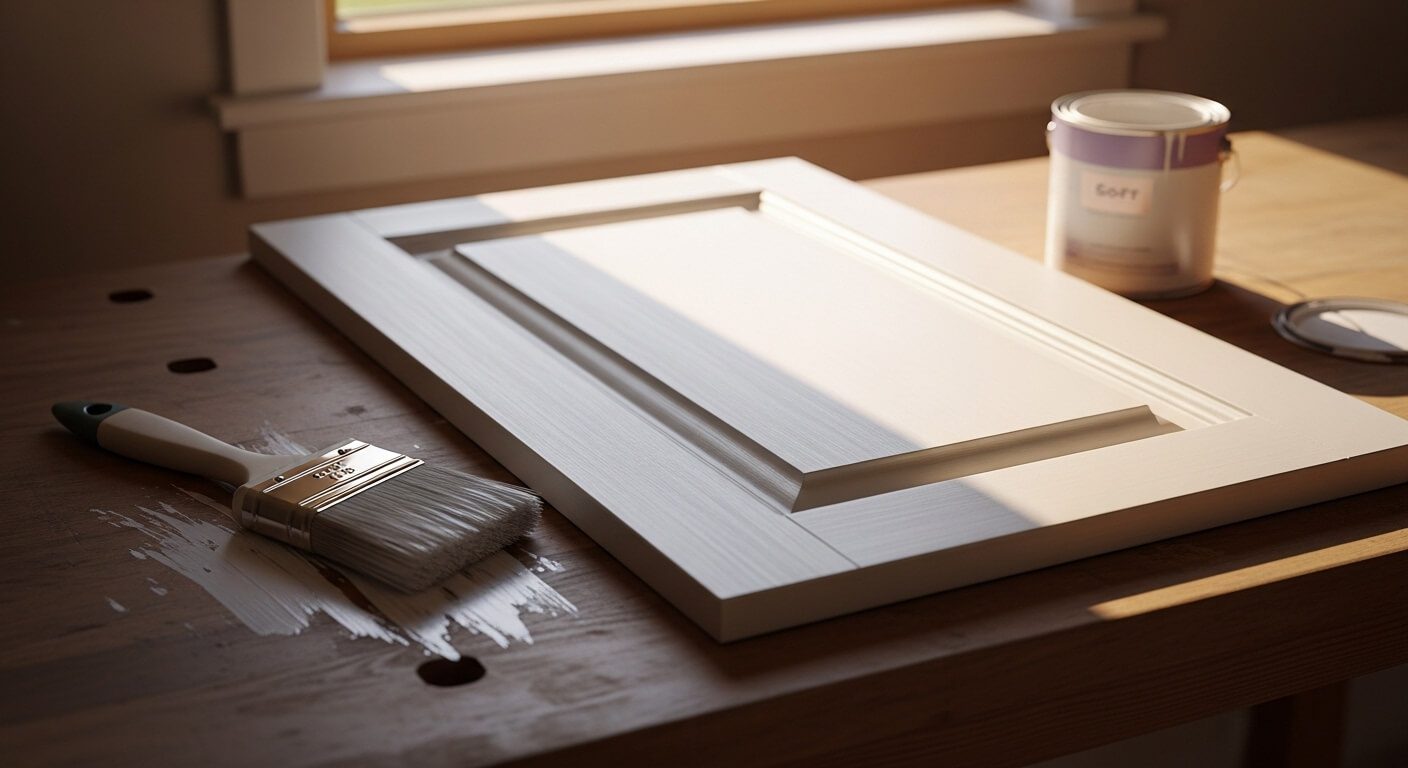

There is a particular kind of satisfaction that comes from opening a freshly painted cabinet door and seeing a surface so smooth it looks factory-sprayed. No brush marks. No roller stipple. Just a clean, hard shell of color that holds up to daily abuse without flinching. That finish is not accidental. It comes from choosing the right product — and in the world of cabinet and furniture painting, urethane alkyd enamel paint sits at the very top of the hierarchy.
If you are in the middle of planning a kitchen refresh, a bathroom vanity makeover, or even a furniture flip, you have likely spent time staring at paint aisle options wondering which can is actually worth your money. This guide cuts through the noise. We tested, researched, and compared the leading urethane alkyd enamel paints on the market today, and what follows is an honest, detailed breakdown of what each product delivers — and where it falls short.
Whether you are a first-time DIYer or someone who has painted a dozen cabinets and still wants better results, this article is your reference point.
Quick Summary: What You Need to Know
- Urethane alkyd enamel paint combines the hardness of oil-based finishes with the cleanup convenience of water-based formulas.
- These paints self-level exceptionally well, making them ideal for cabinets, doors, and trim.
- Top-performing options include Benjamin Moore Advance, Sherwin-Williams Emerald Urethane Trim Enamel, and Rust-Oleum Cabinet Transformations.
- Proper surface prep and priming are non-negotiable for a durable finish.
- Expect to pay between $45 and $95 per gallon for quality urethane alkyd enamel.
- Allow full cure time of 21 to 30 days before returning doors to heavy use.
- A neutral wall color in your kitchen or bath will dramatically influence how your cabinet finish reads in natural light.
What Is Urethane Alkyd Enamel Paint and Why Does It Matter for Cabinets
Before getting into product recommendations, it helps to understand exactly what you are working with. Traditional oil-based alkyd paints were long considered the gold standard for cabinetry because they dry to an exceptionally hard, smooth surface. The problem was the cleanup involved solvents, the dry time stretched into days, and the yellowing over time — especially in white or light colors — frustrated homeowners to no end.
Urethane alkyd enamel represents the evolution of that technology. Formulators engineered a water-carried version that retains the self-leveling and hardness properties of oil-based paint while behaving more like a latex during application. You clean brushes with soap and water. Dry times are measured in hours rather than days. Yellowing is dramatically reduced. And the final film hardness rivals what you would get from a factory-applied coating.
For anyone painting kitchen cabinets or bathroom vanities, these properties are not optional luxuries. Cabinets take more abuse per square foot than nearly any other surface in a home. They get touched hundreds of times a day, wiped down with cleaning products, subjected to steam, and bumped by dishes and pots. A standard interior latex simply does not have the film hardness to survive that environment without chipping, scratching, or wearing thin at the edges.
This is why professional furniture paint in the urethane alkyd category has become the go-to for serious DIYers and painting contractors alike. When paired with a well-chosen neutral wall color, the final result feels intentional, polished, and genuinely professional.
Top Urethane Alkyd Enamel Paints Reviewed
Benjamin Moore Advance Waterborne Interior Alkyd Paint
Benjamin Moore Advance is arguably the most widely recommended cabinet enamel among professional painters and interior designers. It is a waterborne alkyd formula that flows and levels like an oil paint, meaning brush strokes and roller stipple virtually disappear as it dries.
The open time — the window during which the paint remains wet enough to manipulate — is longer than most competing products. This is enormously helpful when painting large cabinet door panels where you need time to back-brush and eliminate lap marks. The finish is available in eggshell, satin, and semi-gloss sheens, giving you flexibility depending on whether you are going for a muted furniture look or a harder, easier-to-clean surface.
In terms of hardness, Advance cures to a finish that resists dents and scuffs at a level you simply cannot achieve with conventional latex. Full cure takes approximately 21 days, and during that window the surface is more vulnerable than it will eventually become. Coverage runs about 350 to 400 square feet per gallon on properly primed surfaces, and you will typically need two coats for solid, even color.
Cost: Approximately $75 to $90 per gallon depending on region and retailer.
For technical specifications and application conditions, visit Benjamin Moore for detailed data sheets.
Sherwin-Williams Emerald Urethane Trim Enamel
Sherwin-Williams built its Emerald Urethane Trim Enamel specifically for trim, doors, and cabinets, and it shows in the formulation. This paint has one of the tightest block resistance ratings in its class, meaning that doors and drawers painted with it are far less likely to stick together after closing — a frustratingly common problem with softer latex paints in warm, humid environments like kitchens and bathrooms.
The film hardness develops more quickly than Advance, which some painters prefer when working on a project with a tight timeline. You can typically recoat within four to six hours under ideal conditions, and light use can resume after 24 hours. Emerald Urethane is available in virtually any custom color through Sherwin-Williams stores, and it can be tinted to complement almost any neutral wall color you are working around.
It brushes smoothly and rolls without significant texture. Leveling is slightly inferior to Advance, particularly in lower temperatures, so application environment matters. Aim for temperatures between 50 and 90 degrees Fahrenheit with moderate humidity for best results.
Cost: Approximately $85 to $95 per gallon.
Sherwin-Williams publishes detailed product comparisons and contractor application guides at Sherwin-Williams.
Rust-Oleum Cabinet Transformations
Rust-Oleum’s Cabinet Transformations system occupies the budget-to-mid tier of the market and serves as an excellent entry point for homeowners painting cabinets for the first time. Rather than a straight gallon of paint, it is a kit-based system that includes a deglosser, bond coat, decorative glaze, and protective topcoat. The all-in-one nature removes some of the guesswork around primer compatibility and topcoat selection.
The finish quality is respectable for a DIY-targeted product, though it does not reach the mirror-smooth results possible with Benjamin Moore or Sherwin-Williams products applied correctly. Durability is adequate for light-duty kitchen cabinets but may show wear sooner in high-traffic areas like lower cabinets near the sink or dishwasher.
Cost: Approximately $45 to $65 per kit (covers a typical kitchen).
Surface Preparation: The Step That Determines Everything
Even the best urethane alkyd enamel paint will fail prematurely on surfaces that were not properly prepared. This is the single most overlooked factor in DIY cabinet painting projects, and it accounts for the majority of complaints about peeling, chipping, and adhesion failures.
Follow this sequence without skipping steps:
- Remove all cabinet doors and hardware. Paint them flat and horizontal to avoid drips.
- Clean every surface with a degreasing cleaner. Kitchen grease and cooking oils create an invisible barrier that prevents adhesion.
- Sand all surfaces with 120 to 150-grit sandpaper to scuff the existing finish. Do not attempt to sand down to bare wood unless the existing finish is severely damaged.
- Wipe down with a tack cloth to remove all sanding dust. Any residue left behind will show through your topcoat.
- Apply a high-adhesion primer. For MDF cabinet doors, use a shellac-based primer on the edges to prevent grain raise and swelling.
- Lightly sand the dried primer with 220-grit, tack off again, and then apply your urethane alkyd enamel.
The This Old House editorial team has published an excellent step-by-step cabinet painting guide that aligns with these prep recommendations for anyone who wants additional visual guidance.
Tools and Materials You Will Need
Gathering the right tools before you start will save significant frustration mid-project:
- High-quality synthetic bristle brush (Purdy or Wooster recommended for urethane alkyds)
- 4-inch foam roller for flat door panels
- Sanding sponges in 120, 150, and 220-grit
- Tack cloths
- Shellac or water-based bonding primer
- Degreaser (TSP substitute works well)
- Drop cloths and painter’s tape
- Nitrile gloves
- Good ventilation — open windows or use a box fan
Cost Breakdown: Budget, Mid-Range, and Premium
Budget (Under $55 per Gallon)
At this price point you are typically looking at Rust-Oleum Cabinet Transformations kits or comparable store-brand alkyd enamels. These products perform adequately for light-use scenarios and are well-suited for renters, rental properties, or projects where longevity past five years is not a priority. Expect to repaint sooner and accept a finish that is slightly less hard than mid or premium options.
Mid-Range ($55 to $75 per Gallon)
Products like Behr Alkyd Semi-Gloss Enamel and PPG Breakthrough fall into this tier. They deliver solid hardness and self-leveling properties at a price point that makes large kitchen projects more manageable. These are excellent choices for most homeowners doing a full kitchen repaint, especially when combined with quality primer and proper prep.
Premium ($75 to $95 per Gallon)
Benjamin Moore Advance and Sherwin-Williams Emerald Urethane Trim Enamel sit at the top of the consumer market. For a kitchen or bath where longevity, finish quality, and hardness are non-negotiable, the premium is genuinely worth it. The difference in surface feel between a properly applied coat of Advance and a budget enamel is immediately apparent — and it holds up demonstrably better over years of daily use.
Head-to-Head Comparison: Which Paint Wins in Each Category
Best for leveling and self-smoothing: Benjamin Moore Advance
Best for block resistance and humidity: Sherwin-Williams Emerald Urethane
Best for budget-conscious full-kitchen projects: Rust-Oleum Cabinet Transformations
Best for fast recoat on tight timelines: Sherwin-Williams Emerald Urethane
Best for color depth and richness in tinted colors: Benjamin Moore Advance
When choosing between Advance and Emerald Urethane specifically, the decision often comes down to application style. Advance rewards patience and slower, deliberate brushwork. Emerald Urethane performs more consistently across a wider range of application speeds and temperatures, making it the more forgiving choice for less experienced painters.
Common Mistakes That Ruin a Cabinet Painting Project
- Skipping the degreaser. Invisible kitchen grease is the number one cause of adhesion failure on cabinets.
- Not sanding between coats. Light sanding with 220-grit between coats dramatically improves the final finish quality and adhesion of subsequent layers.
- Applying paint too thick. Urethane alkyd enamels self-level best when applied in thin, even coats. Thick coats cause runs and take longer to cure.
- Rushing the cure time. A surface can feel dry to the touch within hours but remain soft internally for weeks. Hanging doors before the paint has cured significantly increases the chance of door-to-frame sticking.
- Using the wrong primer. Compatibility between primer and topcoat matters. Always check the technical data sheet of your chosen urethane alkyd enamel for recommended primers.
- Painting in cold or very humid conditions. Both Benjamin Moore Advance and Sherwin-Williams Emerald Urethane require specific temperature and humidity windows for proper curing.
Longevity and Maintenance: Making Your Finish Last
A properly applied premium urethane alkyd enamel on well-prepped cabinets should last between eight and fifteen years before showing meaningful wear. The variables that most affect longevity are surface prep quality, number of coats applied, full cure time before heavy use, and the cleaning products used on the surface over its lifetime.
For daily cleaning, a mild dish soap solution on a soft microfiber cloth is all you need. Avoid abrasive scrubbers, bleach-based cleaners, and anything containing acetone — these will eventually break down even the hardest enamel finish. Wipe spills promptly rather than letting them sit, particularly acidic substances like tomato or citrus juice.
Minor touch-ups are straightforward with urethane alkyd enamels if you saved some paint. Lightly sand the damaged area, wipe clean, and apply a thin coat. The self-leveling properties help blend edges reasonably well. For larger repairs, it may be worth repainting an entire door rather than touching up a visible panel.
According to research published by the Paint Quality Institute, waterborne alkyd formulations maintain their gloss retention and color consistency significantly better than traditional oil-based paints over five-plus years, particularly in environments with temperature fluctuations.
Design Considerations: Color, Sheen, and Your Neutral Wall
The color you choose for your cabinets will interact directly with the paint colors already in the room. Your neutral wall color functions as the visual backdrop that either harmonizes with or fights against your cabinet finish. Warm whites and off-whites on cabinets tend to work best against neutral wall colors with warm undertones — think greige, soft taupe, or warm linen tones. Cool cabinet whites, like those with blue or gray undertones, pair more naturally with neutral wall colors in the cooler gray or blue-gray family.
Sheen level is another decision point worth deliberate thought. Semi-gloss is the traditional choice for cabinets because it is the easiest to clean and shows off the smoothness of the enamel finish. Satin is becoming increasingly popular in kitchen design because it offers excellent cleanability while appearing softer and less formal. Eggshell is rarely recommended for cabinet boxes but can work well on furniture pieces that see less daily contact.
For more design inspiration on combining cabinet colors with coordinating paint choices, CraftsnComforts.com offers a range of DIY guides and before-and-after transformations that show real-world results in kitchen and bath spaces.
Frequently Asked Questions
1. Is urethane alkyd enamel paint the same as oil-based paint?
Not exactly. Urethane alkyd enamel is a waterborne formula that carries alkyd resin in a water base, whereas traditional oil-based paint uses solvent as the carrier. The cured film properties are similar — hard, smooth, and durable — but cleanup, dry time, and VOC levels differ substantially. Urethane alkyds are much more DIY-friendly while delivering comparable results.
2. Do I need to prime before applying urethane alkyd enamel paint?
Yes, in virtually every cabinet painting scenario. Primer improves adhesion, blocks stains, and creates a uniform base that allows the topcoat to level properly. On raw wood or MDF, primer is non-negotiable. Even on previously painted surfaces in good condition, a light bonding primer or a thorough sanding will significantly improve adhesion and final finish quality.
3. Can I use a paint sprayer with urethane alkyd enamel?
Absolutely, and spraying will produce the smoothest possible finish. HVLP (High Volume Low Pressure) sprayers are the best tool for cabinet doors, though the learning curve is steeper than brushing or rolling. If you spray, you will need to thin the paint slightly per the manufacturer’s recommendations and apply multiple thin coats.
4. How long do I need to wait between coats?
Most urethane alkyd enamels require four to eight hours between coats at room temperature. Sherwin-Williams Emerald Urethane tends toward the shorter end of that range, while Benjamin Moore Advance benefits from a full six to eight hours. Always check the technical data sheet for your specific product, as cooler temperatures or higher humidity will extend recoat windows.
5. Can I use urethane alkyd enamel on bathroom vanities?
Yes, and it is an excellent choice for bathroom cabinetry. The hard, moisture-resistant film that urethane alkyd enamels produce is well-suited for humid bathroom environments. The key is allowing full cure before the vanity is exposed to regular steam and moisture. Use semi-gloss sheen for the easiest cleanup in bath environments.
6. Will urethane alkyd enamel yellow over time?
Far less than traditional oil-based alkyds. The waterborne formulation of modern urethane alkyds significantly reduces the yellowing problem. White and off-white colors may show very slight warm toning over many years, particularly in rooms with low natural light, but this is minimal compared to solvent-based predecessors.
7. What sheen level should I choose for kitchen cabinets?
Semi-gloss is the classic recommendation for its cleanability and its ability to show off the hard, smooth surface of a well-applied enamel. Satin is a strong alternative that reads softer in the space while still being wipeable. Avoid flat or matte finishes on cabinets — they absorb grease and stains and cannot be scrubbed without damaging the finish.
8. How much paint do I need for a typical kitchen?
A medium kitchen with upper and lower cabinets typically requires two gallons of topcoat for two coats of coverage, plus one to two gallons of primer. Larger kitchens or those with many cabinet doors may require three gallons of topcoat. Always buy slightly more than your calculation suggests to allow for touch-ups and corrections.
Conclusion: Invest in the Right Product and Do the Prep Work
After all the research, testing, and real-world comparisons, the conclusion is straightforward: if you want professional-quality results on kitchen cabinets or bathroom vanities, urethane alkyd enamel paint is the category you should be shopping in. The self-leveling properties, the film hardness, and the long-term durability put these products in a completely different league from standard interior latex.
Among the products reviewed, Benjamin Moore Advance stands out as the top all-around performer for DIYers who want the closest possible approximation of a factory finish. Sherwin-Williams Emerald Urethane Trim Enamel is the stronger pick for anyone who needs faster recoat times or is working in a higher-humidity environment. Rust-Oleum Cabinet Transformations earns its place as a legitimate budget option for smaller projects or less demanding use cases.
Whatever product you choose, remember that the paint is only half the equation. Thorough surface prep — degreasing, sanding, priming, and sanding again — is what separates a finish that lasts a decade from one that chips at the three-year mark. Take the prep seriously, apply thin coats, allow full cure time, and the result will speak for itself every time someone opens a cabinet door.
A fresh cabinet finish against a well-chosen neutral wall color can transform a dated kitchen into something that looks genuinely renovated — all without the cost of replacing the cabinets themselves. That is the real promise of professional furniture paint applied with care and the right knowledge.
About the Author
Adeel Mushtaque is a passionate home decor enthusiast and self-taught DIY art creator who believes that a beautiful living space should never come at an unreasonable price. With a sharp eye for design and a hands-on approach to home transformation, Adeel brings thoughtful, practical guidance to every project he tackles. His work on CraftsnComforts.com is driven by a simple philosophy: creativity, quality craftsmanship, and stylish living are accessible to everyone — regardless of budget.