

How to Choose and Display DIY Art for Every Space
When I first started making my own wall art, I thought the “hard part” was crafting it — picking colors, gluing pieces, layering textures. But when I hung my first few creations, something felt off. They looked great individually, but somehow out of place on my walls.
That’s when I learned a golden truth: placement and styling make the art come alive.
The same piece that looks ordinary in the wrong room can feel designer-level in the right one. The key? Understanding how art interacts with space, mood, and lighting.
Let’s explore how to match your DIY wall art to every room in your home — beautifully, intentionally, and affordably.
The Art of Styling: Why Placement Matters
Art isn’t just décor — it’s emotional architecture.
It sets the tone for the space around it.
When you match your wall art’s energy to a room’s purpose, the entire space feels balanced and elevated.
- Living rooms call for conversation pieces.
- Bedrooms whisper calm and comfort.
- Offices need focus and motivation.
- Bathrooms thrive on simplicity and freshness.
Think of it like interior storytelling — each wall becomes a new chapter.
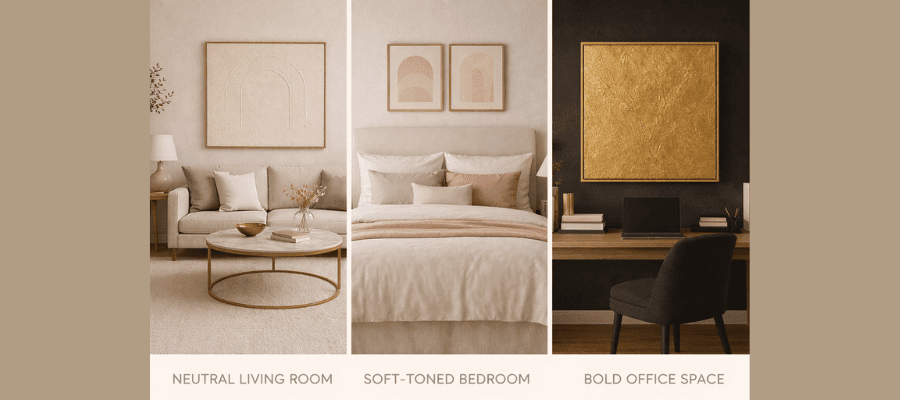
Living Room Wall Art Ideas
The living room is your stage — the first place guests see, and where your personality shines most.
It’s the perfect spot for statement DIY pieces that set the tone for your entire home.
1. Large-Scale Canvas Art
If you’ve tried the “DIY Canvas Wall Art” projects (Cluster 2), this is where they belong. Oversized abstract or textured canvases make the room feel complete.
Tips:
- Center at 6–8 inches above your sofa.
- Keep frames neutral if your furniture is bold, or vice versa.
- Pair one large canvas with smaller accent pieces nearby.
2. Gallery Walls
Create a cohesive gallery with a mix of framed art, quotes, and textures.
Use matching frames or keep a consistent color theme.
3. Textured & Moss Art
A DIY moss wall art piece adds earthy calm and depth — perfect for softening modern interiors.
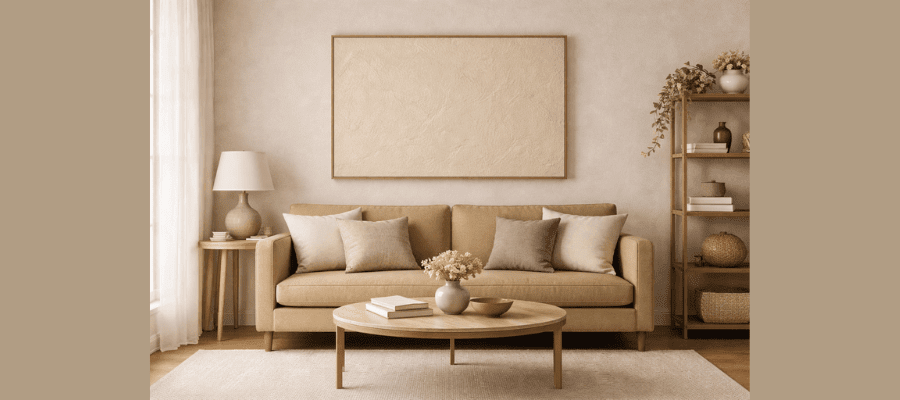
Bedroom Wall Art Ideas
Bedrooms are about serenity, reflection, and intimacy — your art should mirror that.
Think soft colors, minimalist designs, and personal touches.
1. Framed Fabric or Linen Art
Use fabric remnants from your DIY projects (Cluster 8) — muted, tactile pieces that add warmth without clutter.
2. Quote or Verse Wall Art
A subtle hand-painted quote above your bed brings quiet comfort.
Opt for gentle fonts and neutral backdrops.
3. Diptych or Triptych Sets
Two or three coordinating panels look elegant above a headboard.
💡 Pro tip: Use symmetry — one large piece or two equal panels centered on the wall.

Kitchen & Dining Room Wall Art
Kitchens are the heart of the home — bright, busy, and full of life. Wall art here should feel cheerful and lively, but not distracting.
1. Framed Printable Art
Simple “Eat, Love, gather” or recipe-style typography art works beautifully in breakfast nooks.
2. Rustic Wood Wall Signs
Flip old cutting boards or scrap wood into word art like “Bon Appétit” or “Farm Fresh.”
3. Herb & Botanical Prints
Preserved moss or dried herb frames tie perfectly into a kitchen’s natural palette.
💡 Pro tip: Keep art away from direct heat or steam.

Bathroom Wall Art Ideas
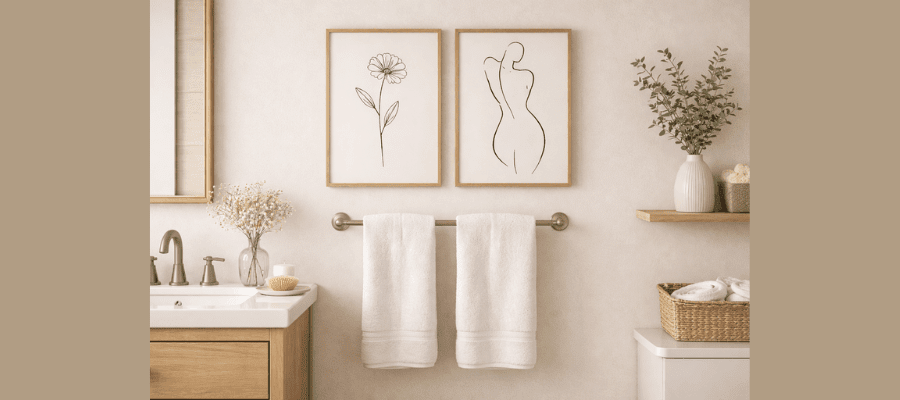
Bathrooms are underrated for design potential — clean, compact, and perfect for DIY art that brings freshness.
1. Minimalist Prints
Think black-and-white photography or modern line art — timeless and spa-like.
2. Sealed Fabric or Paper Art
Use waterproof sealant to protect fabric or paper-based DIYs from humidity.
3. Textured or 3D Wall Art
A small textured plaster piece adds subtle luxury without overwhelming tight spaces.
💡 Pro tip: Avoid heavy frames — lightweight foam board or acrylic works best here.
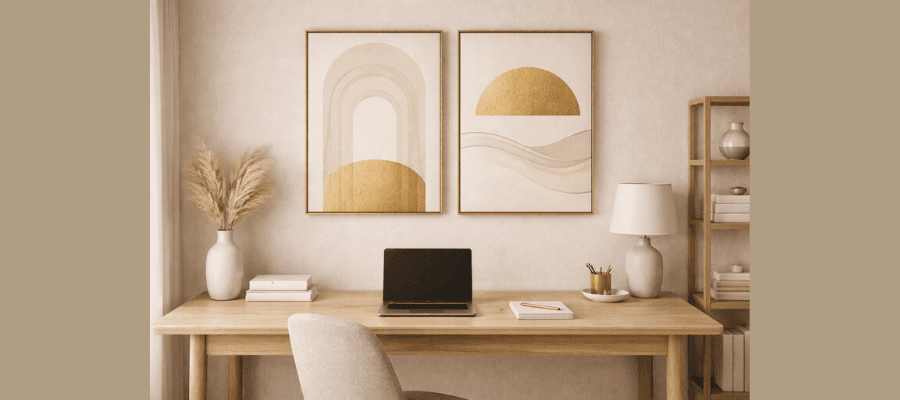
Office & Workspace Wall Art
Your workspace should motivate, not distract.
Wall art here can balance inspiration and focus.
1. Geometric or Minimal Abstracts
Clean lines and symmetry help reduce visual clutter and boost productivity.
2. DIY Quote Art
Add motivation with framed affirmations or stenciled typography.
3. Black & Gold Accent Art
Use Dollar Tree frames and metallic foil to create subtle “executive” vibes on a budget.
💡 Pro tip: Position art behind your desk for a strong visual backdrop during video calls.
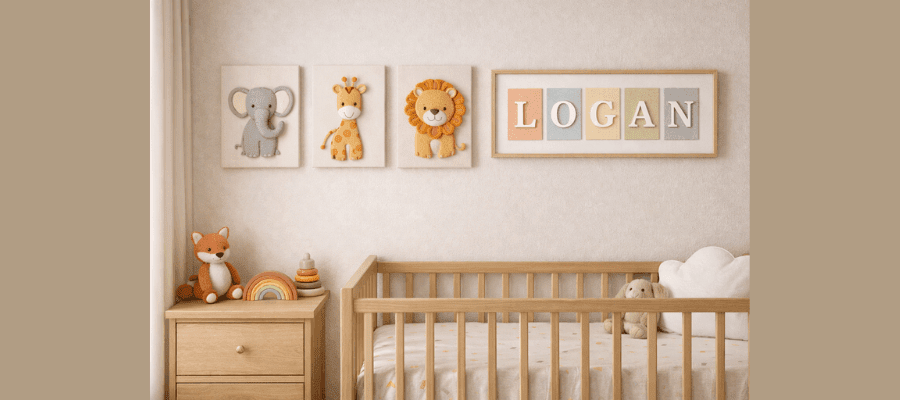
Kids’ & Nursery Wall Art
Here’s where fun, color, and creativity explode — safely!
Children’s rooms thrive on art that sparks imagination.
1. Name or Initial Art
Use foam letters, wood blocks, or stencils to craft personalized wall names.
2. Fabric or Felt Wall Pieces
Soft textures are tactile, safe, and easy to replace as kids grow.
3. Themed Art
Create wall scenes using paper cutouts — butterflies, animals, stars, or quotes.
💡 Pro tip: Use removable adhesive hooks — flexibility matters for growing kids’ styles.
Entryway & Hallway Styling
These transitional spaces set the mood for your home.
1. Statement Mirror Wall
Use your “Mirror Mosaic” from Dollar Tree projects (Cluster 7) as a reflective focal point.
2. Family Gallery
Mix photos, quotes, and textured art into a personal story wall.
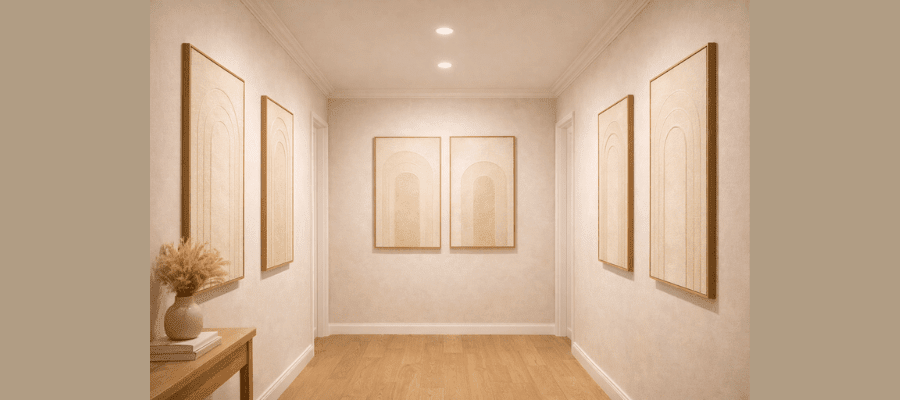
3. Vertical Art for Narrow Spaces
Long, slim wood panels or hanging art draw the eye upward and make hallways feel taller.
💡 Pro tip: Layer soft lighting — sconces or fairy lights enhance art without glare.
Layout Tips for Cohesive Design
Whether you’re decorating one room or your entire home, balance is key.
1. Maintain Visual Flow
Use repeating colors, frames, or materials from room to room to create unity.
2. Play with Height
Align the center of all artwork roughly 57 inches from the floor — gallery standard.
3. Group by Theme
Keep nature-inspired pieces together, modern textures together, etc.
4. Use Negative Space
Don’t cover every wall. Empty space makes art stand out more.
5. Recycle & Refresh
Swap art between rooms seasonally — keeps your space dynamic without new costs.
Final Thoughts
Each wall in your home tells a story — the only difference is how you choose to tell it.
Whether it’s a textured canvas in your living room, a framed linen piece in your bedroom, or your child’s paper butterfly art in their playroom, every piece carries a part of you.
That’s the real beauty of DIY décor — it transforms houses into stories you can live in.
And remember: it’s not about perfection. It’s about creating art that feels alive in the spaces you love most.
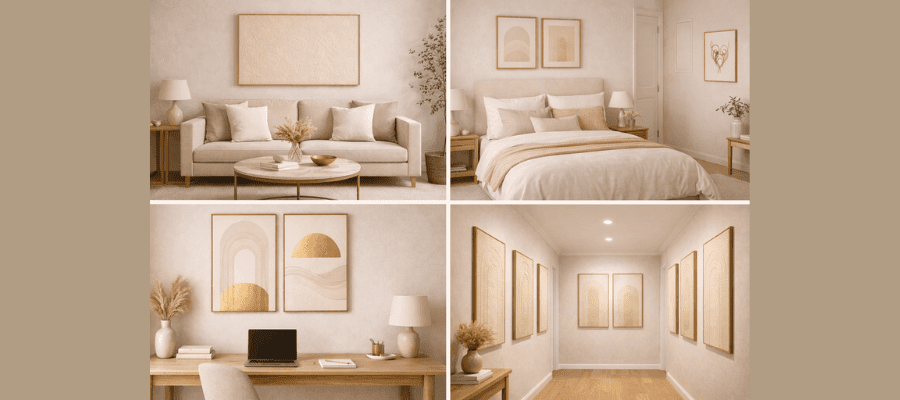
[Insert Image: Cozy, art-filled home interior showing diverse DIY wall art styles]People May Ask (FAQ)
Q1. What’s the best wall art size for different rooms?
Living rooms: 24×36+ inches. Bedrooms: 16×20 or two 12x12s. Bathrooms: 8×10 or smaller.
Q2. How high should wall art be hung?
Center your art about 57 inches from the floor — that’s average eye level.
Q3. How do I mix art styles across rooms?
Stick to one unifying element — color palette, frame style, or texture.
Q4. Can I use DIY art in rental spaces?
Absolutely! Use command strips and lightweight frames for easy, damage-free hanging.
Q5. How often should I change wall art?
Every 3–6 months for a fresh look — or seasonally if you enjoy decorating year-round.
About the Author
Written by Adeel Mushtaque — a DIY storyteller and décor enthusiast helping readers transform blank walls into personal galleries. With a blend of creativity, storytelling, and practical design, Adeel’s projects prove that great style begins with what you already have — and the imagination to see it differently.