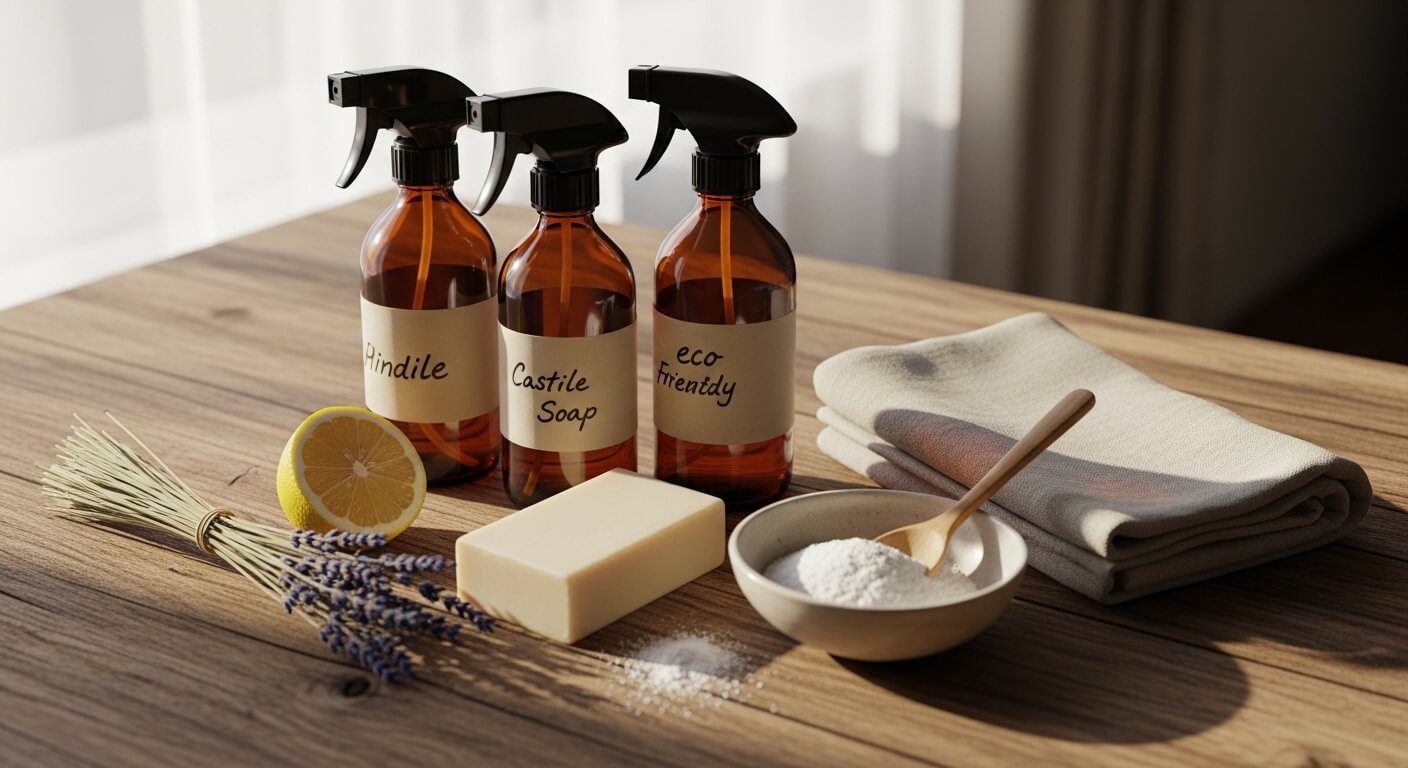

Eco Friendly Cleaning Products: Complete Guide to a Greener, Cleaner Home
Estimated read time: 9 minutes
Making the switch to eco friendly cleaning products is one of the most impactful changes you can make inside your home — and honestly, it’s a lot easier than most people think. Whether you’ve been overwhelmed by ingredient labels, unsure which brands actually deliver on their promises, or simply curious about what makes a cleaner “green,” this guide cuts through the noise. The best eco-friendly cleaning products do exactly what conventional ones do — they tackle grease, bacteria, grime, and odors — without leaving behind a trail of harsh chemicals that affect your family, your pets, and the environment.
In my experience, the shift starts with understanding what you’re actually buying. Conventional cleaners often contain synthetic fragrances, chlorine bleach, phosphates, and petroleum-derived surfactants. These chemicals don’t just rinse away; they end up in waterways and soil, disrupting ecosystems. Eco cleaning products, by contrast, rely on plant-based surfactants, biodegradable ingredients, and naturally-derived antimicrobials. The good news: modern formulations have closed the performance gap significantly.
This complete guide covers everything from what eco-friendly cleaning products actually are and how to evaluate them, to top picks across different categories, common mistakes to avoid, and how to make smarter purchases without blowing your budget. By the time you finish reading, you’ll have a clear, actionable plan for a cleaner home and a cleaner conscience.
What Are Eco Friendly Cleaning Products?
The term “eco friendly” gets tossed around loosely on product packaging, so it’s worth defining it precisely. A genuinely eco friendly cleaning product is one that is formulated with ingredients that are biodegradable, derived from renewable resources, free from toxic persistent chemicals, and packaged with minimal plastic waste. Many carry third-party certifications — the EPA’s Safer Choice program, EWG Verified, or the EU Ecolabel — which provide independent verification that what’s on the label is actually true.
The distinction between “natural” and truly “eco” matters here. A product can claim to be natural while still containing ingredients that are harmful at scale or non-biodegradable. What to look for: plant-derived surfactants (like sodium coco-sulfate or decyl glucoside), essential oil-based fragrances (rather than synthetic parfum), and recyclable or refillable packaging. What to avoid: chlorine bleach, triclosan, synthetic musks, phosphates, and quaternary ammonium compounds (“quats”) — even if the bottle has a leaf on it.
According to the National Institute of Environmental Health Sciences, indoor air can be 2 to 5 times more polluted than outdoor air, largely due to volatile organic compounds (VOCs) released by conventional cleaning sprays and aerosols.
What certifications should I look for on eco cleaning products?
Third-party certifications are your shortcut to separating genuine green products from greenwashing. The EPA Safer Choice label means every ingredient has been evaluated for human and environmental safety — it’s one of the most rigorous programs available in the U.S. EWG Verified goes further by also requiring full ingredient disclosure and restricting any ingredient with a hazard score above a certain threshold. For European brands, look for the EU Ecolabel or Nordic Swan. USDA Certified Biobased is another strong marker — it tells you a defined percentage of the product’s content comes from renewable biological sources. When a product carries none of these labels but claims to be “green,” dig into the ingredient list yourself.
Best Eco-Friendly Cleaning Products for Home Use
Finding the best eco-friendly cleaning products for home means thinking room by room. Your kitchen, bathroom, laundry, and floors all have different needs, and no single product does everything optimally. That said, a handful of standout brands and product types have proven themselves across the board — both in independent lab testing and in real-world household use.
All-Purpose Cleaners: Branch Basics Concentrate and Meliora All-Purpose Spray consistently rank among the top eco-friendly cleaning products for general surface cleaning. Both use plant-derived surfactants, are fragrance-free or use essential oils only, and come in refillable or concentrate formats that drastically reduce plastic waste. Seventh Generation also offers a solid all-purpose line with EPA Safer Choice certification.
Dish Soap: Concentrated dish soaps punch above their weight. Attitude, Ecos, and Puracy all deliver grease-cutting performance without synthetic fragrances or dyes. If you’re after the best eco friendly cleaning products that also work as hand soap and general cleaner, a truly concentrated formula like Branch Basics diluted 1:30 in water is extraordinarily efficient and cost-effective.
Laundry Detergent: Dropps, Tru Earth, and Molly’s Suds have transformed eco laundry. Strip-format and pod formats eliminate bulky plastic jugs and perform well in cold water, which itself saves energy. For those pairing their cleaning routine with better home tools, check out our roundup of the best cordless vacuum for pet hair — keeping floors clean between washes is half the battle.
The best eco-friendly cleaning products for home use combine plant-based formulas with responsible packaging — concentrates and refillables are almost always the smarter long-term choice, both for the environment and your wallet.
Top Eco-Friendly Cleaning Products by Category
Here’s a sharper breakdown of the top eco-friendly cleaning products across the categories most households care about. Think of this as a curated shortlist — each of these has been selected based on ingredient transparency, performance reviews, packaging practices, and certification status.
- Bathroom Disinfectant: Bioprotect 500 or Force of Nature (which uses electrolyzed water — EPA-registered, zero synthetic chemicals)
- Glass & Window Cleaner: Ecos Window Cleaner or a DIY vinegar-water solution (seriously, it works)
- Floor Cleaner: Better Life Floor Cleaner — plant-derived, safe on hardwood, tile, and laminate
- Toilet Cleaner: Seventh Generation Toilet Bowl Cleaner — plant-based, no chlorine bleach
- Oven & Degreaser: Biokleen Bac-Out or Puracy Natural Multi-Surface Cleaner for routine grease; heavy oven buildup may require a baking soda paste method
- Laundry Stain Remover: Ecover Stain Remover Stick or Branch Basics Oxygen Boost
One category often overlooked is the tools themselves. Switching to reusable microfiber cloths (rather than disposable paper towels) is one of the highest-impact changes you can make alongside product swaps. Our guide on microfiber car cloths dives into how these cloths work — and the principles apply just as well inside your home. Microfiber captures more bacteria than cotton rags with just water alone, which means you can clean effectively using far less product.
Buy concentrates whenever possible. A single 32 oz bottle of concentrate can make 30–60 spray bottles of ready-to-use cleaner, reducing plastic waste by 90% or more and typically cutting your per-use cost in half.
How Do You Make Cleaning Products Eco Friendly?
How do you make cleaning products eco friendly at home?
Making your own eco cleaning products at home is easier than most people expect — and shockingly cheap. The core ingredients are white distilled vinegar, baking soda, castile soap, and essential oils. Vinegar’s acetic acid content makes it an effective disinfectant and degreaser on most non-stone surfaces (avoid on marble and granite, where it can etch). Baking soda is a mild abrasive and deodorizer. Castile soap — made from plant oils like olive, coconut, or hemp — is a genuine workhorse that cuts grease, cleans fabrics, and is safe for skin.
A go-to all-purpose spray: fill a 16 oz spray bottle with equal parts water and white vinegar, add 15 drops of tea tree essential oil (antimicrobial) and 10 drops of lavender or lemon for fragrance. That’s it. It cleans countertops, sinks, stove surfaces, and bathroom tiles. One thing I’ve learned after years of making DIY cleaners: label everything, including the dilution ratio. Concentrated castile soap mixed with vinegar actually cancels out — they’re acidic and alkaline respectively — so keep them separate and use for different tasks.
For a deeper look at vinegar-based cleaning specifically, our article on cleaning hacks with vinegar covers a dozen specific applications room by room, with exact ratios and tips on what surfaces to avoid.
Never mix vinegar with hydrogen peroxide in the same container — together they form peracetic acid, which can irritate eyes, skin, and lungs. Use them separately, not as a combined solution.
Cost Breakdown: Budget vs. Premium Green Cleaners
One of the biggest myths about eco cleaning products is that they’re always more expensive than conventional options. That’s often not true once you factor in concentration ratios, multi-use formulas, and reduced paper towel consumption. Here’s a realistic comparison:
| Category | Budget / DIY | Mid-Range | Premium |
|---|---|---|---|
| All-Purpose Cleaner | DIY vinegar spray ~$0.10/bottle | Seventh Generation ~$4–$6 per bottle | Branch Basics Concentrate ~$49 (makes 60+ bottles) |
| Dish Soap | Castile soap diluted 1:10 ~$0.20/oz | Ecos or Attitude ~$5–$8 per bottle | Puracy ~$10–$12, ultra-concentrated |
| Laundry Detergent | Washing soda + soap flakes ~$0.05/load | Molly’s Suds ~$0.25/load | Tru Earth or Dropps ~$0.35–$0.50/load |
| Toilet Cleaner | Baking soda + vinegar ~$0.05/use | Seventh Generation ~$4–$5 per bottle | Blueland or Cleancult tablets ~$3–$5/refill |
| Glass Cleaner | Diluted isopropyl alcohol + water ~$0.08/bottle | Ecos Window ~$3–$5 per bottle | Method Glass Cleaner ~$5–$7 |
As you can see, once you commit to concentrates or DIY, eco cleaning products can actually undercut the cost of conventional cleaners significantly. The upfront investment in a set of reusable glass spray bottles (around $15–$20 for a set of four) pays off fast.
Common Mistakes When Switching to Green Cleaners
What are the most common errors people make with eco cleaning products?
The number one mistake: buying “green” products without reading the ingredient list. Greenwashing is rampant. Phrases like “naturally derived,” “plant-based fragrance,” or “eco-conscious formula” are not regulated terms and carry no legal weight. Always read the actual ingredient panel or look up the product on the EWG’s Guide to Healthy Cleaning before purchasing.
Second common error: mixing incompatible ingredients. As mentioned, vinegar and castile soap cancel each other out. Baking soda and hydrogen peroxide combined are also fine individually but less effective as a mixture. Keep your DIY formulas simple and single-purpose.
Third: expecting eco cleaners to work exactly the same way as conventional ones on the first try. Some green degreasers need a slightly longer dwell time (30–60 seconds) on a surface before wiping. Others require a little more elbow grease. It’s not a performance flaw — it’s a trade-off for not using aggressive synthetic solvents.
Fourth: ignoring the tools. Eco products work best with quality tools. Pairing your green cleaner with the right tech — whether that’s a good mop, a quality scrub brush, or a reliable vacuum — makes a significant difference. For households with pets, for instance, a strong vacuum removes pet dander that even the best cleaner can’t tackle alone; see our review of the best robot vacuum 2025 review for options that complement a green cleaning routine.
Switching to eco cleaning products is a process, not a single purchase. Take it room by room, read ingredient labels, and pair your products with the right reusable tools for best results.
Longevity & Getting the Most from Your Products
Unlike conventional cleaners, many eco cleaning products — particularly concentrates — have a longer shelf life when stored correctly. Keep them in a cool, dark location, away from direct sunlight and heat. Essential oil-based sprays can degrade faster than synthetic-fragrance ones (typically 6–12 months for DIY mixes), so make small batches and label with a date.
Refillable systems like Blueland and Branch Basics extend both product life and environmental impact. Their tablets dissolve in water on demand, which means no product degradation from water sitting in a bottle for months. For laundry strips and pods — store in a dry environment to prevent early activation. A simple airtight container works perfectly.
One underrated longevity tip: use the correct dilution. Most people over-dilute concentrates (thinking more product = cleaner results), which wastes product and can leave residue. Conversely, check that your dilution is sufficient for the task — a 1:10 ratio for heavy kitchen grease versus a 1:30 ratio for daily surface wiping.
For households that also use smart home cleaning tools, pairing eco products with the right gadgets amplifies results. Our roundup of the best cleaning gadgets highlights tools that reduce how much product you need in the first place — steam cleaners and UV sanitizers, for instance, require zero chemicals at all.
A 2021 study published in the British Medical Journal found that regular use of disinfectant cleaning sprays was associated with a measurable increase in respiratory symptoms — a finding that has driven significant consumer interest in fragrance-free and plant-based cleaning formulas.
Frequently Asked Questions
What are eco friendly cleaning products?
Eco friendly cleaning products are formulated with biodegradable, plant-derived, or naturally occurring ingredients that are safer for human health and the environment compared to conventional cleaners. They avoid synthetic chemicals like chlorine bleach, phosphates, triclosan, and petroleum-derived surfactants. The best versions carry third-party certifications such as EPA Safer Choice, EWG Verified, or EU Ecolabel, which independently confirm that every ingredient meets defined safety and environmental standards. They’re designed to be effective at cleaning surfaces, fabrics, and dishes while breaking down harmlessly in waterways and soil after use.
How do you make cleaning products eco friendly?
You can make cleaning products eco friendly at home using a handful of simple, inexpensive ingredients: white distilled vinegar, baking soda, castile soap, and essential oils like tea tree or lemon. A basic all-purpose spray uses equal parts water and white vinegar with 15 drops of tea tree oil. For a gentle scrub, mix baking soda with a few drops of castile soap and a squeeze of lemon juice. The key is to keep formulations simple and purpose-specific — avoid mixing vinegar and castile soap together, as they neutralize each other. Reusing spray bottles and making small batches as needed also reduces waste considerably.
Are eco friendly cleaning products as effective as conventional ones?
Yes, for the vast majority of everyday cleaning tasks, eco friendly cleaning products perform on par with conventional ones — sometimes better. Modern plant-based surfactants are highly effective at cutting grease and lifting grime. Where some eco cleaners require slightly more dwell time or a bit more manual scrubbing, the trade-off is a product that’s safer for your family, your pets, and the watershed. Heavy-duty tasks like mold remediation or severe drain blockages may still require specialized products, but for daily household cleaning, green formulas are more than capable.
Is it true top eco-friendly cleaning products cost more?
It’s a common misconception that the top eco-friendly cleaning products always cost more. When you factor in concentrate formats — where a single bottle makes dozens of spray bottles — the per-use cost often drops well below that of conventional ready-to-use sprays. DIY options using vinegar, baking soda, and castile soap cost pennies per batch. Mid-range certified brands like Seventh Generation and Ecos are competitively priced with mainstream options at most grocery and big-box stores. The premium end (Branch Basics, Blueland) does have a higher upfront cost, but the math works out in your favor over time.
What ingredients should I avoid in cleaning products?
Key ingredients to avoid include chlorine bleach (sodium hypochlorite), triclosan, synthetic musks, phthalates (often hidden under “fragrance” or “parfum”), phosphates, quaternary ammonium compounds (“quats”), and 2-butoxyethanol. These chemicals are associated with respiratory irritation, hormone disruption, aquatic toxicity, and contributions to antibiotic resistance. The EWG’s Guide to Healthy Cleaning is a free database where you can look up any product’s ingredient profile and hazard score before buying — it’s one of the most useful tools for navigating the eco cleaning market.
Can I use eco cleaning products safely around pets and children?
Generally yes — one of the primary motivations people have for switching to eco cleaning products is the desire for a safer home environment for kids and pets. Products certified by EPA Safer Choice or EWG Verified have been specifically screened for ingredients that are harmful to vulnerable populations. That said, always check labels for essential oils that may be toxic to cats (tea tree, eucalyptus, and certain citrus oils can be problematic in high concentrations). Fragrance-free options are the safest bet for households with very young children or pets with sensitivities. Always store all cleaning products — eco or not — out of reach of children and animals.
Do eco friendly cleaning products disinfect effectively?
Most general eco cleaning products clean effectively but are not registered EPA disinfectants — meaning they haven’t gone through the specific pathogen-kill testing required for that label. For true disinfection (killing 99.9% of bacteria and viruses on a surface), you need either an EPA-registered product or a specific method. Force of Nature, which uses electrolyzed hypochlorous acid, is EPA-registered as a disinfectant and uses no synthetic chemicals. For most everyday cleaning, however, removing pathogens through physical action (scrubbing with a plant-based soap) is sufficient and what public health experts recommend for routine home maintenance.
What’s the best way to transition to eco cleaning products without wasting what I already have?
The most waste-conscious approach is to finish what you already have before replacing products one by one. As each conventional cleaner runs out, replace it with an eco alternative. Start with the products you use most — typically all-purpose spray, dish soap, and laundry detergent — as these have the biggest environmental footprint through frequent use. Reuse the empty spray bottles for DIY formulas; most standard trigger-spray bottles work fine with vinegar or castile soap solutions. This gradual transition avoids throwing away usable products, spreads out the cost, and gives you time to test and compare performance across categories.
Conclusion: Making the Green Switch Work for Your Home
Switching to eco friendly cleaning products isn’t about being perfect — it’s about making progressively better choices. Start with the products you use every day, read ingredient labels with intention, and lean into concentrates and refillables wherever possible. The top eco-friendly cleaning products on the market today genuinely clean as well as their conventional counterparts, and many cost less per use when you account for dilution ratios and multi-purpose capability.
The broader reward is real: a home that smells clean because it is clean — not because it’s been doused in synthetic fragrances. Air quality improves. Surfaces are safer for kids crawling on them and pets lying on them. And over time, your purchasing choices contribute meaningfully to reducing the chemical load entering waterways and soil. These are meaningful, compounding benefits from what is ultimately a simple lifestyle shift.
If you want to continue optimizing your home cleaning routine, there are several related areas worth exploring. Understanding how to use everyday pantry staples as cleaners — particularly vinegar — opens a world of chemical-free solutions. Pairing your eco products with smarter home tools, from robot vacuums to steam cleaners, reduces how much product you need altogether. And as you go deeper into a sustainable home routine, the overlap with general home organization and maintenance becomes clear — a cleaner, better-organized space requires less intensive cleaning over time. All of these topics are ones we explore in depth here at CraftsnComforts.com, and they fit together into a coherent approach to a healthier, more intentional home.