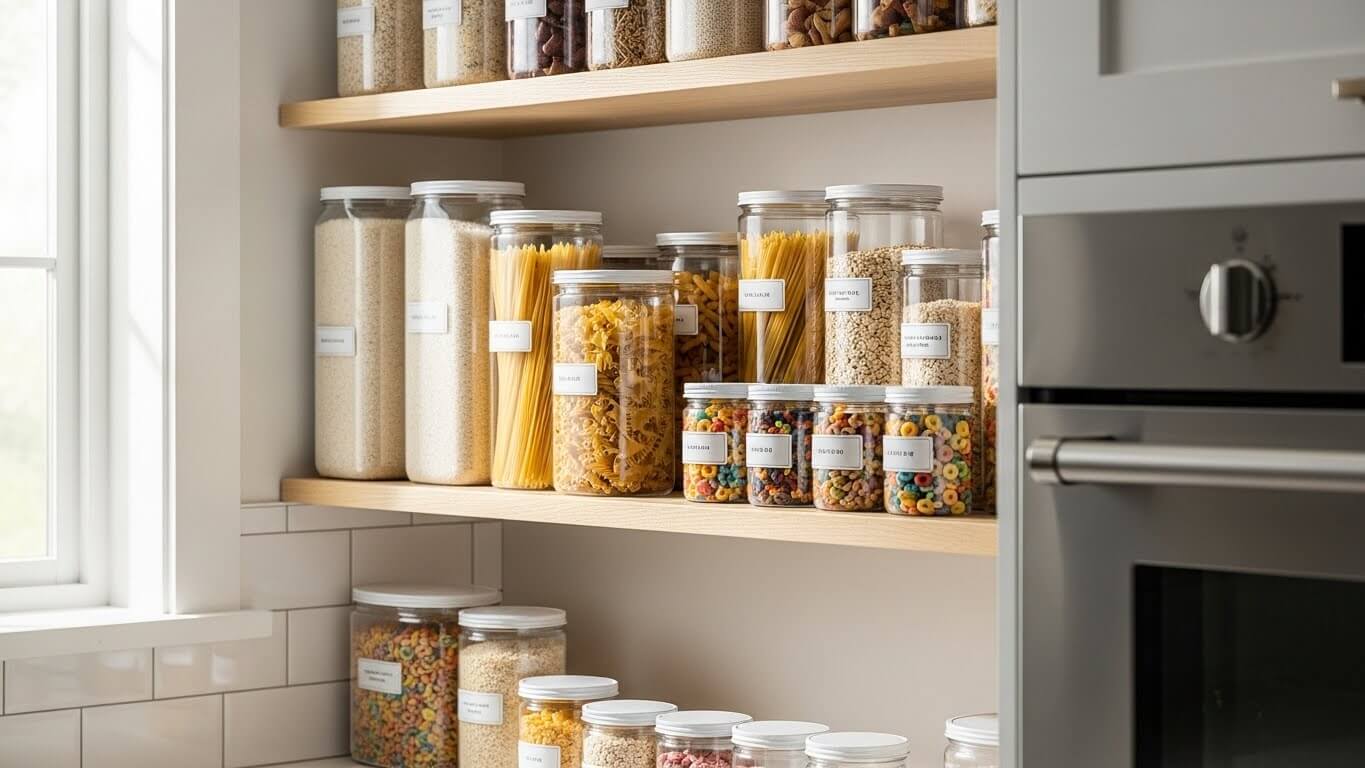

If you’ve ever tried to pour rice from a half-torn bag while holding the door open with your knee, you already know the quiet chaos of an unorganized pantry. It’s not that you don’t have enough space — it’s that your food isn’t working with you. This is where plastic jars change everything. Not in a flashy, makeover-show way, but in the calm, practical way that makes everyday cooking smoother.
This article supports a broader approach to home organization by focusing on one deceptively simple tool. The goal isn’t perfection. It’s ease.
The Simple Reason Plastic Jars Work So Well
Plastic jars remove friction from daily pantry use. That’s the real benefit.
They replace unstable packaging with containers that stack, seal, and show you exactly what you have. When everything is visible and consistent, decisions become faster — what to cook, what to buy, what to toss.
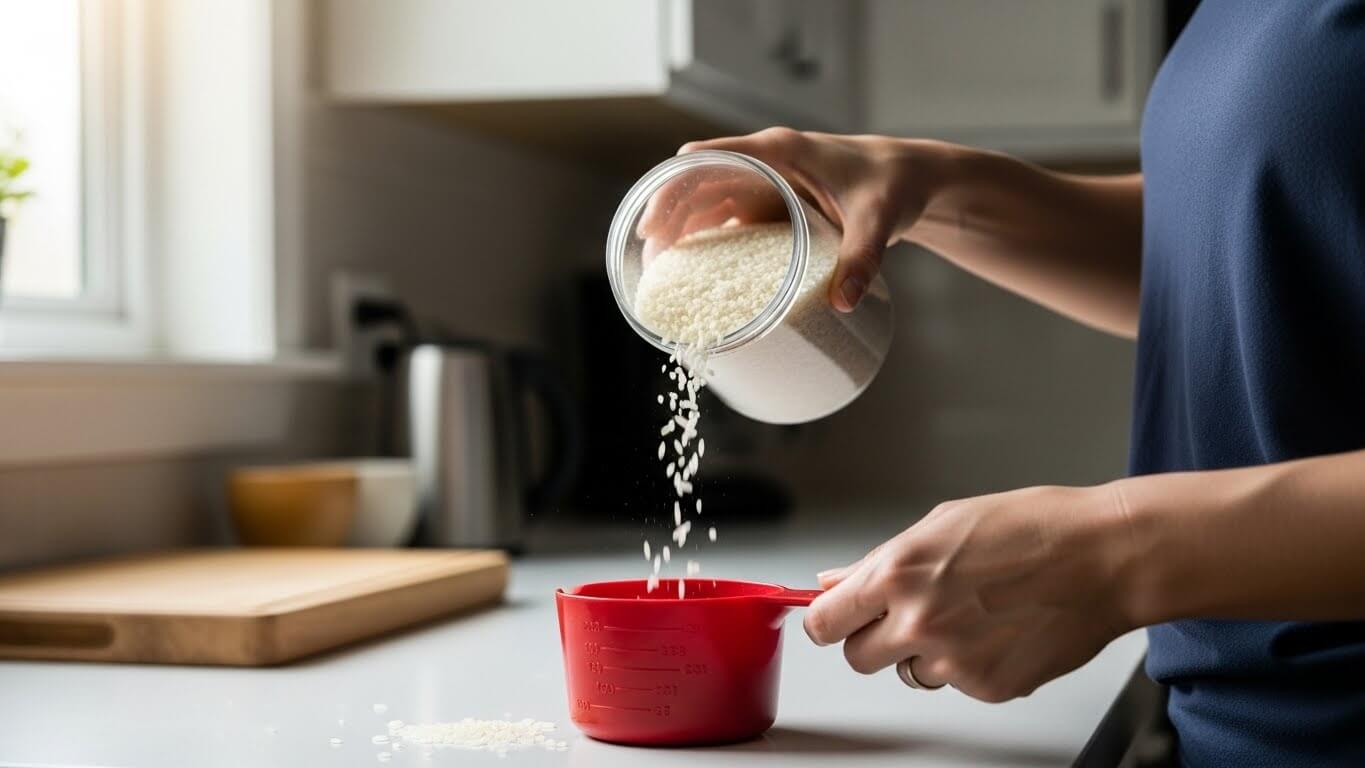
At a glance benefits:
- Clear sides eliminate guesswork
- Uniform shapes create usable vertical space
- Secure lids protect food from humidity and pests
- Lightweight construction makes shelves safer and easier to access
This is one of those upgrades that supports a more functional pantry setup without requiring a full overhaul.
Visibility Changes How You Use Your Pantry
Opaque boxes and original packaging hide problems until they’re inconvenient. Plastic jars do the opposite.
When flour runs low, you see it before baking day. When pasta varieties multiply, you can consolidate instead of rebuying. This kind of visibility supports smarter habits and reduces waste — something that’s often overlooked in broader conversations about creating an organized kitchen that actually works.
A well-organized pantry isn’t about labeling everything. It’s about reducing mental load.
Stackability Turns Dead Space Into Storage
Most pantry shelves waste vertical space because packaging heights are inconsistent. Plastic jars, especially square or modular styles, align cleanly.
Instead of air gaps and leaning bags, you get:
- Stable vertical stacks
- Clear shelf zones by category
- Easy reconfiguration as needs change
This is particularly helpful if you’re working within a small pantry or rental-friendly shelving where permanent solutions aren’t an option.
Why Plastic Beats Glass for Everyday Pantry Use
Glass jars look beautiful — until you drop one on a tile floor.
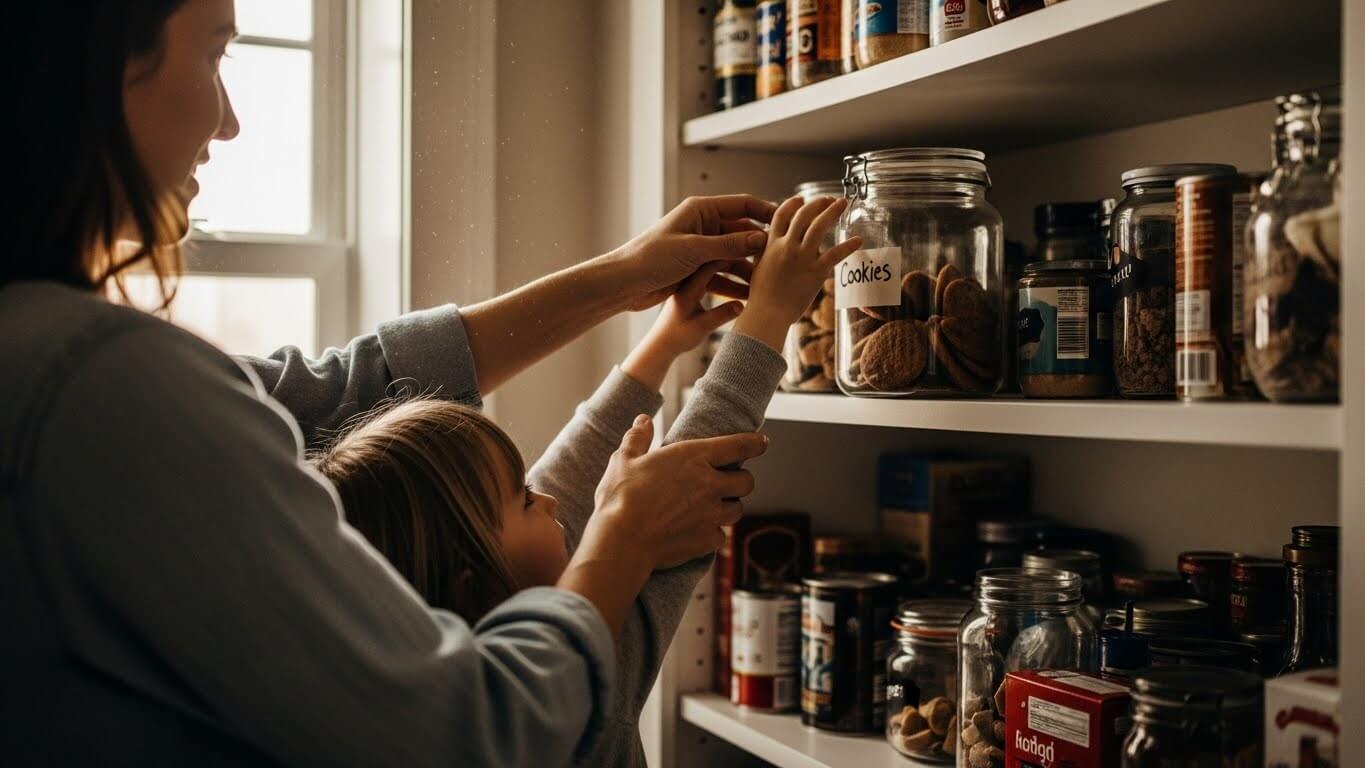
Plastic jars offer a more forgiving, family-friendly alternative:
- Safer for homes with kids
- Lighter for upper shelves
- Less stress when reorganizing or cleaning
They may not have the same aesthetic weight as glass, but they excel at daily practicality. For many households, that trade-off makes sense, especially when building sustainable home organization habits over time.
Moisture Control Without the Fuss
Dry goods don’t fail because of age alone. Humidity and air exposure are usually the culprits.
Most quality plastic jars come with gasket-style lids that create an airtight seal. This keeps:
- Sugar from clumping
- Flour from absorbing odors
- Snacks from going stale too quickly
You don’t need specialty containers for every ingredient — just consistent sealing across your pantry.

Common Mistakes to Avoid When Switching to Plastic Jars
Plastic jars work best when chosen intentionally. A few missteps can undo the benefits:
Buying too many sizes
Stick to 2–3 core sizes. Variety feels helpful, but consistency stacks better.
Ignoring shelf depth
Measure before buying. Oversized jars can block access or waste space.
Over-labeling
Clear jars already show contents. Labels should clarify, not clutter.
Avoiding these mistakes helps your pantry stay flexible — a key principle in maintaining an organized home without constant resets.
Where Plastic Jars Make the Biggest Impact
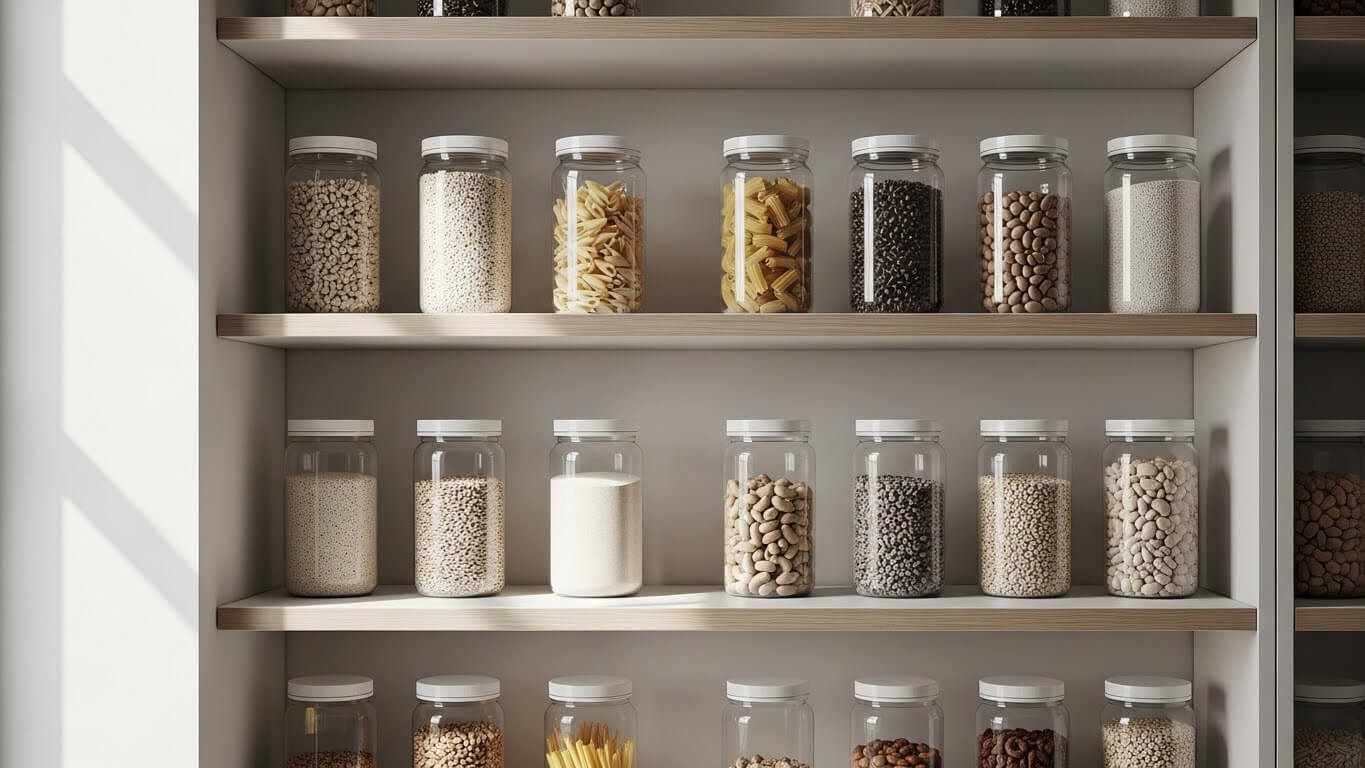
Plastic jars shine most in these categories:
- Rice, lentils, beans
- Pasta and grains
- Baking ingredients
- Snacks and cereals
They’re less ideal for oils or items used infrequently. Organization works best when effort matches payoff.
FAQs
Are plastic jars safe for food storage?
Yes, when they’re labeled food-grade and BPA-free. Avoid reusing non-food containers.
Do plastic jars absorb odors?
Quality plastic resists odor absorption, especially with proper cleaning and drying.
Are they dishwasher safe?
Many are, but top-rack only is safest. Always check manufacturer guidance.
Should everything be transferred into jars?
No. Focus on high-use dry goods. Over-transferring creates unnecessary work.
A Calmer Pantry Starts With Fewer Decisions
Plastic jars don’t organize your pantry for you — they make it easier to stay organized. They reduce friction, increase visibility, and support habits that last beyond a weekend reset.
When pantry storage works quietly in the background, cooking feels lighter. And that’s the kind of organization that actually sticks.