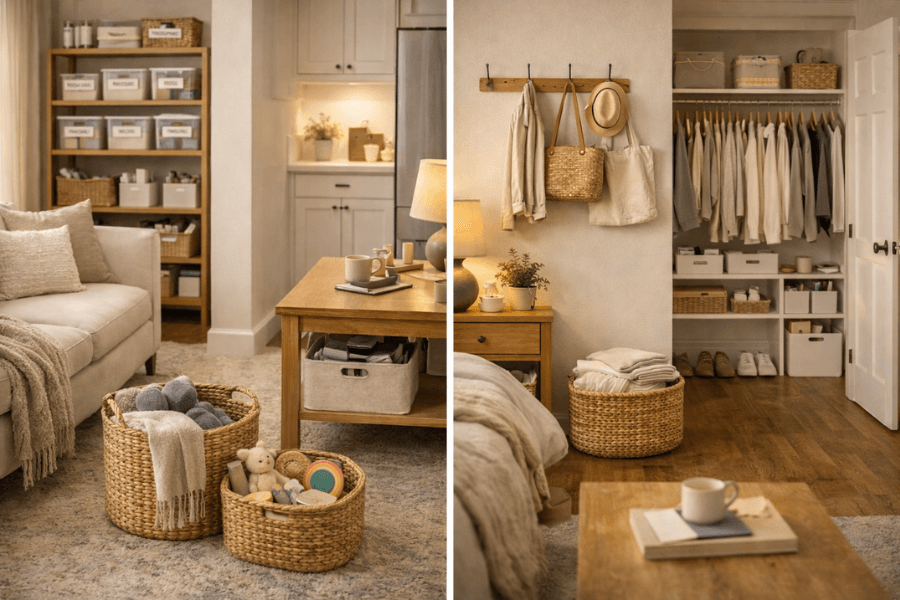

You tidy up, put things away, and for a few days your home feels lighter — until the clutter slowly returns. Shoes reappear by the door. Drawers become messy again. Counters collect random items that don’t seem to belong anywhere. When this happens, it’s easy to think the solution is buying better organization tools.
But clutter doesn’t come back because you lack bins or dividers. It comes back when systems don’t match real routines.
Organization tools only work when they support habits that already exist. Without clear categories, easy access, and realistic placement, even the best tools become part of the mess. This is something we explored in the whole-home organization foundation — tools are helpful, but they’re never the starting point.
In this guide to essential home organization tools, we’ll focus on practical, flexible options that genuinely support everyday systems. The goal isn’t to own more organizers, but to choose tools that make it easier to keep your home calm, functional, and clutter-free over time.
What Makes an Organization Tool Actually Useful?
Not all organization tools solve problems — some simply make clutter look neater for a short time. A tool becomes useful only when it supports how a space is actually used, not how it’s supposed to look. That’s why function should always come before aesthetics.
A beautiful organizer that’s awkward to access or annoying to use won’t last. If opening a lid, stacking containers, or reaching a high shelf feels inconvenient, items won’t go back where they belong. The best organization tools reduce effort, not add steps.
Accessibility matters just as much as appearance. Useful tools keep everyday items within easy reach and clearly visible. When you don’t have to think about where something goes, organization becomes automatic. This is especially important in shared spaces, where systems need to work for everyone — not just one person.
Ease of maintenance is another overlooked factor. Tools that require constant rearranging, perfect folding, or precise placement tend to fail quickly. Real-life homes need flexible storage that can handle busy days, changing routines, and occasional mess without falling apart.
This idea connects directly to the principles covered in Home Organization Ideas for Every Room — effective organization starts with understanding behavior first, then choosing tools that support that flow. When tools match your habits and energy levels, they quietly do their job in the background, helping your home stay organized without constant effort.
Storage Bins & Baskets
Storage bins and baskets are often the first tools people reach for — and for good reason. When used thoughtfully, they create flexible, forgiving systems that make every day tidying faster and less stressful. The key is knowing which type to use and where, instead of treating all bins the same.
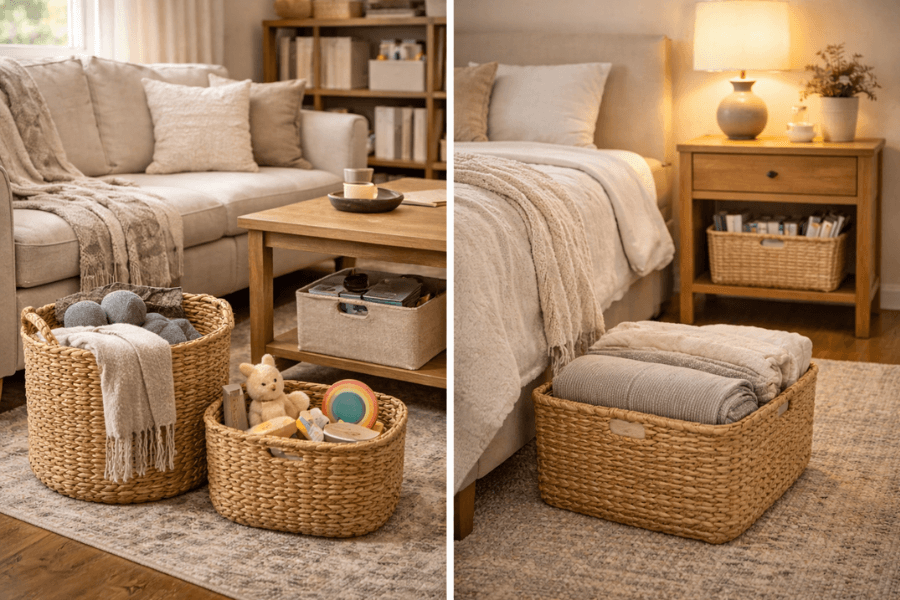
When to Use Open Baskets
Open baskets work best for items you use frequently and need to put away quickly. Think blankets in the living room, toys in shared spaces, or extra pillows in the bedroom. Because there’s no lid to open or stack to move, open baskets reduce friction — you can drop items in without thinking.
They’re especially useful in homes with kids, busy schedules, or low-energy days. When storage is easy, it actually gets used. Open baskets also help with visibility, making it easier to remember what you own and return items to the right place.
When Closed Bins Work Better
Closed bins are ideal for items you don’t use daily or don’t want visually present. Seasonal items, backup supplies, paperwork, or off-season clothing benefit from being stored out of sight.
Lidded bins help reduce visual clutter and protect contents from dust, but they work best when clearly labeled and easy to access. If stacking or opening bins feels like a hassle, they’ll quickly be ignored.
Common Mistakes With Bins
One common mistake is buying too many bins without clear categories. Empty bins don’t create organization — systems do. Another issue is mixing unrelated items in one bin, which turns it into a catch-all.
The most effective bin systems have clear purposes, some breathing room, and placement close to where items are actually used.
Drawer Organizers & Dividers
Drawers often look organized from the outside, but inside they quietly become one of the biggest sources of clutter. Utensils slide into each other, socks mix with accessories, and bathroom drawers turn into random collections of half-used items. Drawer organizers and dividers work best when they’re used to create boundaries, not force perfection.
Declutter Before Dividing
Before adding any dividers, empty the drawer completely. This step matters more than the organizer itself. Decluttering first helps you see what actually belongs in that space and prevents overcrowding.
Keeping too many items in a divided drawer defeats the purpose — compartments overflow, items don’t fit properly, and the system falls apart. A little empty space inside each section makes drawers easier to maintain.
Best Use Cases for Dividers
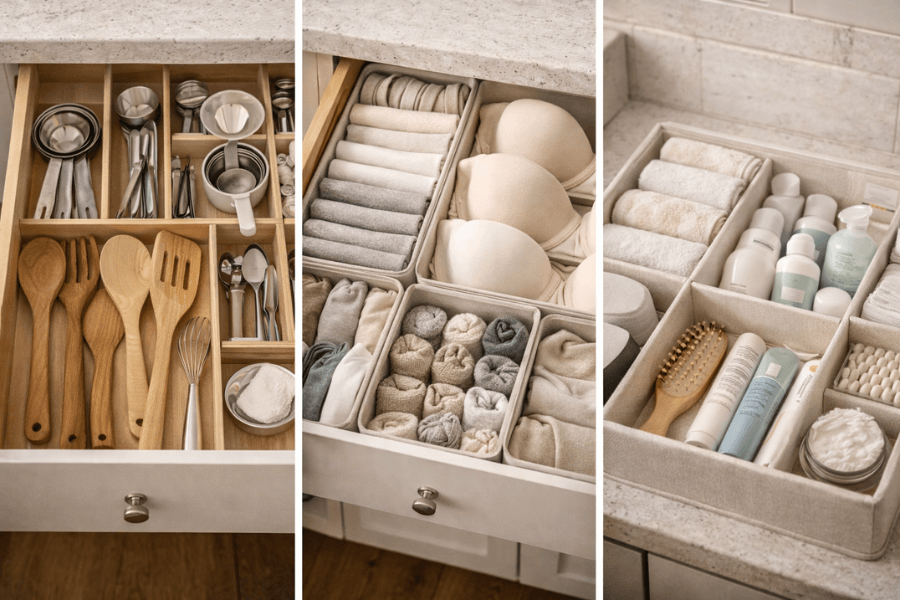
In kitchens, dividers are ideal for utensils, measuring tools, and small gadgets that otherwise tangle together. Group items by task instead of size to create a more intuitive flow.
In bedrooms, drawer dividers work well for socks, undergarments, accessories, and folded clothing. Clear categories reduce decision fatigue during busy mornings.
In bathrooms, dividers help separate skincare, grooming tools, makeup, and first-aid items. This keeps drawers from becoming catch-alls and makes daily routines faster.
The most effective dividers are adjustable and easy to clean. When drawers are simple to reset, organization becomes a habit instead of a chore.
Shelving & Vertical Storage Tools
When floor space is limited, vertical storage becomes one of the most effective ways to stay organized without making a home feel crowded. Walls, doors, and unused vertical gaps offer valuable storage opportunities — especially in small homes where every square foot matters.
Vertical storage works best when it’s intentional and lightly used. The goal isn’t to fill every wall, but to use height strategically to support daily routines.
Wall-Mounted Shelves
Wall-mounted shelves are ideal for keeping frequently used items accessible without taking up floor space. In kitchens, they work well for everyday dishes or jars. In living rooms or bedrooms, they can hold books, baskets, or decorative storage.
The key is spacing and restraint. Shelves should feel breathable, not overloaded. Using baskets or bins on shelves helps maintain a clean visual line while still offering flexibility.
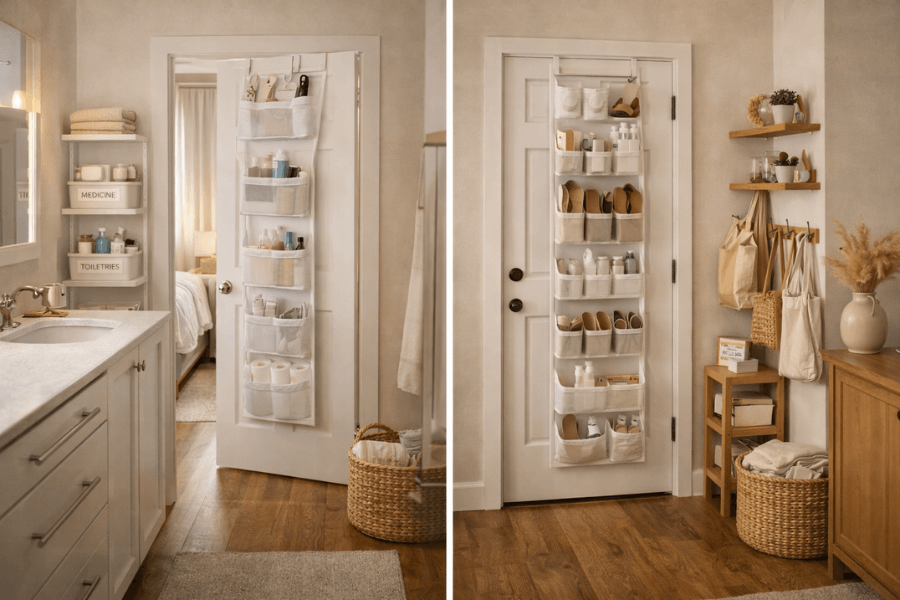
Over-the-Door Organizers
Over-the-door organizers are often underestimated, but they’re incredibly useful in tight spaces. Closet doors, bathroom doors, and pantry doors can all support storage without altering the room layout.
They work best for lightweight items like shoes, accessories, cleaning supplies, or toiletries. Clear pockets or labeled sections prevent these organizers from becoming cluttered catch-alls.
When Vertical Storage Fails
Vertical storage fails when it’s overused or placed too high to access easily. If items require a step stool or constant rearranging, the system won’t last.
Successful vertical storage keeps frequently used items within reach and reserves higher spaces for occasional use. When balanced correctly, vertical tools make small homes feel organized — not overwhelmed.
Labels, Containers & Visibility Tools
One of the biggest reasons organization systems fail is decision fatigue. When your brain has to stop and think, “Where does this go?”, clutter starts to build. Labels and visibility tools remove that pause and make tidying feel automatic instead of exhausting.
Clear vs Opaque Containers
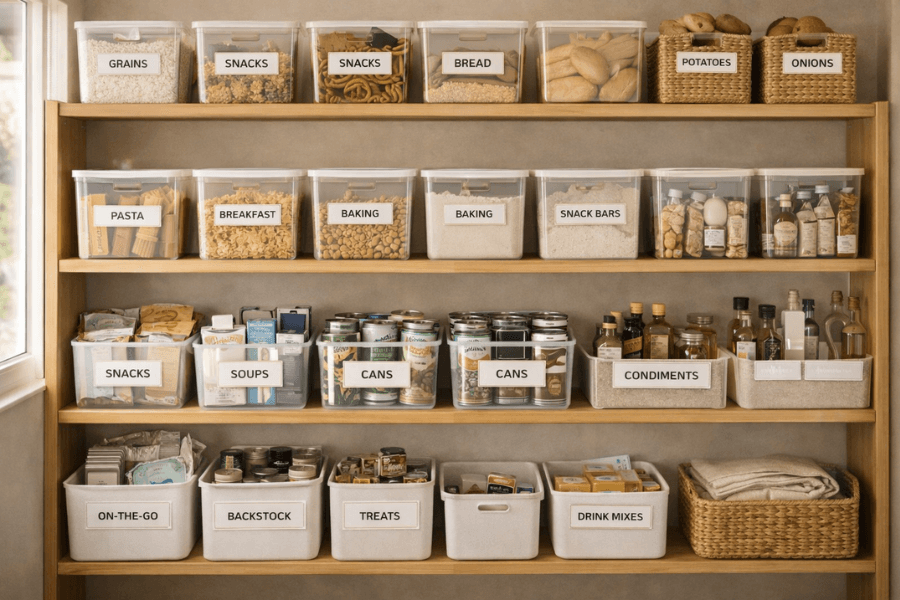
Clear containers work best for everyday items, especially in pantries, closets, and shared spaces. Being able to see what’s inside at a glance reduces overbuying, forgotten items, and unnecessary digging. Visibility supports memory — if you can see it, you’re more likely to use it and put it back.
Opaque containers have their place too. They’re useful for items you don’t need to see daily, such as backups, seasonal supplies, or less frequently used tools. The key is consistency: mixing too many container styles creates visual noise and adds mental effort.
Labeling Logic (Simple > Decorative)
Labels are not about aesthetics — they’re about clarity. Simple, readable labels work better than decorative ones because they communicate quickly. Clear wording helps everyone in the household follow the system without asking questions.
Good labels define categories, not exact items. “Snacks” works better than listing every snack inside. This flexibility allows systems to adapt as needs change, reducing friction and making organization easier to maintain over time.
Tools for High-Clutter Zones (Entryway, Closet, Desk)
Some areas of the home attract clutter faster than others. Entryways, closets, and desks sit at the center of daily routines, which means even small gaps in organization quickly turn into visible mess. The right tools in these zones don’t just store items — they interrupt clutter before it spreads.
Entryway Hooks & Trays
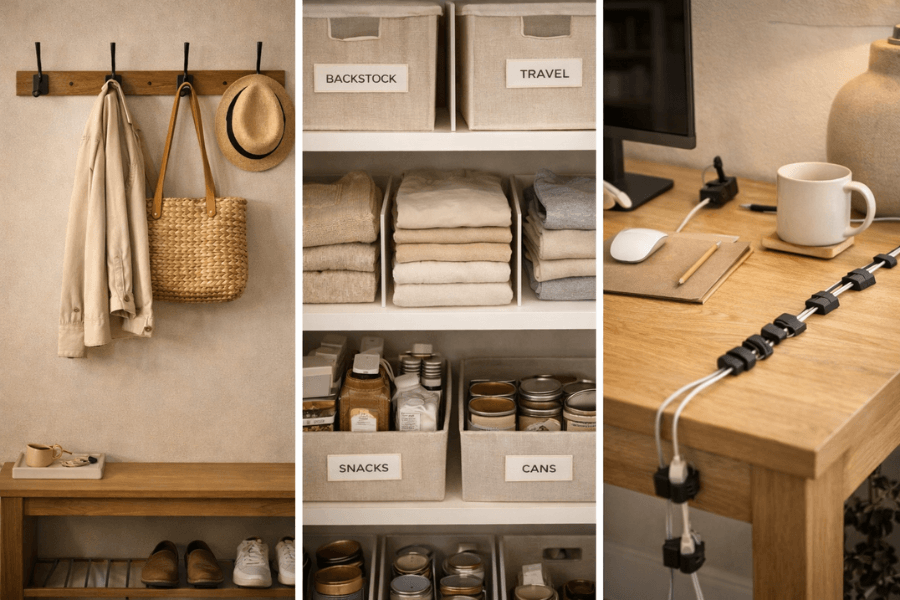
Hooks and trays are essential for creating a reliable drop zone. Wall hooks keep bags and jackets off chairs and floors, while small trays give keys, wallets, and sunglasses a consistent landing spot. These tools work best when placed directly where items are naturally dropped, not where they look most decorative.
Simple, visible setups are more effective than hidden storage in high-traffic entryways.
Closet Hangers & Shelf Dividers
Closets benefit from tools that maintain separation. Matching hangers create visual calm and prevent clothes from slipping, while shelf dividers stop folded stacks from collapsing into each other.
These tools don’t force perfection — they provide structure. When categories stay contained, closets are easier to reset after busy mornings or laundry days.
Desk Cable Organizers
Desk clutter is often caused by cables more than paper. Cable organizers, clips, sleeves, or small boxes keep cords grouped and predictable. When cables have a clear path and place, desks instantly feel calmer and more functional.
In high-clutter zones, tools should reduce steps, not add rules. When organization feels intuitive, it actually lasts.
Tools That Often Get Overbought (What to Skip)
One of the easiest ways to lose momentum while organizing is by buying tools that promise quick fixes but don’t solve real problems. These purchases often come from frustration — not clarity.
Over-specialized organizers are a common trap. Tools designed for one very specific item or setup may look clever, but they rarely adapt as needs change. When routines shift, these organizers stop fitting your life and quickly become clutter themselves.
One-purpose tools create a similar issue. If something can only be used in one narrow way, it limits flexibility. Homes work best with tools that can be repurposed across rooms, seasons, and routines.
Poor-quality containers are another frequent mistake. Flimsy bins crack, lids warp, and cheap dividers slide out of place. When tools don’t hold up, people stop using them — and systems collapse.
Good organization doesn’t come from owning more tools. It comes from choosing fewer, better ones that support change, daily use, and imperfect habits. Skipping these common mistakes builds trust in your systems — and keeps clutter from creeping back in.
How to Choose the Right Tools for Your Home?
The right organization tools aren’t universal — they’re personal. What works beautifully in one home can feel frustrating in another. That’s why choosing tools should always start with how you live, not what looks good online.
Your lifestyle matters first. A busy household with kids, pets, or shared spaces benefits from open, forgiving storage that allows quick resets. Quieter homes may prefer more structured systems. Tools should match daily routines, not fight them.
Your space plays a big role as well. Small homes often need vertical storage, multi-purpose tools, and visibility to prevent overbuying. Larger spaces may require clearer zoning to stop clutter from spreading. Measure before buying and choose tools that fit comfortably instead of filling every inch.
Finally, consider your energy levels. Organization should work on low-motivation days. If a tool requires perfect folding, stacking, or constant rearranging, it won’t last. Simple tools with fewer steps are easier to maintain long-term.
These ideas align with the principles shared in the Whole-Home Organization Foundation — understanding behavior first leads to better, more sustainable organization choices.
FAQ – Home Organization Tools
Do I need organizers to get organized?
No, organizers are not the starting point. You can get organized without buying a single tool by decluttering and creating clear categories first. Organizers become helpful after you understand what you own and how you use it. Think of tools as support systems — they make good habits easier to maintain, but they can’t replace thoughtful organization on their own.
What tools work best for small homes?
Small homes benefit most from flexible, multi-purpose tools. Open baskets, clear containers, vertical shelving, and over-the-door organizers work better than bulky furniture. Visibility is key — when you can see what you own, you’re less likely to overbuy. Choose tools that save space, reduce steps, and adapt easily as routines change.
Are expensive organizers worth it?
Price doesn’t always equal effectiveness. Some higher-quality organizers last longer and feel better to use, but many affordable tools work just as well. What matters most is fit — does the tool suit your space, habits, and energy levels? It’s better to buy fewer, well-chosen tools than invest in expensive systems that don’t match real life.
How many bins are too many?
You have too many bins when they no longer have clear purposes. Every bin should represent a category, not a place to hide clutter. If bins are overflowing, unlabeled, or filled with unrelated items, it’s time to declutter or reduce quantity. Empty space inside a bin is a sign of a healthy system.
What should I organize first?
Start with the area that causes the most daily frustration. For many people, that’s the entryway, kitchen counter, or desk. Organizing one high-impact space creates immediate relief and builds momentum. Once you see what works, it becomes easier to apply the same logic to other areas of your home.
Conclusion
Home organization tools can make a real difference — but only when they’re chosen with intention. The most effective tools don’t force you to be perfect; they quietly support the systems you already have in place. When tools reduce effort, clarify categories, and fit naturally into your routines, organization becomes easier to maintain over time.
There’s no need to buy everything at once or chase the “perfect” setup. Start small. Observe how your home functions. Add tools slowly, only where they genuinely solve a problem. Organization isn’t about owning more — it’s about making thoughtful choices that work for your space, energy, and lifestyle.
When tools support systems — not replace them — clutter loses its grip, and calm becomes part of everyday life.
About the Author
Written by Adeel Mushtaque — a DIY storyteller and home-living enthusiast who focuses on practical organization systems that work in real homes. Through Crafts n Comforts, Adeel helps readers choose tools that support everyday routines instead of complicating them. His approach blends thoughtful systems with simple, flexible organization tools, showing that a clutter-free home isn’t built by buying more — it’s built by understanding how spaces are used and choosing solutions that quietly make life easier.