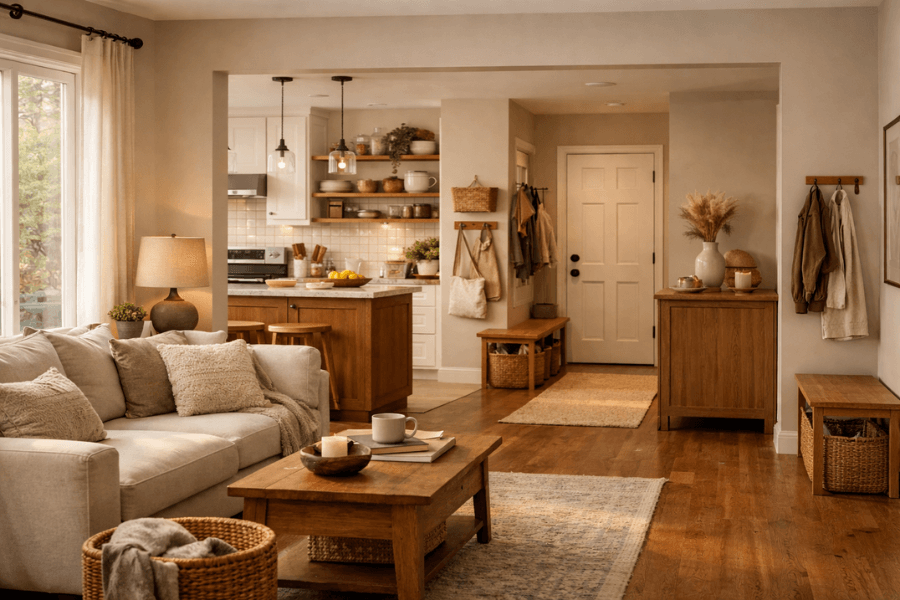

Discover practical home organization ideas for every room to reduce clutter, simplify daily routines, and create a calmer, more functional home that supports real life.
Introduction
Most homes don’t feel messy all at once — clutter builds quietly. A few things left on the counter. Shoes that don’t make it back to the closet. Papers placed “just for now” that somehow stay there for weeks. Over time, those small piles begin to affect more than just how your home looks. They affect how it feels.
When your space feels constantly unfinished, it’s hard to fully relax. Even simple tasks start to feel heavier because you’re always working around the mess. And no matter how often you tidy, the clutter seems to return — which can be frustrating and discouraging.
The truth is, this usually has nothing to do with being disorganized. Most homes simply don’t have systems that match real life. Busy schedules, shared spaces, changing needs, and limited energy all play a role. When organization doesn’t align with how a home is actually used, clutter becomes a cycle instead of a one-time problem.
That’s why this guide to home organization ideas for every room focuses on realistic, human-centered solutions. Instead of perfection or picture-perfect setups, we’ll look at simple systems that reduce friction, support daily routines, and make spaces easier to maintain. Room by room, you’ll learn how to create a home that feels calmer, more functional, and genuinely supportive — not just tidy for a moment, but organized in a way that lasts.
Whole-Home Organization Foundation
Before organizing individual rooms, it’s important to understand why clutter keeps coming back. Most people don’t struggle because they’re careless — they struggle because their homes are fighting their habits.
Clutter returns when systems don’t exist where life actually happens. Items end up on the nearest surface, not because people are lazy, but because there’s no clear, convenient place for them to go. When organization relies on willpower instead of structure, it never lasts.
Homes are not static spaces. They are constantly in use — mornings are rushed, evenings are tired, weekends are unpredictable. Real organization starts when you accept this reality and build systems that support behavior instead of expecting behavior to change first.
How Clutter Moves from Room to Room
Clutter rarely stays in one place. A bag dropped near the door moves to a chair. Papers from the entryway migrate to the kitchen counter. Laundry starts in the bedroom and somehow ends up everywhere else.
This happens because items don’t have a home at the point of use. When storage is far away, inconvenient, or unclear, clutter travels. Whole-home organization means stopping clutter at its source — not chasing it from room to room.
Organization vs Storage Mindset
One of the biggest misunderstandings about organization is confusing it with storage. Storage is about hiding things. Organization is about creating flow.
You can add shelves, bins, and cabinets endlessly, but if items are hard to put away or don’t make sense where they’re stored, clutter will return. Organization focuses on access, logic, and habits — not just containers.
Designing Systems for Real Life
Effective organization works on your worst days, not your best ones. Systems should be simple, forgiving, and easy to maintain when energy is low.
That means:
- Fewer steps to put things away
- Storage close to where items are used
- Clear categories instead of perfect labels
When systems are designed for real life, organization becomes natural instead of exhausting. This foundation makes every room easier to organize — and easier to keep organized.
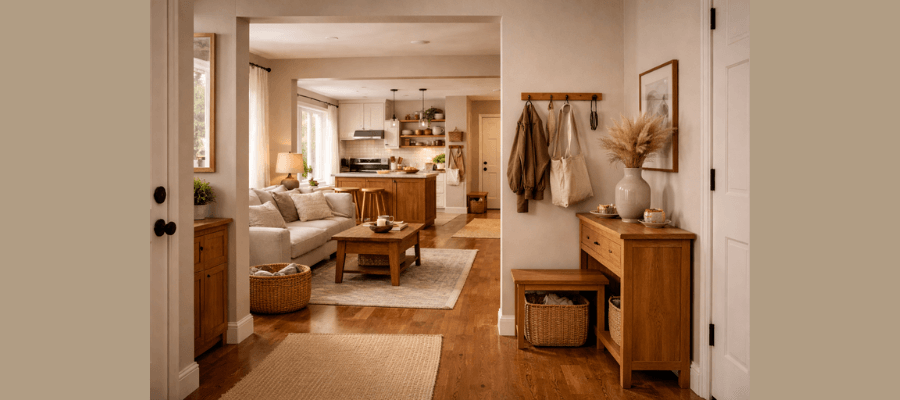
Living Room Organization
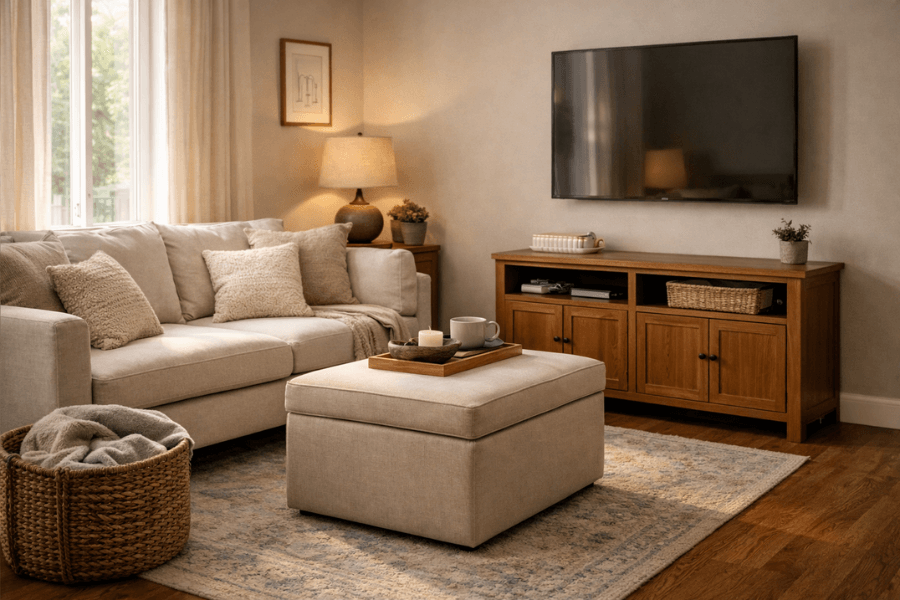
The living room deserves its own dedicated organization strategy because it does too many jobs at once. It’s where you relax, entertain guests, scroll on your phone, watch TV, work on a laptop, and sometimes store things that don’t have a proper place yet. When one room is expected to handle everything, clutter builds faster here than anywhere else.
The goal isn’t to keep the living room perfectly tidy at all times. The goal is to make it easy to reset, even on busy or low-energy days.
Common Living Room Clutter Problems
Most living room clutter falls into a few predictable categories. Remote controls, chargers, and cables never seem to stay in one place. Blankets and cushions pile up. Books, toys, paperwork, and random “in-between” items land on coffee tables and side surfaces.
Another common issue is shared clutter. When multiple people use the same space, items don’t clearly belong to anyone — so they belong nowhere. Without defined storage, the living room slowly becomes a drop zone for the entire house.
Storage Strategies That Actually Work
The most effective living room storage is hidden but accessible. Closed cabinets, media units, storage ottomans, and benches allow you to put things away quickly without making the room feel busy.
Baskets are especially useful in living rooms because they don’t require precision. You can toss in blankets, magazines, or toys and instantly reduce visual clutter. The key is to assign each basket a clear purpose instead of letting it become a random catch-all.
When possible, store items close to where they’re used. Games near seating, blankets near the sofa, and chargers near outlets reduce the chance that things will spread across the room.
Cable & Tech Clutter Management
Cables are one of the fastest ways to make a living room feel chaotic. Tangled wires, visible power strips, and loose chargers add visual noise even when everything else is clean.
Group cables by function, shorten excess length, and guide them toward one designated tech zone. Using simple cable clips or boxes can make a noticeable difference without a full setup overhaul. When tech has a “home,” it’s easier to keep it under control.
Daily + Weekly Maintenance Habits
Living room organization stays manageable when small habits are built in. A two-minute reset at night — returning remotes, folding blankets, clearing surfaces — prevents clutter from piling up. Once a week, empty baskets and return items to their proper rooms.
A living room that’s easy to reset feels calmer, more welcoming, and far less overwhelming — even when life gets busy.
Kitchen & Pantry Organization
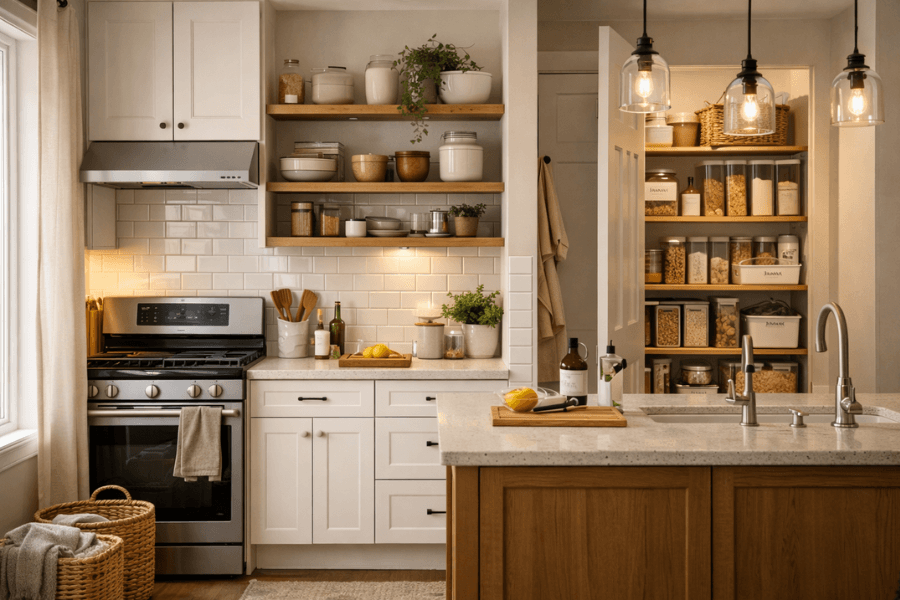
A cluttered kitchen doesn’t just look messy — it slows everything down. When drawers are overfilled, cabinets feel chaotic, and pantry items are hard to find, even simple meals start to feel exhausting. Because the kitchen is used multiple times a day, small organization issues here create daily friction.
The key to a functional kitchen is clear zones and simple systems that match how you actually cook, clean, and move through the space.
Kitchen Zone System (Prep, Cook, Clean)
Effective kitchen organization starts with zones. Instead of storing items wherever they fit, group them by function.
The prep zone should hold cutting boards, knives, mixing bowls, and commonly used tools. The cook zone works best when pots, pans, oils, and spices are stored close to the stove. The clean zone should include dish soap, towels, trash bags, and cleaning supplies near the sink or dishwasher.
When items live near where they’re used, you waste less time searching — and things are more likely to get put back properly.
Pantry Organization Principles
Pantries often become cluttered because food is stored by packaging instead of purpose. Boxes, bags, and jars create visual noise and hide what you actually have.
Organizing by category works better. Group snacks, baking supplies, canned goods, grains, and breakfast items together. When everything has a clear category, it’s easier to maintain order and avoid overbuying.
Visibility matters. You don’t need to see every label clearly, but you should be able to tell what’s inside a space at a glance.
Container & Labeling Logic
Containers are helpful — but only when used intentionally. The goal isn’t matching sets; it’s consistency. Using similar container shapes makes shelves easier to manage and prevents awkward stacking.
Labels reduce mental effort. They help everyone in the household know where things belong, which is especially important in shared kitchens. Simple, readable labels are more effective than decorative ones.
Mistakes That Make Kitchens Messy Again
One of the most common mistakes is buying storage before decluttering. Another is keeping rarely used appliances in prime cabinet space while everyday items are pushed aside.
Overcrowding is another issue. When cabinets are packed too tightly, items don’t go back neatly — and clutter returns quickly. Leaving a little breathing room makes organization easier to maintain.
A well-organized kitchen doesn’t require perfection. It requires systems that support daily use, repeated routines, and real-life messes.
Bedroom & Closet Organization
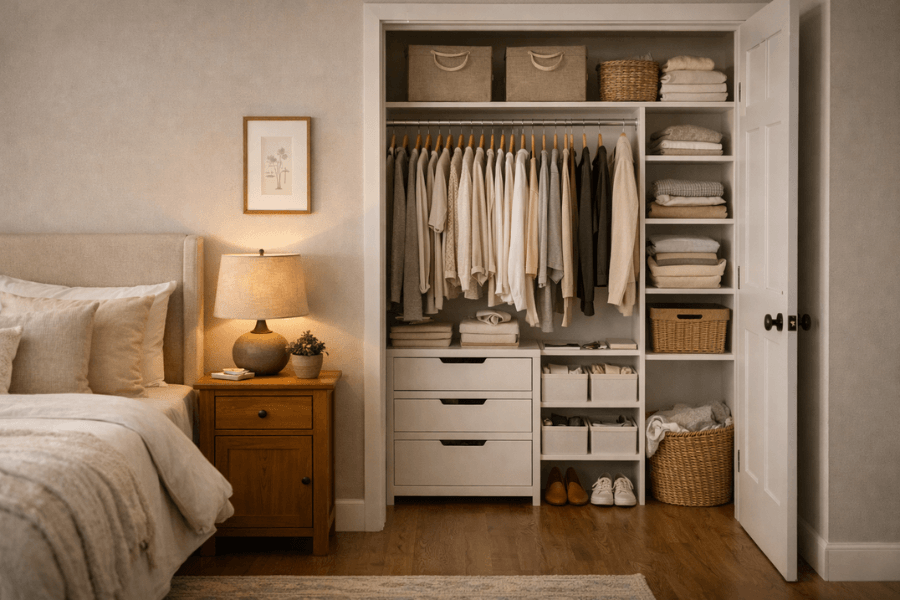
The bedroom should feel like a place to slow down, but clutter can quietly do the opposite. Piles of clothes, overstuffed closets, and unfinished laundry make the space feel busy even when you’re trying to rest. Bedroom organization works best when it focuses on daily flow, not perfect folding.
Closet systems that look great online often fail in real life because they don’t account for habits, energy levels, or how often clothes are actually worn.
Closet Decluttering, Realistically
Decluttering a closet doesn’t mean emptying everything at once. A more realistic approach is to edit in layers. Start by removing items you no longer wear, that don’t fit your body, or that don’t match your current lifestyle.
Guilt pieces — clothes kept “just in case” — create mental clutter even when hidden. Keeping only what supports your present life makes organization easier to maintain and decisions simpler.
Clothing Categories & Flow
Clothing should be organized by category first, not color. Group tops, bottoms, layers, and special-occasion pieces separately. This creates a natural flow when getting dressed and prevents overstuffing one area while another stays empty.
Everyday items should live at eye level. Less frequently worn clothing can be stored higher or lower. When clothing flows logically through the space, it’s easier to put things back where they belong.
Seasonal Rotation Systems
Seasonal rotation is one of the most effective ways to reduce closet clutter. Keeping off-season clothing in the main closet creates unnecessary crowding.
At the start of each season, move out what you won’t wear for a few months and bring forward what you need now. Storage bins, vacuum bags, or top shelves work well for this purpose. A seasonal reset keeps your closet functional without constant reorganizing.
The Laundry Return System (Most Blogs Miss This)
Many closets fall apart not because of storage, but because laundry never fully returns to its place. Clean clothes sit in baskets, on chairs, or on the bed — becoming clutter again.
A simple laundry return system solves this. Schedule a regular time to fully put laundry away, even if it’s just once or twice a week. Keep hangers accessible and drawers easy to open. When putting clothes away feels quick and painless, clutter doesn’t get the chance to build.
A calm bedroom starts with systems that respect real routines — not ideal ones.
Bathroom & Cleaning Supply Organization
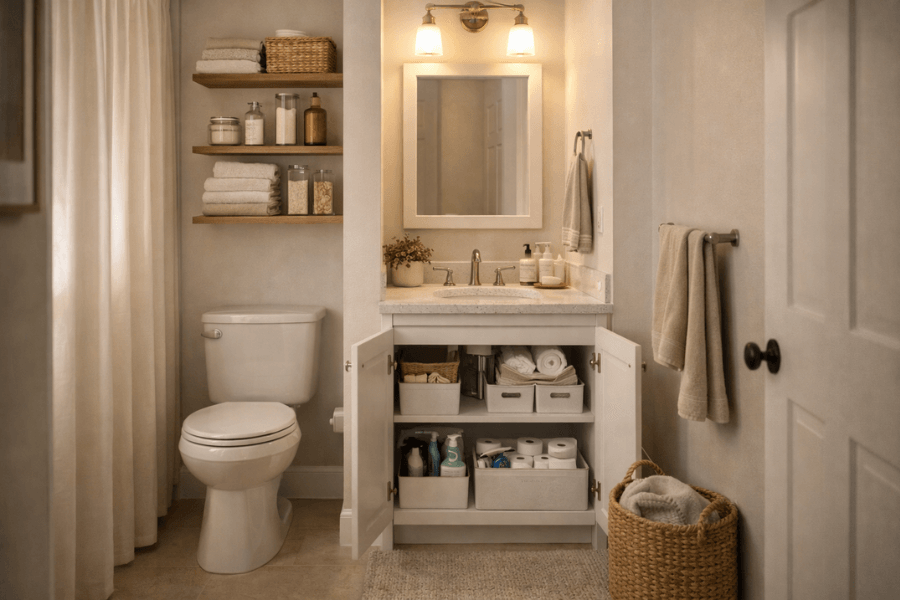
Bathrooms are some of the smallest spaces in the home, yet they work the hardest. Daily routines, shared use, and limited storage make bathroom clutter build up quickly — especially when products don’t have clear places to live. The goal here isn’t to store more, but to store smarter.
Small-Space Bathroom Storage
In small bathrooms, vertical space matters more than square footage. Wall-mounted shelves, over-the-toilet storage, and slim cabinets help keep essentials accessible without crowding the sink or floor.
Limit what stays out on counters. Only daily-use items should remain visible; everything else should be stored nearby but out of sight. This reduces visual noise and makes cleaning faster.
Grouping items by function — skincare, haircare, grooming, first aid — also prevents drawers from becoming chaotic catch-alls.
Under-Sink Organization
Under-sink areas often become messy because of awkward plumbing and wasted space. Adjustable organizers, stackable bins, or simple baskets can turn this area into functional storage.
Use bins to separate categories like extra toiletries, cleaning products, and backup supplies. Avoid stacking items loosely; when things slide around, they’re less likely to go back neatly.
Clear containers work especially well here because you can quickly see what needs refilling.
Cleaning Supplies Placement Logic
One of the most overlooked organization principles is storing cleaning supplies where they’re actually used. Keeping everything in one distant cabinet makes cleaning feel like a bigger task than it needs to be.
Bathrooms benefit from having their own small set of supplies — even if it’s just a basic spray and cloth. A simple cleaning caddy or cabinet nearby reduces friction and increases consistency.
Maintenance Routines
Bathroom organization stays manageable when maintenance is built into routines. A quick counter wipe after use, returning items to their bins, and a short weekly reset prevent clutter from building up.
When systems are simple and storage is easy to access, bathrooms stay cleaner with far less effort.
Home Office, Desk & Cable Organization
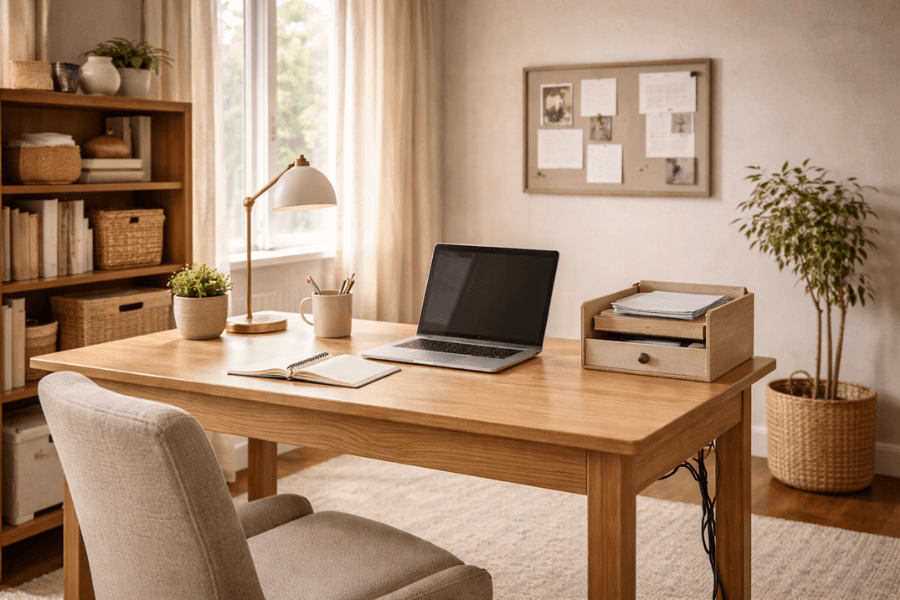
Workspaces tend to collect clutter quietly. A few papers left on the desk, an extra charger plugged in “for now,” a notebook placed to the side — and before you realize it, your desk feels heavy and distracting. A well-organized home office isn’t about strict minimalism; it’s about clear zones and reduced friction.
Desk Zoning
Desk zoning is the foundation of an organized workspace. Divide your desk into clear areas based on function. One zone should be reserved for daily work essentials like your laptop, notebook, and pen. Another zone can hold reference items or tools you use less often. Personal items should have a small, intentional space — not spread across the surface.
When each item has a purpose and a place, your desk becomes easier to reset at the end of the day.
Paper vs Digital Clutter
Paper clutter is often underestimated. Mail, receipts, notes, and documents pile up quickly when there’s no clear decision system.
Create three simple categories: action, file, and discard. Action items stay visible until handled. Important papers are filed immediately. Everything else is recycled or shredded. If possible, digitize documents you don’t need physical access to. Digital clutter matters too, so organize files into clear folders instead of letting everything sit on the desktop.
Cable Management Systems
Cables are one of the biggest sources of visual stress in a home office. Loose wires instantly make a desk feel chaotic, even when everything else is tidy.
Group cables by device, shorten excess length, and guide them along the edges of desks or behind furniture. Cable clips, sleeves, or simple boxes help keep everything contained. The goal isn’t hiding cables perfectly — it’s making them predictable and easy to manage.
Productivity Habits
Organization supports productivity best when paired with habits. Clear your desk at the end of each workday. Return tools to their zones. Once a week, do a quick review of papers, cables, and supplies.
A calm workspace helps your mind focus — and makes it easier to start work without resistance.
Entryway & Shoe Organization
The entryway is one of the smallest spaces in most homes — yet it has an outsized impact on clutter everywhere else. It’s the first place items land when you walk in and the last place you pass before leaving. When this space lacks structure, clutter spreads quickly into nearby rooms.
The goal of entryway organization isn’t storage perfection. It’s creating a clear drop-and-go system that works automatically.
The Drop Zone Concept
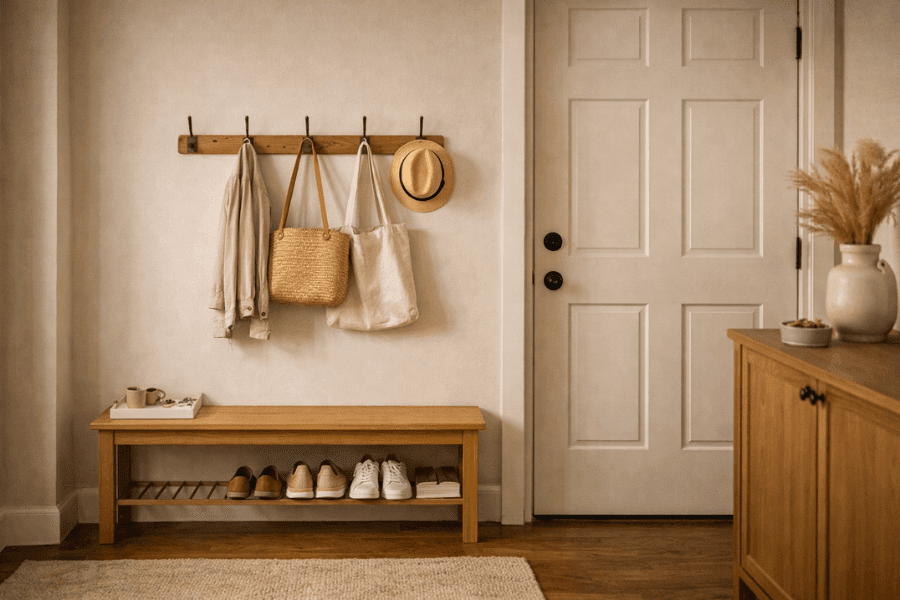
A drop zone is a designated landing area for everyday items like keys, bags, wallets, shoes, and mail. Without one, these items end up on kitchen counters, dining tables, or bedroom chairs.
A successful drop zone is simple and visible. Hooks for bags and jackets, a small tray or shelf for keys, and a bench or rack for shoes create an intuitive flow. The closer the drop zone is to the door, the more likely it is to be used consistently.
Shoe Storage Strategies
Shoes are one of the biggest contributors to entryway clutter. Limiting how many pairs stay out makes a big difference. Keep only the shoes worn regularly near the door and store seasonal or special-occasion pairs elsewhere.
Shoe racks, cubbies, or benches with built-in storage work well for most spaces. In smaller entryways, vertical shoe storage or slim racks help maximize space without blocking walkways.
The best shoe storage is easy to access and just as easy to reset.
Why Entryways Control Whole-House Clutter
When the entryway functions well, clutter is stopped at the source. Items don’t travel further into the home because they already have a place to land.
A quick weekly reset — returning misplaced items and rotating shoes — keeps the system working long-term. A calm entryway sets the tone for the entire home and makes everything beyond it easier to manage.
Small Space & ADHD-Friendly Organization
Small homes and ADHD-friendly spaces face similar challenges: limited storage, constant visual input, and systems that fall apart when energy is low. Traditional organization advice often assumes unlimited space and consistent motivation — which simply isn’t realistic. The solution here isn’t stricter rules, but smarter, more forgiving systems.
Visibility vs Hidden Storage
In small or ADHD-friendly homes, visibility is often more helpful than hidden storage. When items are completely out of sight, they’re easy to forget — and duplicates get bought unnecessarily.
Clear bins, open shelving, and shallow drawers allow you to see what you own at a glance. This doesn’t mean everything must be on display, but frequently used items should be visually accessible. Less-used items can stay hidden, but daily essentials benefit from being easy to spot.
The key is balance: visible enough to remember, contained enough to avoid chaos.
Low-Effort Systems
If a system requires multiple steps, it won’t last. Low-effort organization reduces the number of actions needed to put something away.
Examples include open baskets instead of lidded boxes, hooks instead of hangers, and wide drawers instead of tightly packed shelves. When storage feels intuitive, items are more likely to return to their place — even on rushed days.
Decision Fatigue Reduction
Clutter increases decision fatigue. Too many choices about where something belongs can feel overwhelming, especially in small spaces.
Reducing categories helps. Fewer, clearer zones mean fewer decisions. Labels also play a role by removing the need to think in the moment. When your brain doesn’t have to work as hard, organization feels lighter and more manageable.
Forgiving Organization Setups
Forgiving systems allow for imperfection. They don’t collapse when a day is missed or routines change.
Flexible storage, extra space in bins, and simple reset habits create resilience. Organization should support you when energy is low — not punish you for being human.
When systems are designed with real limitations in mind, small spaces feel calmer, more functional, and far easier to live in.
Common Organization Mistakes
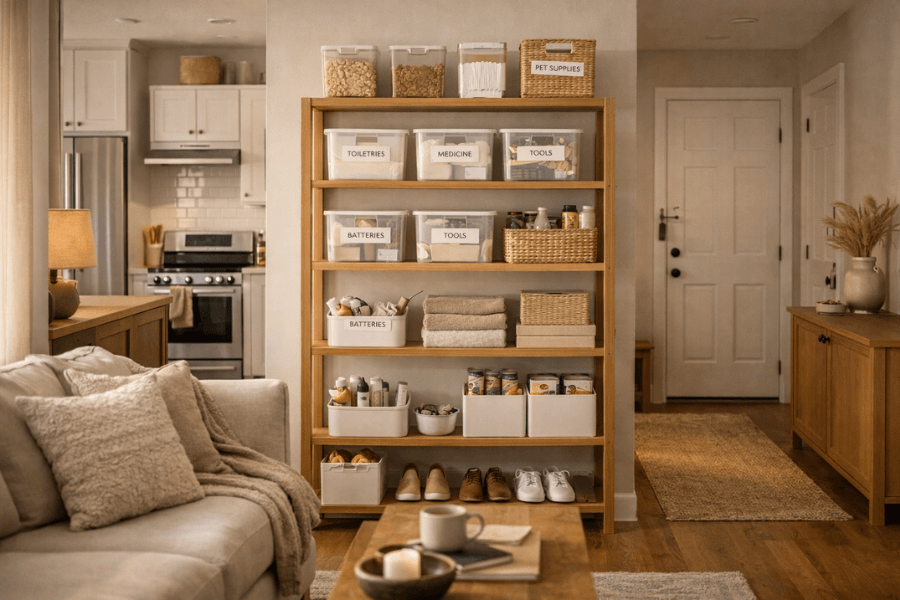
Even with the best intentions, many organization systems fail for the same few reasons. These mistakes don’t mean someone is bad at organizing — they usually mean the system was never designed for real life.
Overbuying Containers
One of the most common mistakes is buying storage containers before understanding the problem. It’s tempting to assume more bins will fix clutter, but containers without a plan often become clutter themselves.
When storage is added without clear categories or limits, items get hidden instead of organized. The result is more stuff, less clarity, and frustration when systems don’t hold up long-term.
Organizing Before Decluttering
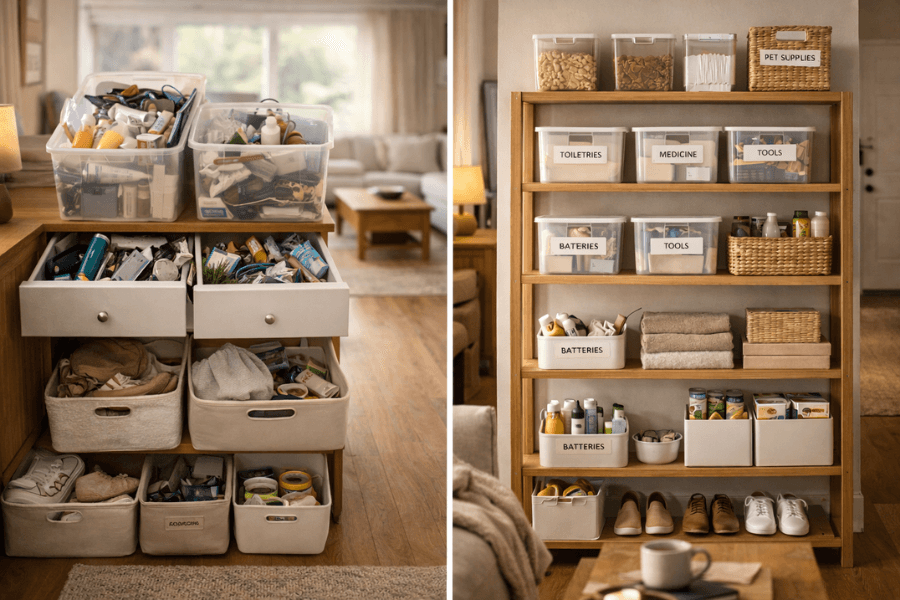
Organizing clutter doesn’t remove it — it just relocates it. Skipping decluttering leads to overfilled drawers, jammed shelves, and systems that are impossible to maintain.
Decluttering creates breathing room. It allows storage to work properly and makes daily maintenance easier. Without it, even the best organization ideas fall apart quickly.
Systems That Are Too Rigid
Perfect-looking systems often fail because they demand consistency that real life can’t always provide. When a setup requires precise folding, exact placement, or multiple steps, it becomes fragile.
Rigid systems collapse the moment routines change or energy drops. Flexible systems — open baskets, forgiving storage, simple categories — survive busy weeks and imperfect days.
Good organization isn’t about control. It’s about resilience. Systems should adapt to life, not the other way around.
Maintenance & Habit Building
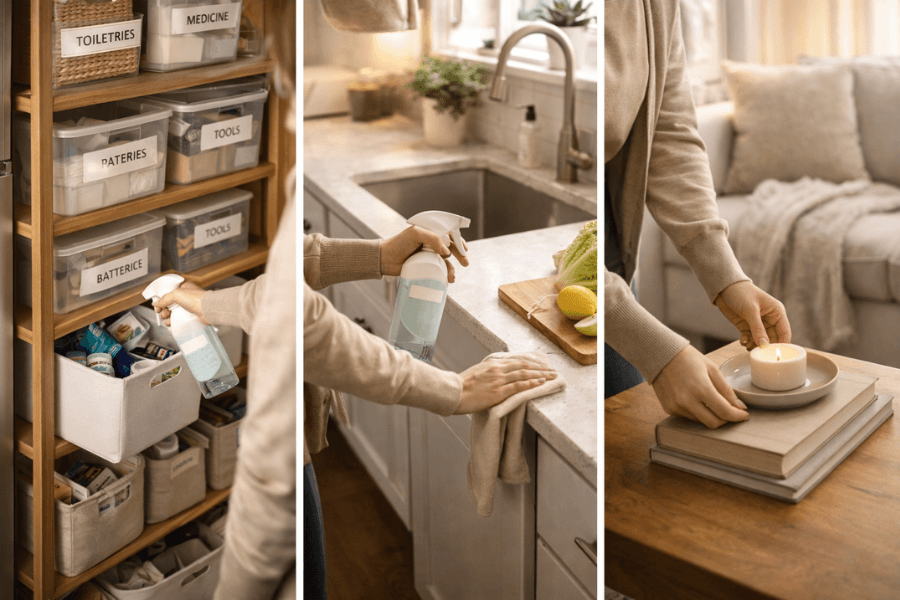
Great organization doesn’t come from one big weekend reset — it comes from small habits that quietly support your home every day. Without maintenance routines, even the best systems slowly fall apart. The goal isn’t constant tidiness, but easy recovery.
Daily Reset Habits
Daily resets should be short and realistic. Five to ten minutes is enough to return items to their homes, clear main surfaces, and prepare the space for the next day.
Focus on high-impact areas like the living room, kitchen counter, and entryway. These quick resets prevent clutter from snowballing and keep systems working without requiring motivation or perfection.
Weekly Home Reset
A weekly reset goes slightly deeper. This is the time to empty baskets, return misplaced items to their rooms, review paperwork, and refresh commonly used storage areas.
Think of it as a gentle system check — not a full clean. Weekly resets help catch small problems before they turn into overwhelming messes.
Monthly Re-Evaluation
Homes change, and organization should evolve with them. Once a month, take a few minutes to reassess what’s working and what isn’t.
Are certain areas always messy? Are categories still relevant? Do storage spots feel inconvenient? Small adjustments keep systems aligned with real life and prevent long-term breakdowns.
When habits support your systems, organization becomes part of daily life — not an ongoing project.
Frequently Asked Questions About Home Organization
What is the best way to start organizing your home?
The best way to start is by choosing one small, high-impact area instead of trying to organize everything at once. Entryways, kitchen counters, or a single drawer are great starting points. Quick wins build momentum and help you understand what kind of systems actually work for you before expanding to larger spaces.
How do I organize my home if I don’t have much storage?
Limited storage doesn’t mean organization isn’t possible. Focus on reducing excess first, then use vertical space, multifunctional furniture, and clear categories. Storing items close to where they’re used matters more than having lots of containers. Simple, well-placed storage almost always works better than adding more furniture.
What’s the difference between decluttering and organizing?
Decluttering is about deciding what stays and what goes. Organizing is about creating systems for what remains. Many people skip decluttering and try to organize everything they own, which leads to overcrowded spaces. Decluttering first makes organization easier, more effective, and far more sustainable.
How can I keep my home organized when life gets busy?
Organization lasts when systems are designed for low-energy days. Short daily resets, simple categories, and storage that’s easy to access help prevent clutter from piling up. Instead of relying on motivation, focus on habits and systems that work even when schedules are unpredictable or energy is limited.
Is it possible to stay organized without buying storage containers?
Yes. Many homes already have enough storage — it’s just not being used intentionally. Repurpose boxes, baskets, jars, and drawers you already own. Organization is about placement, flow, and habits, not matching containers. Buying storage should come after you understand your needs, not before.
Which room should I organize first for the biggest impact?
Start with the room that causes the most daily stress. For many people, that’s the kitchen, living room, or entryway. Improving one high-traffic area often reduces clutter in other rooms as well, making the rest of the home easier to manage.
How do I organize a small home without making it feel crowded?
Small homes benefit from clear categories, visible storage for daily items, and flexible systems. Avoid overfilling shelves and cabinets. Leaving some empty space makes organization easier to maintain and helps rooms feel calmer instead of cramped.
Can home organization really reduce stress?
Yes. Visual clutter increases mental load and decision fatigue. When items have clear places and systems support daily routines, the brain has less to process. A well-organized home doesn’t just look better — it feels calmer and easier to live in.
Conclusion
Organizing your home isn’t about reaching a final, flawless version of your space. It’s about creating systems that support you through real days — the busy ones, the messy ones, and everything in between. When organization works, it quietly reduces stress, saves time, and makes your home feel more like a place to rest than another responsibility.
What matters most isn’t how perfectly everything is stored, but how easily your space resets. Small changes — a clearer drop zone, a better pantry category, a simpler closet flow — add up faster than you might expect. Progress happens when systems are designed to match your habits instead of forcing you to change overnight.
If this guide feels like a lot, remember that you don’t have to do everything at once. Start with one room. One drawer. One habit. Let success build naturally from there.
A well-organized home doesn’t demand perfection. It supports progress. And when your space works with you, daily life feels lighter, calmer, and far more manageable.
About the Author
Written by Adeel Mushtaque — a DIY storyteller and home-living enthusiast who focuses on creating calm, functional spaces through realistic organization systems. Through Crafts n Comforts, Adeel shares practical, experience-driven ideas that help readers reduce everyday clutter without chasing perfection. His approach centers on habits, flow, and flexibility — proving that an organized home isn’t about rigid rules or expensive solutions, but about designing spaces that support real life, real routines, and real energy levels.