
How to Make Cheap Art Look Expensive
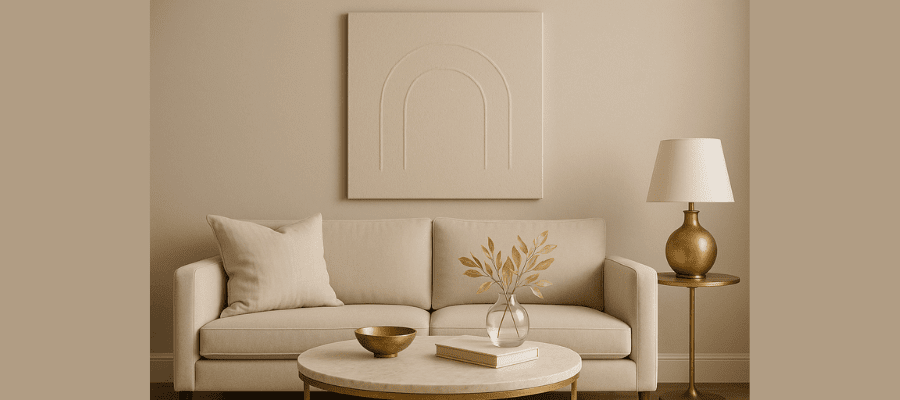
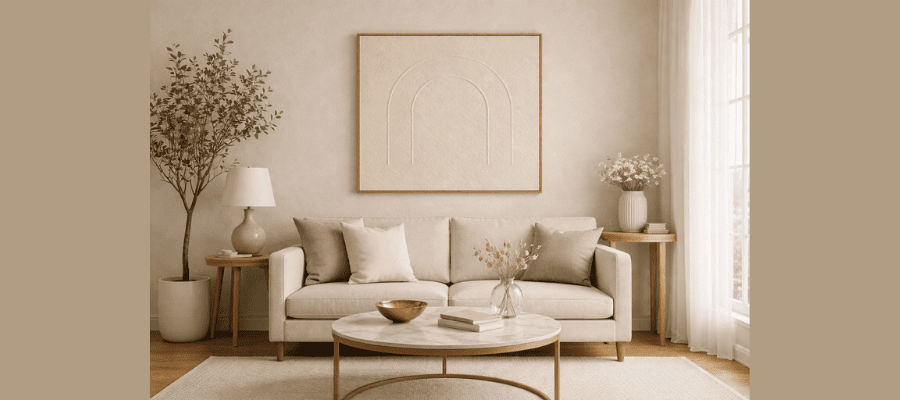
It started with a Pinterest photo of a minimalist living room — crisp white walls, a textured canvas, and sunlight catching on subtle gold accents. The art looked effortless… and expensive.
I clicked the link, saw the $1,200 price tag, and laughed out loud.
That’s when I realized something: luxury isn’t a price point; it’s a feeling.
You can absolutely recreate that same sophisticated look using affordable materials and a bit of creativity.
This guide is all about those secrets — the little hacks that turn ordinary DIY wall art into pieces that look designer-made.
What Makes Art Look Expensive?
Luxury art isn’t about the cost — it’s about composition, color, and craftsmanship.
If you look closely at any high-end gallery wall, a few patterns always stand out:
- Simplicity: Fewer elements, more intention.
- Scale: Large pieces feel grand — even if they’re inexpensive.
- Texture: Matte finishes, depth, and dimension add richness.
- Framing: Clean lines and quality frames transform perception instantly.
- Cohesion: Colors and tones that flow naturally with the room.
Choosing the Right Color Palette
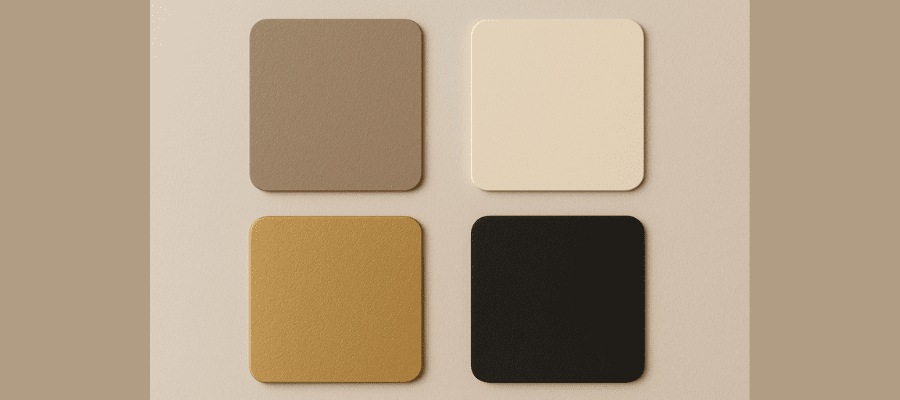
Color is everything. Cheap art often looks chaotic because the palette isn’t unified.
High-end art, on the other hand, whispers rather than shouts.
Luxury Color Combos
- Warm Neutrals: Cream, sand, taupe, and ivory.
- Matte Black & White: Modern, bold, and timeless.
- Earth Tones: Terracotta, clay, olive, and rust.
- Metallic Accents: Brushed gold, champagne, or bronze — just hints, never full coverage.
💡 Pro tip: Keep your palette under 4 colors max. Monochrome is your friend when aiming for sophistication.
Texture, Dimension, and Layering Techniques
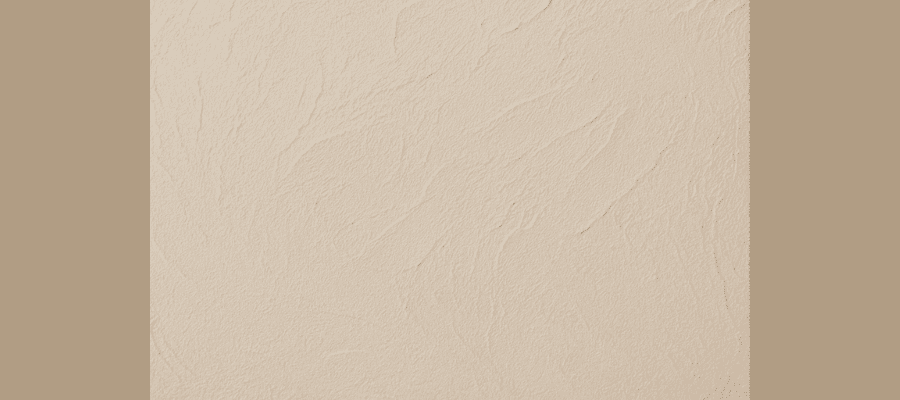
Luxury design thrives on touchable surfaces — think linen, plaster, or matte paint.
You can achieve that depth affordably:
- Mix baking soda into acrylic paint for a stone-like texture.
- Use joint compound or spackle to sculpt raised patterns.
- Layer neutral paints with dry brushing for visual dimension.
- Combine soft fabrics (linen, velvet, burlap) with wood or metallic trim.
Materials That Look Luxurious (But Aren’t)
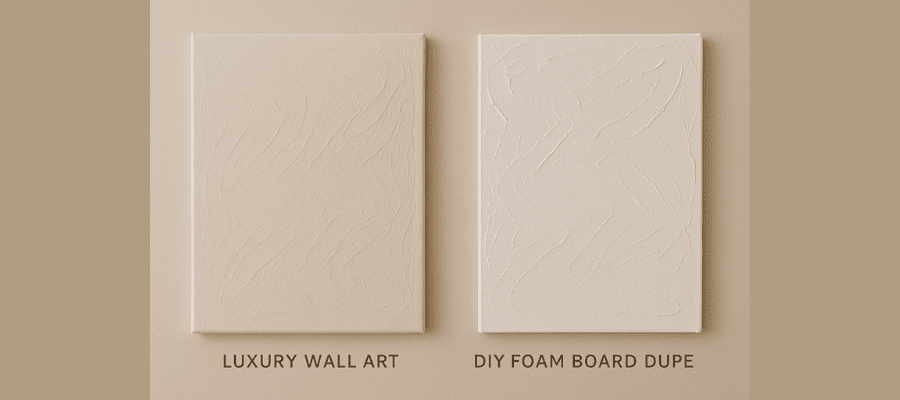
Here’s the insider secret: most “designer” wall art uses simple materials presented elegantly.
Affordable, Luxe-Looking Materials:
- Foam board instead of canvas (lightweight and crisp)
- Spray-painted Dollar Tree frames
- Faux gold leaf or metallic foil paper
- Linen fabric remnants
- Wallpaper or wrapping paper backgrounds
- Molding strips from the hardware aisle
- White plaster or modeling paste for sculptural effects
Framing & Finishing Touches That Elevate Any DIY
Frames are where luxury happens. A $2 print can look like a $200 gallery piece with the right border.
Finishing Hacks:
- Use floating frames for modern art.
- Paint wooden frames matte black or champagne gold.
- Add linen or white mats around small prints for scale.
- Spray-paint old frames in neutral hues for consistency.
- For large pieces, create DIY wood slat frames (see “Wood Wall Art Projects”).
💡 Pro tip: Always remove the glass from frames when displaying textured or 3D art — the depth looks far more authentic.
8 Luxe-Looking DIY Wall Art Ideas (Step-by-Step)
These projects use simple, inexpensive materials — but the end result feels designer-level.
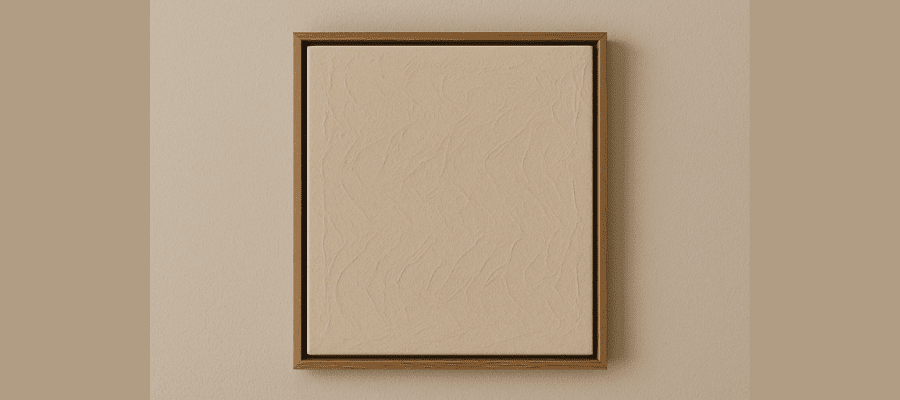
1. Minimalist Monochrome Texture Canvas
Use spackle and a palette knife to create soft waves on a white canvas.
Paint over with off-white acrylic for a serene, sculptural effect.
(Inspired by Cluster 4’s plaster techniques.)
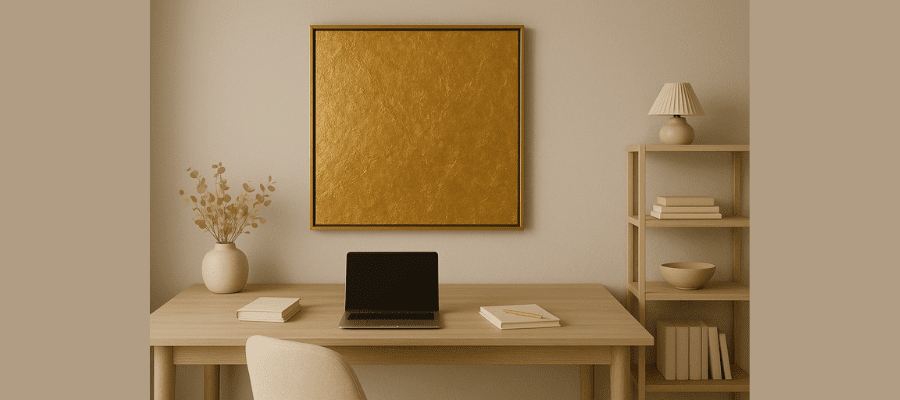
2. Gold Leaf Abstract Panel
Paint a large foam board in ivory, then randomly apply adhesive and gold foil sheets.
Blend lightly with beige paint for a “faded gild” finish — elegant and restrained.
3. Matte Black Dimensional Art
Paint a canvas matte black, then use spackle or thick acrylic for raised strokes.
When light hits it, the shadows make it come alive — pure modern luxury.
4. Framed Fabric Art
Stretch linen, muslin, or canvas drop cloth over a frame.
Add a small embroidery, or keep it plain for minimalist texture.
5. Shadow Box with Metallic Accents
Use a Dollar Tree shadow box, fill it with textured paper or moss, and highlight with a single gold-painted element — a leaf, stone, or shell.
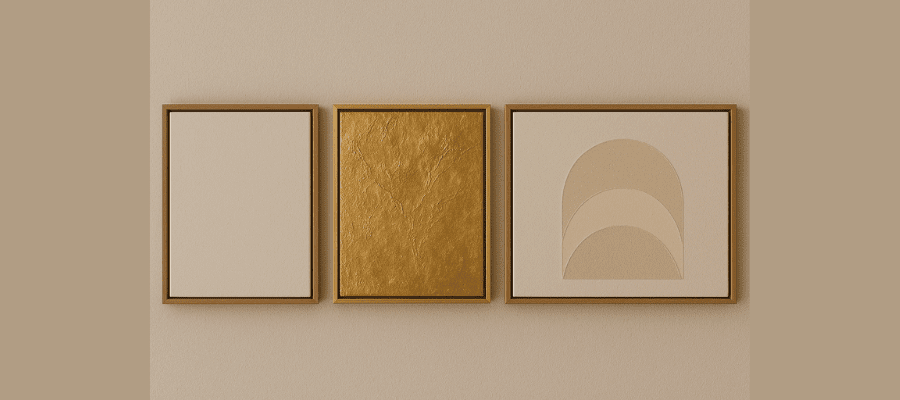
6. Oversized Gallery Diptych
Paint two large canvases with matching abstract patterns using a palette knife.
Hang side by side — the space between them creates that “gallery wall” luxury effect.
7. Faux Stone or Plaster Texture
Mix joint compound with gray and beige acrylics for a marble-like surface.
Use a rag to blot irregular patterns and finish with a matte sealer.
8. Sculptural 3D Wall Piece
Cut foam into abstract shapes, glue to a backing board, and coat with plaster.
Paint everything in soft white for a bold yet understated centerpiece.
Styling Your DIY Like a Designer
Once your piece is ready, how you hang it matters as much as what you’ve made.
Placement Tips
- Hang large art 6–8 inches above furniture.
- Use sets of 2 or 3 for symmetry.
- Match the frame tones to your décor metals (brass, black, or wood).
- Keep spacing consistent — 2 inches apart in galleries, max.
Room Ideas
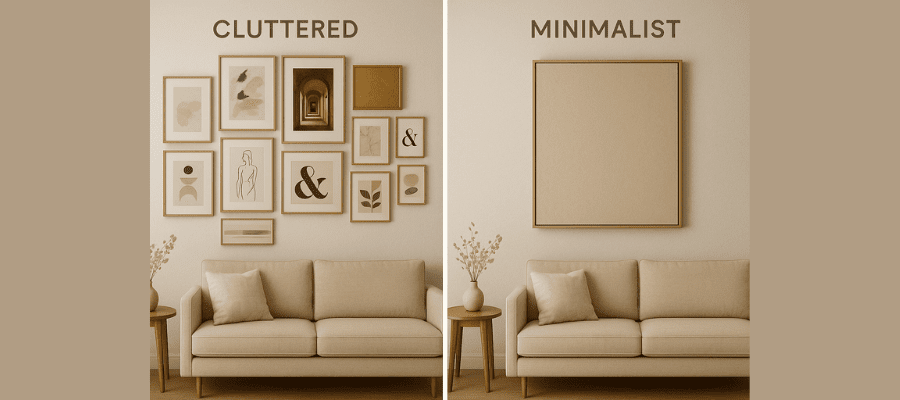
- Living Room: Oversized texture art above the sofa.
- Bedroom: Soft-toned diptychs above the headboard.
- Office: Black-and-gold minimal abstracts for focus and confidence.
- Hallway: Vertical panels to elongate space visually.
Common Mistakes That Make DIY Look “Cheap”
Luxury is all in the details — skip these traps:
- Glossy paint overload: Stick to matte or eggshell finishes.
- Uneven framing: Misaligned art ruins the upscale feel.
- Too many colors: Simplicity = sophistication.
- Visible glue or tape: Always clean edges and seams.
- Wrong scale: Tiny art on big walls looks unfinished — size up!
Final Thoughts
Making art that looks expensive isn’t about spending — it’s about slowing down, refining your vision, and trusting your taste.
A luxury home isn’t defined by designer price tags — it’s defined by presence.
And presence comes from intention, detail, and a little creative courage.
So grab that foam board, your favorite paint, and a palette knife.
You might just surprise yourself when someone walks in and says,
“Wow — where did you buy that?”
And you get to smile and say, “Actually… I made it.”
❓ People May Ask (FAQ)
Q1. How do I make cheap wall art look high-end?
Use large scale, neutral tones, and texture. Frame it with quality materials and keep designs minimal.
Q2. What paint finish looks most expensive?
Matte and satin finishes feel sophisticated and photograph beautifully.
Q3. Can I mix gold and silver in luxury DIY art?
Yes, but balance is key — keep one metal dominant and use the other sparingly.
Q4. What’s the best size for statement DIY wall art?
At least 24×36 inches. Bigger pieces instantly elevate a space.
Q5. How can I make my DIY look store-bought?
Focus on crisp edges, smooth finishes, and cohesive color schemes — presentation is everything.
✍️ About the Author
Written by Adeel Mushtaque — a storyteller and design creator passionate about proving that style isn’t about price, it’s about creativity. From Dollar Tree finds to high-end textures, Adeel helps readers craft walls that look straight out of a design magazine — without breaking the bank.